

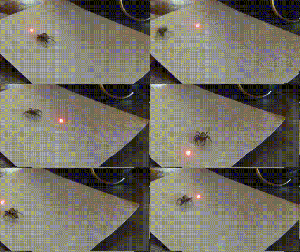
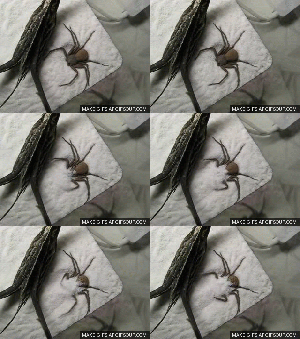

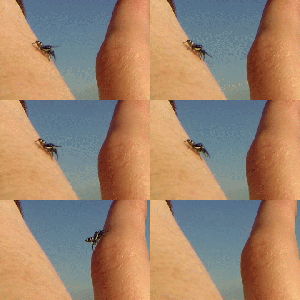
spiders.
always reblog spider nerds
I thought I was gonna go to bed early tonight but I guess not
hey friend you just unleashed my nerdy wrath buckle up
short answer: no, I know r&j is a tragedy and I read it as such. Shakespeare didn’t write “romances”, at least not in the sense you mean (some people call his later stuff that’s harder to put into a genre ‘romances’, such as the winter’s tale and the tempest)
so no I’m not a moron thanks
here’s the long answer:
I presume you’re “one of those people” who likes to count themselves as the Specialest Snowflake In All The Land because they don’t buy into the fake cheesy idea of //romance// that everyone else so blindly believes
maybe you like to talk about how romeo and juliet were “just horny teenagers”, how they knew each other for three days, how romeo so loved rosaline thirty seconds before spotting juliet, so clearly he’s fickle and silly. they weren’t actually in love, they were just teenage idiots.
because only stupid girls buy that stuff.
you’re more mature than that.
am I right?well, here’s the thing, sunshine- you aren’t special. I hear this same damn argument right down to the last word every time I mention my love of this play and it ENRAGES me every time because 99% of the time this is coming from /other teenagers/. other young people talking about how this isn’t a story to be taken SERIOUSLY. it’s silly and frivolous and unrealistic. they don’t realize that this play is dedicated to them.
and it’s criticizing people just like you.
while I do believe that these two young people were soul mates (I’ll get to that later), I don’t really think this is a story about love. it’s a story about /passion/- how love and hate are only a hair’s breadth apart and their overwhelming capacity for healing or for destroying. the emotion that drives mercutio to defend romeo from tybalt. what drives mercutio to be killed at his hand. what pushes formerly docile, dreamy romeo to slay his cousin in law: it all begins to seem like the same continuous passion, enflaming the same group of people on the hottest day of the year.
as a result, love isn’t a pretty thing in this play. it’s linked inextricably to death, to murder, to chaos. love is presented as the most dangerous force in the universe. it leaves five bodies in its wake, and then at the end (people forget this) it’s what finally brings the ancient feud to an end.
it’s not silly. it’s not frivolous. o brawling love, o loving hate.and who are the conductors of this unstoppable force? who sets verona burning and then rebuilds it better in under a week?
kids.
people with a shitty understanding of this play who love to dismiss it and downplay it like to call it a “cautionary tale”- why you shouldn’t think with your dick, why you should grow up and not be so rash, be sensible.
I agree with part of this. it is a cautionary tale. but it’s directed at YOU.
you, who devalue youth. you, who underestimate teenagers and what they’re capable of, who wave off their every thought or feeling with “just a kid”. who think that love is a pretty little silly thing and that no one under the age of 25 is capable of really experiencing it. that the kids don’t MATTER.
capulet thought it- he dismissed tybalt’s rage during the party as dumb kids throwing a hissy fit. he wrote juliet off as a child who should be seen and not heard, shuffled from her father to her husband, guided by the wisdom of those older and wiser than her.
in the world presented in the play, age has NOTHING to do with wisdom. the adults range from careless (montague) to helpless (lady capulet) to blithering (the nurse). the wisest character, the most eloquent and intelligent one with the most beautiful poetry, is fourteen year old juliet.
(go back and read it. whose speeches are the most beautiful, sophisticated, complex? Juliet’s.)okay, fine, you say. but they didn’t love each other, they just saw each other and got hot and bothered and wanted to jump the other’s bones! anyway, what about rosaline?!
I’ll address rosaline first:
shakespeare likes making fun of the poets of old (take for instance his “my mistress’ eyes” sonnet, a deliberate parody of the Petrarchan model of frilly love poetry). heres another example in romeo. when we first meet romeo he’s mooning over a girl in the frilliest, stalest, most formulaic verse imaginable. we get the feeling he’s enjoying himself, basking in his misery.
notice, though, that we never see rosaline on stage. she represents romeo’s vague infatuation with the //idea// of love, the pretty image he made up in his head from reading old poems. this not only creates an incredible arc in his character, but makes his love for juliet obviously the real deal by comparison. he meets juliet and his world goes into free fall; he’s rash and violent and impulsive, and the verse that was so stale and ingenuine before shifts into some of the most famous passionate poetry in the english language.
in his first scene, he asks “is love a tender thing?” he falls in love with juliet- REAL love, not the kind in poems- and comes to answer his own question: no. no it fucking isn’t.but, you say. but they CANT have loved each other! you don’t fall in love just by LOOKING at someone!
yeah, I know you don’t.
but here’s the thing. if you aren’t willing to suspend some modicum of disbelief, you won’t get anything from shakespeare. period.
we’re already assuming that these people just happen to walk around speaking in blank verse and rhyming couplet. the plot of hamlet relies on the existence of a ghost, a midsummer night’s dream on fairies, macbeth on witches, the tempest on magic, measure for measure on the friggin /bed trick/- is it SUCH A HORRIBLE STRETCH FOR YOUR CYNICAL POSTMODERN MIND TO MAKE that characters can identify their soulmates with a look? have we reached that level of lazy cynicism as a society that magical love flowers and vengeful ghosts are believable, where a woman can turn into a boy by shoving a hat over her hair and statues spring to life as deceased loved ones, but love at first sight (a very very common Elizabethan plot device; it’s /everywhere/ in shakespeare) is just too much of a stretch?
no one rolls their eyes at hamlet because “ghosts aren’t real. are you one of those people who believe in ghosts?” no- they take it for the plot device that it is in order to get to the message of the play as a whole, and the truths of the human conditions it reveals, with the help of some purely theatrical elements.
but kids in love. that’s far too silly.
it’s really fucking sad.
and questions like yours, anon? those make me really, really fucking sad.
bringing this back cuz someone tried to challenge me today
Zachar: Usually translated as “male” in English.
Nekevah: Usually translated as “female” in English.
Androgynos: A person who has both “male” and “female” sexual characteristics. [Source: 149 references in Mishna and Talmud (1st-8th Centuries CE); 350 in classical midrash and Jewish law codes (2nd -16th Centuries CE).]
Tumtum: A person whose sexual characteristics are indeterminate or obscured. [Source: 181 references in Mishna and Talmud; 335 in classical midrash and Jewish law codes.]
Ay’lonit: A person who is identified as “female” at birth but develops “male” characteristics at puberty and is infertile. [Source: 80 references in Mishna and Talmud; 40 in classical midrash and Jewish law codes.]
Saris: A person who is identified as “male” at birth but develops “female” characteristics as puberty and/or is lacking a penis. A saris can be “naturally” a saris (saris hamah), or become one through human intervention (saris adam). [Source: 156 references in mishna and Talmud; 379 in
classical midrash and Jewish law codes.]Source: Classical Jewish Terms for Gender Diversity by Rabbi Elliot Kukla, 2006
Our Sages non-judgmentally explore the role of intersex people in regards to many facets of ritual and civil law such as circumcision, redemption, oath-taking and menstruation.
The midrash, in Bereshit Rabah, posits that Adam, the first human being, was actually an androgynos. While in the Babylonian Talmud (Yevamot 64a-64b) the radical claim is made that Abraham and Sarah were tumtumim, gender non-conforming people. According to our tradition the first human being and the first Jews were gender outlaws. This teaches us that it is those that transgress the apparently rigid lines of Judaism that have caused the tradition to grow.
— Rabbi Elliot Kukla, Parashat Vayechi: Beyond Stick Figures
You know what’s awesome? Research. You know what’s not awesome? Not being able to get access to research because it’s stuck behind a paywall and you don’t belong to an institution/your institution doesn’t subscribe to that particular journal.
FEAR NOT.
Here is a list of free, open access materials on a variety of subjects. Feel free to add if you like!
GO FORTH AND LEARN SHIT, MY FRIENDS.
Directory of Open Access Journals– A compendium of over 9000 journals from 133 countries, multilingual and multidisciplinary.
Directory of Open Access Books– Like the above, but for ebooks. Also multidisciplinary.
Ubiquity Press– Journals covering archaeology, comics scholarship, museum studies, psychology, history, international development, and more. Also publishes open access ebooks on a wide variety of subjects.
Europeana– Digital library about the history and culture of Europe.
Digital Public Library of America– American history, culture, economics, SO MUCH AMERICA.
Internet Archive– In addition to books, they have music and videos, too. Free! And legal! They also have the Wayback Machine, which lets you see webpages as they looked at a particular time.
College and Research Libraries– Library science and information studies. Because that’s what I do.
Library of Congress Digital Collections– American history and culture, historic newspapers, sound recordings, photographs, and a ton of other neat stuff.
LSE Digital Library– London history, women’s history.
Wiley Open Access– Science things! Neurology, medicine, chemistry, ecology, engineering, food science, biology, psychology, veterinary medicine.
SpringerOpen– Mainly STEM journals, looooong list.
Elsevier Open Access– Elsevier’s kind of the devil but you might as well take advantage of this. Mainly STEM, also a linguistics journal and a medical journal in Spanish.
Also, remember — there is a wide world of researchers out there, most of whom don’t give two figs about paywalls. Let people know what you’re having trouble accessing, and you’d be surprised how quickly a copy will find its way to your inbox. And if you do belong to an institution with a library, check out their interlibrary loan system, which is a more official way of getting things from behind a paywall at no cost to you.
I just discovered foodtimeline.org, which is exactly what it sounds like: centuries worth of information about FOOD. If you are writing something historical and you want a starting point for figuring out what people should be eating, this might be a good place?



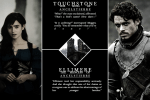


“For everyone and everything, there is a time to die. Some do not know it, or would delay it, but its truth cannot be denied. Not when you look into the stars of the ninth gate.”
[insp x]
My GOD


 Kimchi and Justice