So while doing some pirate research for the play I’m writing I stumbled upon one of the most amazing things I’ve ever read. In the 5th century A.D. there was a Scandinavian princess called Alwilda who’s father tried to set her up to marry Alf, the Prince of Denmark. Alwilda wasn’t cool with this so she and some female companions dressed as men, stole a ship, and sailed away. Eventually they met a company of pirates who were in need of a new captain and they were so captivated by her that they elected her as their new leader. Her crew became so infamous that Prince Alf was sent out to stop them. When their ships met he took Alwilda prisoner and she was so impressed by Alf’s skill that she agreed to marry him after all and eventually became the Queen of Denmark.
I stopped caring whether this was factually accurate about halfway through because it’s completely AWESOME.
Medievalist here for triumphant fact-checking: this story is, if not true, at least true according to the history of the Danes (Gesta Danorum) written in the 12th century by Saxo Grammaticus. You can read his account of Alwilda’s story in the original Latin here, or in English translation here. Highlights include:
She exchanged woman’s for man’s attire, and, no longer the most modest of maidens, began the life of a warlike rover. Enrolling in her service many maidens who were of the same mind, she happened to come to a spot where a band of rovers were lamenting the death of their captain, who had been lost in war; they made her their rover captain.
I love the implication that there were lots of Danish maidens just WAITING for the opportunity of a life of piracy…
On this day in 1881, the nurse Mary Seacole died in London aged
76. Originally from Jamaica, the young Mary was taught her nursing
skills by her mother. When war broke out in the Crimea, she applied to
give medical assistance to wounded servicemen but was refused, and so
gave treatment independently. Her patients admired ‘Mother Seacole’ and
helped raised money for her after the war when she was left destitute.
Despite her exemplary national service and popularity in Britain,
Seacole faced discrimination at home due to her race, and was unable to
vote or hold public office. She has thus often been forgotten and placed in
the shadow of famous Crimean War nurse Florence Nightingale, however, in
2004 Seacole was voted the greatest black Briton.
“Chevalier d’Éon, was a French diplomat, spy, freemason and soldier who fought in the Seven Years’ War. D’Éon had androgynous physical characteristics and natural abilities as a mimic, good features for a spy. D’Éon appeared publicly as a man and pursued masculine occupations for 49 years, although during that time d’Éon successfully infiltrated the court of Empress Elizabeth of Russia by presenting as a woman. For 33 years, from 1777, d’Éon dressed as a woman, claiming to have been female at birth. Doctors who examined d’Éon’s body after d’Éon’s death discovered that d’Éon would have actually been designated male at birth.”
Can we all talk about this bad ass genderfluid French soldier/spy from the 1700s? Please?
He presented as a woman for a specific reason. That doesn’t make him gender fluid.
They also lived the rest of their life until death as a woman. They retired from their work in the military and lived the last years of their life as a woman, collecting a military pension.
So I don’t know why you think you get to decide that their gender “really” was a cis man?
Chevaliere d’Eon blackmailed the French government into changing the records to say that she was born female. I’m having a hard time seeing that as anything other than an especially punk rock form of legal transition.
God damn. d’Eon did not fuck around.
Fun fact: she continued to compete in fencing tournaments up into her sixties. There’s some great art of her facing off against opponents.
Hopefully this inspires more ladies to apply. -Emily
Excuse you @npr. Women have been applying since the beginning of the manned space program. NASA hasn’t been interested in accepting them till recently.
(The Mercury Thirteen. Women who wanted to go to space in the 50′s, paid their own way through testing to prove they were capable of the same rigorous standards the men were, and then were ignored and forgotten by NASA.)
Don’t put the lack of female astronauts on a (supposed) lack of female applicants. The fault lies on the shoulders of those who refused (and continue to refuse) to believe that women are just as capable of travelling to space as men.
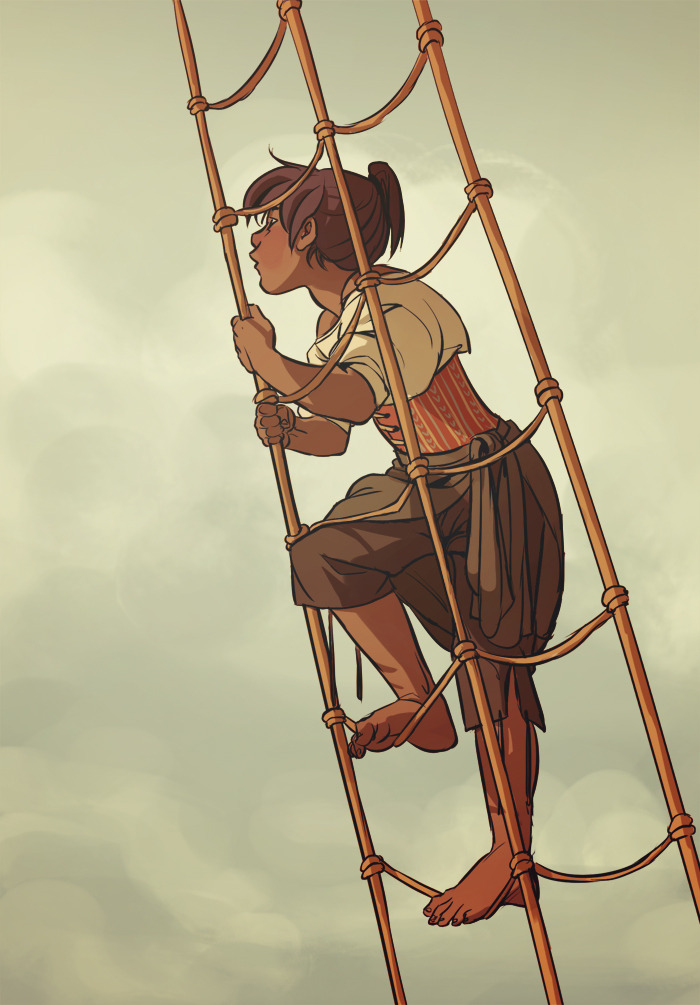
Daughter of a gun (ノ´ヮ´)ノ*:・゚✧ No idea if such a thing existed but surely there had to be girls born on board in the Age of Sail?
*puts on obnoxious historian hat*
*clears throat*
there were actually tons of women and girls on board ships during the age of sail and it’s really cool history that no one!!! ever!!! talks about!!!
like captains of merchant ships used to bring their wives and children on board for long voyages all the time (and of course there were plenty of well known female pirate ship captains, and women cross-dressing as men, and prostitutes that more people seem to know of)
there’s actually a really amazing story of one woman, Mary Ann Patten who was the wife of the captain of this ship called Neptune’s Car. Captain Patten decided that he wanted her onboard with him and she was super about this and learned all about navigation and sailing and everything. so this one voyage they’re going around the tip of south america when her husband gets sick and is bed ridden with a fever right as the ship sails into one of the worst storms any of the crew had ever seen and it looks like they might lose the ship or have to stop
so you know who takes over??? the first mate???
no.
MARY
she took over the whole crew and sailed that ship through freezing water and pack ice and had it coasting smoothly into the san francisco harbour like it was nothing. and she did this all at age 19. while pregnant.
at one point the first mate tried to get the crew to mutiny against her but they all rallied with her and told him to shut the heck up because she obv knew what she was doing.
there’s a great book about women in the age of sail called ‘female tars’ by suzanne stark that i cannot recommend enough and has way more amazing stories and insights about the myriad roles women and girls played aboard ship during that time period.
(sorry i totally didn’t mean to hijack your post i love all of your art and this is gorgeous i just got over excited sorry sorry sorry)
Philip Schuyler was a general in the Continental Army as well as a businessman. He was actually pretty good at it, and the British wanted to take him out of commission. One night, a raiding party broke into the Schuyler house looking for him. The family (Philip included) hid in an upstairs bedroom – when they realized that the baby was still in her cradle downstairs.
So, who volunteered to sneak through a house of armed men to get her? Who got grabbed on the way back up and, still holding the baby, lied to their leader when he stuck a gun in her face and demanded to know where General Schuyler was?
Peggy.
*and
When they asked her where he was, she responded something like “He has gone to get help.” which scared them all so much that they left the home before the back-up could arrive.
Peggy had her baby sister in her arms, her pregnant sisters and mother upstairs hiding, and a gun in her face and she managed to stay calm enough to save her family.
God bless Peggy Schuyler.
[MI5 Officer] Mary Sherer met Phyllis McKenzie, who had worked for British intelligence in New York during the war, and the two women became inseparable. They lived together for the rest of their lives, ‘perfect foils for each other’. Within MI5 they were assumed to be lesbians or, rather, Lesbians [always capitalized in MI5 documents, possibly as a holdover of classical education]. Together they moved to Rome and opened the Lion Bookshop on Via del Babuino near the Spanish Steps. ‘Mary was a very fast runner and would think nothing of pursuing the rather numerous petty thieves that abounded in Rome during and after the war. She loved a challenge.’ This formidable pair of English ladies, known as ‘the Lionesses,’ spent their days surrounded by books and a large posse of dogs: Pekinese, French bulldogs, and pugs, ‘all of which Mary doted on’.
Double Cross: The True Story of the D-Day Spies by Ben Macintyre (via hesperos)























 Kimchi and Justice