candidlyautistic:

superpunkjellyfish:

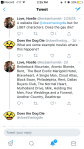
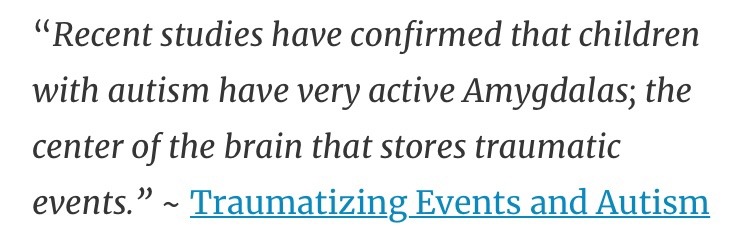
so uh. hey. anyone autistic wondering why their trauma is affecting them so harshly despite thinking it wasn’t as severe as it could’ve been?? here’s your reassurance that you’re not overreacting, your Trauma Bank ™ just runs on overdrive.

Read the article; it does a decent job of explaining both the neuroscience and breaking the neuroscience down into an easier to, well, English.

http://unstrangemind.com/autistics-are-at-greater-risk-of-trauma/

starjeweled-alpenglow:

artbymoga:

curlicuecal:

joulssance:

i love one (1) disaster wizard

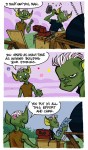
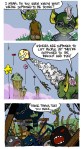
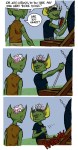
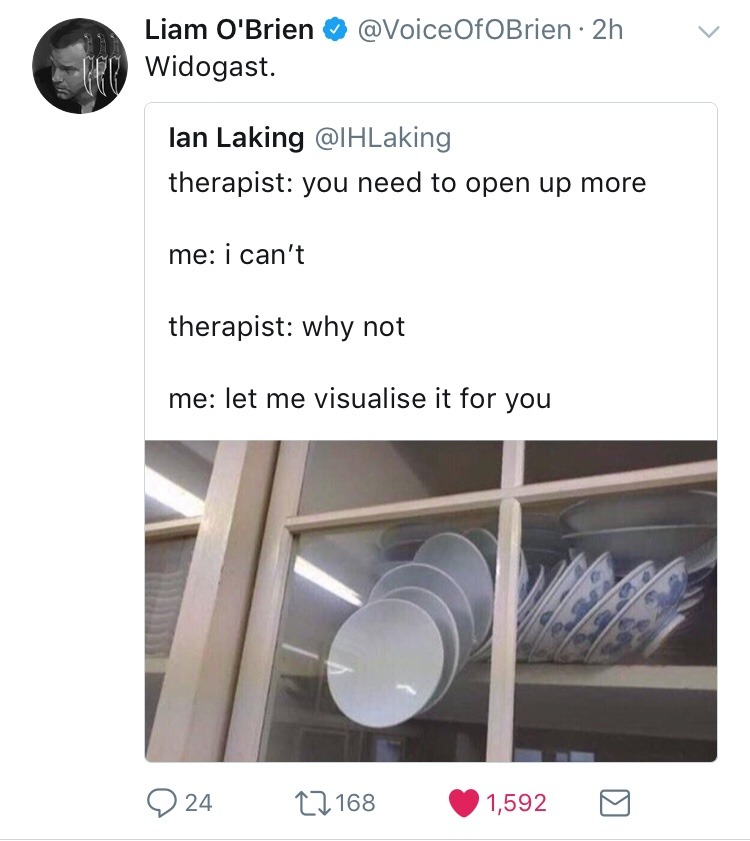
It’s a good metaphor tho, because the situation is never going to get better if you don’t eventually pull the door. And afterwards, no matter what the damage was, you’ll have a working cabinet, whatever plates you could salvage, and a place to start putting new plates.

Reblogging for that comment ^

Hats off for negative jokes turned to wholesome posts

tosety:

illogical-bullshit:

wishful-thinkment:

tinygayrobin:

thedemonsurfer:

bringsyouwings:

mysticorset:

the-original-bravo:

theblacklittlemermaid:

daughterofdiaspora:

my mom taught me the therapeutic power of cleaning. open all the windows. throw out the old. wipe down the entire house. burn some incense. roast some coffee. then rest. that way the tears from last night don’t feel as heavy. 

She just wanted you to clean the house

No it’s actually been studied and proven that for people with anxiety and depression that it’s really good for us it gives us a sense of control, setting, and being well grounded. It allows to make a new place out of the old and is really relaxing

It is such a catch-22, that cleaning when you are depressed (and likely less able to gather the executive functioning to do so) also alleviates it. After having a good clean, I always feel more in control and less stressed. It’s the getting started that is the hardest part. The good news is, even a tiny bit of cleaning has a positive effect, so start with what you can manage.

Even if you just clean up the immediate area around you, even if you clean a little at a time or spaced out over days, you’ll feel lighter.

This!!

Even if all you can do is put three dishes in the dishwasher, or move the dirty laundry pile to outside the laundry door, or throw out that box of leftovers that have been sitting in the fridge for 2 weeks

it counts.

My therapy professor always gets his patients to just wipe the bathroom mirror when they’re feeling that way. Just the mirror, nothing more. But then by the time his patients are done with the mirror, most of them report “well, I was already in the bathroom, so I did the sink and tub too.” And before they know it, they’ve cleaned an entire bathroom.

My therapist once told me that, every day, I should try and do at least one thing that I either enjoyed, or gave me a sense of mastery. And honestly, the enjoyment thing can kind of seem overrated, especially when you feel like crap, but the mastery thing? Doing laundry or taking out the trash or whatever else I can bring myself to accomplish?

Holy shit, man… it’s /good/

This stuff saved my ass back when I had depression. Vacuuming the room, spraying some febreze shit and wiping some countertops works wonders.

tiny baby steps are helpful

do what you can, forgive yourself for what you can’t, and challenge yourself to do better tomorrow (and it’s okay to fail at this; just try again the next tomorrow)

MAKE A LIST.

like, when things are not terrible. break it down into teeny tiny steps. as small as you need. as someone else said somewhere else on Tumblr: don’t worry if someone else thinks it’s ridiculous, this is between you and God.

and then next time everything is shit, you don’t have to think, you just have to follow directions.

Ridiculous yet effective ways to deal with Executive Dysfunction

roachpatrol:

kestrel-tree:

Dealing with
executive dysfunction and ADHD becomes so much easier when you stop trying to
do things the way you feel like you should
be able to do them (like everyone else) and start finding ways that
actually work for you, no matter how “silly” or “unnecessary”
they seem.

For
years my floor was constantly covered in laundry. Clean laundry got
mixed in with dirty and I had to wash things twice, just making more
work for myself. Now I just have 3 laundry bins: dirty (wash it
later), clean (put it away later), and mystery (figure it out later).
Sure, theoretically I could sort my clothes into dirty or clean as
soon as I take them off and put them away straight
out of the dryer, but
realistically that’s never going to be a sustainable strategy for me.

How
many garbage bins do you need in a bedroom? One? WRONG! The correct
answer is one within arms reach at all times. Which for me is three.
Because am I really going to
get up to blow my nose when I’m hyperfocusing? NO. In
allergy season I even have
an empty kleenex box for “used
tissues I can use again.”
Kinda gross? Yeah. But less gross than a
snowy winter landscape of dusty germs on my
desk.

I
used to be late all the time
because I couldn’t find my house key. But it costs $2.50 and 3
minutes to copy a key, so now there’s one in my backpack, my purse,
my gym bag, my wallet, my desk, and hanging on my door. Problem
solved.

I’m
like a ninja for getting pout the door past reminder notes without noticing. If I really don’t want to forget something, I make a
physical barrier in front of my door. A
sticky note is a lot easier to walk past than a two foot high
cardboard box with my wallet on top of it.

Executive dysfunction is always going to cause challenges, but often half the struggle is trying to cope by pretending not to have executive dysfunction, instead of finding actual solutions.

i left cabinet doors open all my life and couldn’t make myself stop leaving them open until i figured out my subconscious just wants to know where everything is at a glance. i put labels on each cabinet door for what was behind the cabinet and after that i was a lot better at closing them. 

showers are hard for me because they involve a lot of steps to get in and out. buying cleaning hand wipes helps me stay a lot cleaner and happier when i’m too tired or distracted to make myself be a normal person– they’re faster and involve way less prep time, decision making, and unpleasant physical sensations. 

i have disordered eating because, again, getting food is complicated, much less cooking anything. buying 10-12$ of cliff bars at a go and keeping them in my room by my bed gives me a headstart on breakfast and lets me take my meds on time. otherwise i would lie in bed, not taking my meds because i had to eat, and not eating because i was too tired and nauseous from being hungry to get out of bed.  

‘just try harder’ is not a solution. figuring out the actual problem and addressing it is the solution.

’normal’ isn’t the goal. you can’t be normal. it’s too late, but you know what, fuck normal. trying to be normal is going to kill you. ‘functional’ is the goal, and you can be functional. you can kick ass at functional. and that’s a lot better. 

kilterstreet:

self-healing:

recovery is not ‘soon i will be untouched, perfect, and in a permanent state of bliss. i will be healed and all will be well, forever.’

recovery is ‘i will continue to survive despite what happens, i will find ways to cope instead of continually tearing myself down. i will recover and will see myself in a light that i never thought was possible.’

Reminded of this excerpt from Getting Through the Day: Strategies for Adults Hurt as Children by Nancy J. Napier: “It also helps to remember that healing occurs in a spiral. We swing around again and again to the same old issues, but at different turns of the spiral. Each time we confront a similar feeling or reaction we have yet another opportunity to learn and to heal. Each time, we bring with us whatever new understanding we have gained since the last time we cycled through this particular difficulty.”

jumpingjacktrash:

heavyweightheart:

the line between not going out as an act of self-care and not going out as a symptom of depression is but a gossamer thread

how i tell the difference: i ask myself if i would like to be out by myself in the park, reading in the shade. if yes, then declining an invitation to be around people or handing off an errand run to someone else is self-care, because it’s a stressful activity i’m avoiding. i’m not self-isolating.

if reading under a tree doesn’t sound good, it’s anhedonia, and i need to make myself get up and move around to encourage my body to step up brain chemical production. so i make myself go for a short walk, and after about two blocks i’m usually feeling a lot less meh. i mean, not ‘all better’ or anything, but i no longer want to curl up like an ammonite and fossilize.

Translation:

violent-darts:

kittydesade:

violent-darts:

kawuli:

violent-darts:

kawuli:

“I’m fine, it’s just–” 

“If I really needed to, I could pretend to be okay, so obviously I’m just being melodramatic and selfish by not pretending to be okay, so you should feel free to ignore me.”

*ponders* A less mean-to-self translation might also be, “Nothing is actually about to fall apart, I’m just miserable, in emotional pain, and it hurts.” 

Sometimes I feel like NT/mentally  healthy people don’t realize that you can be in emotional agony and still going to survive the week just fine. It doesn’t mean things are actually “okay”, but you’re … fine. You can deal. Nobody needs to start panicking or anything. 

A thought, anyway. >.> 

Yeah. That too.

Also “I am deeply uncomfortable with Receiving Comfort” and “If you are upset then I will have to pretend to be okay so that I can make you be not-upset so please do not worry no really.” And probably some other stuff.

Hahahahah yes fair there is also the “I am not really okay but I am also one hundred fucking percent not up to dealing with YOUR FEELINGS about me not being okay so please stop.”

Lately I’ve taken to answering “How are you” or “How’s it going” with “Well, I’m upright and moving” or “Hasn’t stopped yet.” It makes people just uncomfortable to not ask questions but it’s also joking enough that they don’t feel like they have to ask if there’s anything they can do.

Yeah often my answer when I’m badly off is “well I’m not dead yet!” in a very cheerful tone of voice. >.>

violent-darts:

naamahdarling:

wrangletangle:

wrangletangle:

When we say “executive dysfunction”, I think it’s important to acknowledge to ourselves (and make clear to those who don’t struggle with it) that we’re talking about a basket of different struggles that we’re labeling with one name for convenience. One person’s executive dysfunction may not look like another person’s, even though the outcome (not being able to complete a task) may look similar from the outside.

Some people with executive dysfunction struggle to break down tasks into their component steps. Others struggle to connect cause and effect (’if I do this, this other thing will likely happen’), which makes daily life a confusing and sometimes terrifying black box. Still others can break down steps and parse out cause and effect, but they can’t start the first task (hello anxiety my old friend), or they get partway through and get distracted by a tangent or forget what the next step was because there were more than three (ah add i never miss you because you never leave), or they run out of energy before they can finish (tons of situations can cause this, both physical and mental). Sometimes people have a poor sense of how long it will take to do tasks, never seeming to budget enough because they don’t track time internally well. Others can only complete a task when they have sufficient adrenaline to spike their brain into focus, which usually means working in panic mode, which associates those tasks with Bad Feelings and further reinforces any anxiety the person may have.

And this isn’t just a few people. This is large-scale, across many groups struggling with different issues, from heavy metal poisoning to autism to add to chronic illness to anxiety to schizophrenia to mood disorders to traumatic brain injury, and more.

What we need, as a society, is to build better structures for supporting those with executive dysfunction, structures that acknowledge the multiple different types and causes. Because we cannot keep throwing the baby out with the bathwater here. We throw away incredible human potential that could help all of us because our society is set up to require a single skill which a large percentage of our teen and adult society doesn’t have and can’t easily develop (or they would have, trust me), or previously had by has temporarily lost due to injury or illness.

Instead of treating executive function as something that some people have developed and others haven’t, like artistic skills or a talent in maths or the ability to visualize systems or managing people, we treat it as a default that some people haven’t mastered because they’re [insert wrongheaded judgment here].

What if we treated the visual arts that way? If you can’t draw skillfully, you must be deficient in some way. How can you not draw? Anyone can draw. You start as a young child with crayons, what do you mean you can’t do this basic task?

Never mind that it’s a really complex skill by the time you’re expected to do the adult version, rather than the crayon version. Never mind that not everyone has been able to devote energy to developing that skill, and never mind that not everyone can visualize what they want to produce or has the hand-eye coordination necessary to accomplish it.

Now, I have friends who say that anyone can draw, and maybe they’re right on some level. But it’s hard to deny that it helps that drawing is optional. That you can opt out and no one thinks any less of you as a person. Executive function is treated as non-optional, and to some extent, since it’s involved in feeding and clothing and cleaning and educating oneself, it’s not entirely optional. But we make all of those tasks much harder by assuming by default that everyone can do them to an equal degree, and that no one needs or should need help.

If we built a society where it was expected that I might need timed reminders to eat, I would probably remember to do it more often. I certainly did as a child, when the adults around me were responsible for that task. Now that I’m an adult, the assumption is that I somehow magically developed a better internal barometer for hunger. Many people do. But I and many others did not. Recognizing that there are many of us who need help and treating that need as normal would go a long way toward building support into the basic fabric of our society.

But then, I guess that’s been the cry of disability advocates for decades; just assume this is a thing people need help with and build the entire structure with that assumption in mind.

executive dysfunction
I can never tell whether I have it or I’m just lazy (via spurisani)

*waves* I don’t want to be an awkward turtle, but I noticed these tags and I kind of want to address this, since I stumble over this type of comment all the time online and off.
Keep reading

NGL I cry about this a lot more than people think.

This stuff is why I have a knee-jerk *snarl* response at the slightest hint of people starting with “well with Gifted kids we just need to focus on valuing effort -” 

You will not get further than this around me. An absolutely flat “No.” will happen here. Swearing may ensue. A fast catch-up on the prevalence of executive function disorders, anxiety and depression in Gifted kids will almost certainly follow. Probably mixed with swearing. 

When I was a pre-teen, I couldn’t practice piano. 

It’s a weird statement, isn’t it? But in retrospect, it’s true. I internalized this as “I lack discipline”, and “I’m lazy”, and even outright “I’m just a horrible entitled Gifted person skating by on my Giftedness, which is even worse.” 

What actually was going on is that sitting down to practice piano gave me an overwhelming anxiety attack. I didn’t know that, because like most people I didn’t realize that “anxiety” in a clinical sense doesn’t necessarily manifest as what we parse as “fear”-type behaviour. It also manifests as intense distraction, as irritability, as impatience, as anger, etc. 

So experientially, I wanted to practice. I did! 

But first of all I would literally forget until it wasn’t possible anymore. This is my anxiety’s WORST TRICK, and I hate it so much: it will simply misplace information about tasks that scare me and only allow me to remember after it is no longer possible to perform this task. (It is currently playing this game with making a psychiatrist appointment). 

Additionally, if I did manage to force myself to sit down at the piano, I immediately became unable to focus at all. My memory totally fell apart. Every single thought became of getting away from the piano, and it felt like this was the worst, most unpleasant task in the universe. Every slip of the fingers made me feel like I was garbage. Etc, etc, etc. 

So getting to the piano was this unbelievable agonizing struggle but? It was all invisible. All the effort, all the misery, was inside my head. Without diagnosis (and this being the 90s, even if I’d had one, likely without understanding) all that could be seen was a ridiculous aversion to just doing fifteen minutes of practice! Why wouldn’t I just make the effort?

You have no idea what effort looks like from the outside unless and until you know the other person. And what’s going on with them. 

The ten minutes spent fighting inside your own head with the anxiety that’s stopping you from Doing The Thing? Is part of the effort you expend on it.