“If autism isn’t caused by environmental factors and is natural why didn’t we ever see it in the past?”
We did, except it wasn’t called autism it was called “Little Jonathan is a r*tarded halfwit who bangs his head on things and can’t speak so we’re taking him into the middle of the cold dark forest and leaving him there to die.”
Or “little Jonathan doesn’t talk but does a good job herding the sheep, contributes to the community in his own way, and is, all around, a decent guy.” That happened a lot, too, especially before the 19th century.
Or, backing up FURTHER
and lots of people think this very likely,
“Oh little Sionnat has obviously been taken by the fairies and they’ve left us a Changeling Child who knows too much, and asks strange questions, and uses words she shouldn’t know, and watches everything with her big dark eyes, clearly a Fairy Child and not a Human Like Us.”
The Myth of the Changeling child, a human baby apparently replaced at a young age by a toddler who “suddenly” acts “strange and fey” is an almost textbook depiction of autistic children.
To this day, “autism warrior mommies” talk about autism “stealing” their “sweet normal child” and have this idea of “getting their real baby back” which (in the face of modern science) indicates how the human psyche actually does deal with finding out their kid acts unlike what they expected.
Given this evidence, and how common we now know autism actually is, the Changeling myth is almost definitely the result of people’s confusion at the development of autistic children.
Weirdly enough, that legend is now comforting to me.
I think it’s worth noting that many like me, who are diagnosed with ASD now, would probably have been seen as just a bit odd in centuries past. I’m only a little bit autistic; I can pass for neurotypical for short periods if I work really hard at it. I have a lack of talent in social situations, and I’m prone to sensory overload or you might notice me stimming.
But here’s the thing: life is louder, brighter and more intense and confusing than it has ever been. I live on the edge of London and I rarely go into the centre of town because it’s too overwhelming. If I went back in time and lived on a farm somewhere, would anyone even notice there was anything odd about me? No police sirens, no crowded streets that go on for miles and miles, no flickery electric lights. Working on a farm has a clear routine. I’d be a badass at spinning cloth or churning butter because I find endless repetition soothing rather than boring.
I’m not trying to romanticise the past because I know it was hard, dirty work with a constant risk of premature death. I don’t actually want to be a 16th century farmer! What I’m saying is that disability exists in the context of the environment. Our environment isn’t making people autistic in the sense of some chemical causing brain damage. But we have created a modern environment which is hostile to autistic people in many ways, which effectively makes us more disabled. When you make people more disabled, you start to see more people struggling, failing at school because they’re overwhelmed, freaking out at the sound of electric hand dryers and so on. And suddenly it looks like there’s millions more autistic people than existed before.
“…disability exists in the context of the environment.”
Reblog for disability commentary.
That last paragraph is absolutely important.
There’s also some disabilities that effectively don’t exist in a modern environment. Shitty eyesight, for example, is 99% of the time effectively and easily treated with glasses, and is not a disability at all (assuming you can afford the glasses, of course). I don’t have to go to my school’s disability services and request accommodations because I need glasses, and I don’t have to alter my daily life because I wear glasses, because today’s modern environment is perfectly navigable to a person with glasses. If I lived 500 years ago and had the same shitty eyesight, it actually would cause me problems. If only we build the world to accommodate other disabilities the way we accommodate glasses.
I was talking with the very lovely guardian-system about canes and I wanted to compile what I said and some other stuff in a list!
What cane to buy:
Make sure it’s the proper height. My cane is adjustable and I have it on the heightest setting because of I’m 5’8”, 5’9” on a good day. If you’re shorter, you’ll need a shorter cane.
If your disability requires support from both sides of your body, maybe consider some form of forearm crutch. Personally, while both my legs are in pain, I normally take turns with what leg I lead with to give the other a break.
Have fun with the colors! I got a black one and I decorate it with duct tape depending on the season. Be proud of your cane and enjoy looking at it!
When walking with a cane:
Your arms are gonna hurt. The arm you use the cane with will be incredibly sore, especially in the elbow area. Your other arm will get tired from doing stuff like opening doors, holding things, and doing everything you can’t with your cane hand. I’m predominantly right handed, and while I’m able to write, brush my teeth, and open things with my left hand, it’s hard to get used to using my secondary hand because I use my right to use my cane.
Carrying things is gonna be a pain. You’ll struggle to lift things and walk, and back packs drag you down. If something can’t be held with one hand, don’t lift it. Ask for help.
Canes fall over. A lot. When you sit, put it in a place that you can reach it and it won’t fall over. This sometimes means putting it under your seat or on the floor.
Dealing with other people:
There will be people in your life who you didn’t realize are ableist who totally are. I have friends who don’t consider me disabled even with my cane and doctors saying I am. You’re gonna learn the hard way who supports you.
On a happier note, those who support you are wonderful! Hearing them politely offering their help or having them defend you from ableist jerks is a true sign of love.
As for the actual ableist, I know it’s hard to ignore them, but if you spend more time interacting with them, it’ll make you think more about it. remind them and remind yourself that yes, you’re disabled and you don’t owe them anything.
Internal ableism:
Walking with a cane comes with the horrible side effect of thinking you’re not “disabled enough”. This is where I’m here to tell you that everyone has a different way of dealing with a disability. Some disabled people use a wheelchair, and some don’t even need a mobility aid. Not being completely immobile doesn’t make you a faker or not disabled.
I personally practice paganism and all rituals that come along with that, so I find that doing spiritual work helps me feel more myself, but if you’re not pagan, try whatever helps you. Whether it’s your religion, spending time with friends, doing self care, reading, writing, drawing, WHATEVER, do it. You deserve it.
I hope this helps y’all! If you have any questions or just want to vent, send me a message!
I’ve always favored a folding cane because I’ve been a “part-time” user for years (edging towards full-time-when-out-of-the-house these days…) so that I can keep it in my bag for whenever I suddenly & unexpectedly need the support, but don’t have to carry it in my hands when I don’t actually need it.
Also, if you’re short like me (5′1″), you may have a problem finding a cane that’s not too tall. However, you can remove one of the segments from a folding cane to adjust its height. Each of the two canes I’ve had over the last five years were too tall for me even on their shortest setting, but with one of the middle sections removed & then set to the highest spot, they’re just right! And don’t ever underestimate how much difference having a cane of the right height can make! Even as little as a fraction of an inch can be the difference between comfort or shoulder/back/side/hand/etc. pain.
I was imagining something like the drawing thing, but instead a person in a wheelchair, at the point where they’d get stuck trying to use these and looking really grumpy.
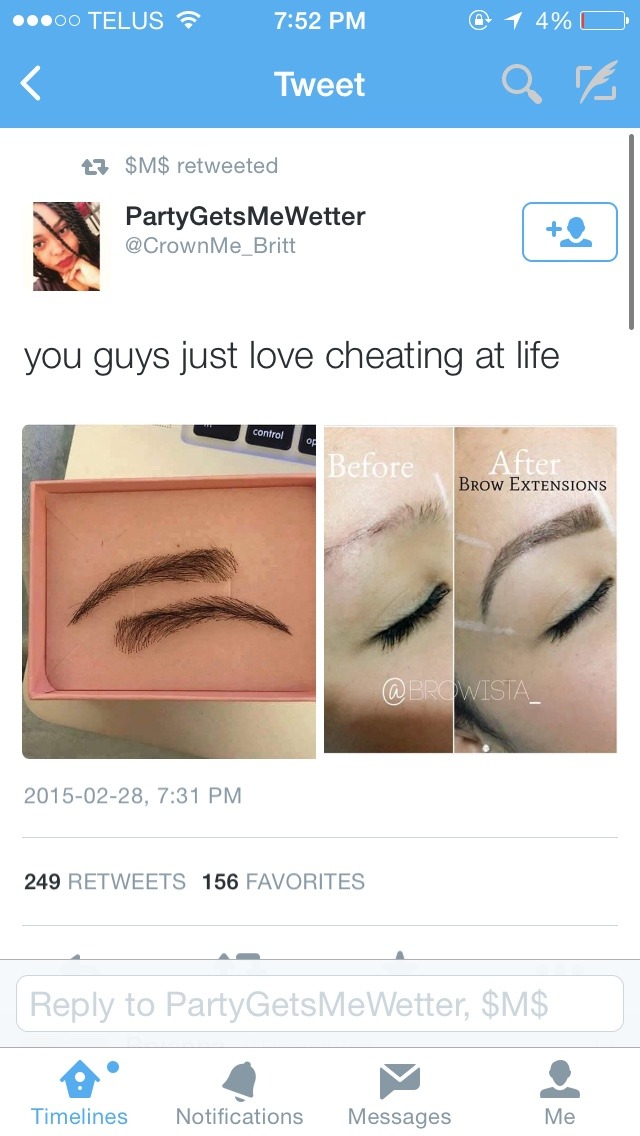
Okay but do you realize how good this is for cancer patients?? People with scars who can’t grow brows??? People with alopecia??? (Sp? ) like… pls stop hating the beauty industry.
people with trichotillomania
Yes to people with trich. One of my roommates reblogged this saying they didn’t even know they made these until they met me. And the sad thing is, I didn’t even know they made these until I did a Google search one night in a fit of desperation. I’ve gone to so many therapists for trich, and instead of providing me resources like this, they would often leverage the fear of looking ugly as motivation to stop. If anything, it only ever made the problem worse.
These save me so much time in the morning. Before I discovered them, I would have to meticulously pencil my brows on every day just to feel normal enough to leave the house. By contrast, I can keep the fake ones on for about three days at a time, and gluing them in place takes only a few minutes with a bit of practice.
I’ve been getting mine from headcovers.com for over three years now. They’re a bit pricier than the ones offered on other sites, but they last 3-4 months if taken care of properly (meaning to buy the site’s adhesive remover as well and clean them after each use). They also look very natural. Everyone who’s talked to me about them told me they didn’t even know my eyebrows were fake until I alluded to such or took them off in their presence.
This sounds like it could be quite useful for some of my readers!!
of course something ignorant was said about this product by the original tweet poster, but
reblogging for the false eyebrow site^^
really thinking about purchasing some.
Going bald during chemo didn’t bother me nearly as much as losing my brows. I’m not sure if it was because I had adorable wigs or just because I was prepared for that part, but nobody tells you how much the color, thickness, and shape of your brows affects your face.
I didn’t even know eyebrow extensions were a thing. Reblogging for my followers with trich and alopecia
i didn’t know chemo makes your eyebrows fall out. that would be so upsetting. i’m glad false eyebrows are a thing.
These are wonderful for people with cancer and or with trich? Cause holy hell that’s amazing tbh.
I hate the fact that most people don’t tend to think about the fact that people with disabilities and disease/need for this might be able to you know, use stuff like this. They assume only people who don’t have issues and or the only issue they have is ‘lol thin eyebrows and u guys get brow extensions why u so extra’ is just…. ugh….
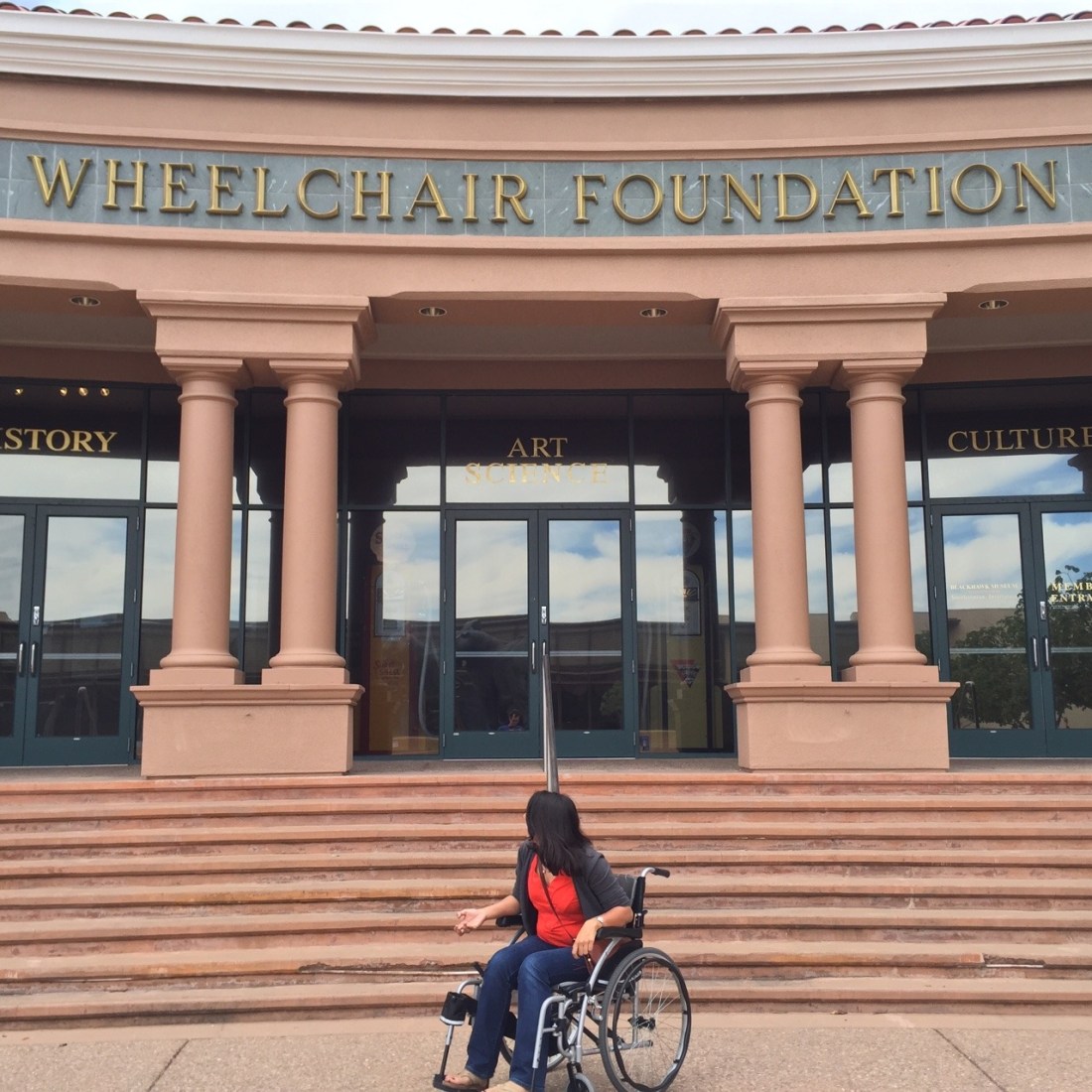
Honestly, I was cracking up when this photo was taken, because it’s just so ridiculous.
There was a ramp, but it was VERY well camouflaged. And when I did finally get in, there were these awful thick carpets that were next to impossible to wheel over.
Basically, no one thought this through.
[ID: photo of a wheelchair user at the bottom of a flight of steps with their back turned, looking up. the building behind them reads in large capital lettering, “wheelchair foundation”.]
See, the problem with people who aren’t in wheelchairs writing about and/or drawing people who are in (manual) wheelchairs is that the people who aren’t in wheelchairs tend to think that there’s only like four movements that you do in a wheelchair. You can either push forward, push backwards, turn left, or turn right. And the characters do it all while sitting up straight or bending forward so that their noses touch their knees.
But the amount of motions that I go through on a daily basis are actually amazing. And the body language…you could write an entire book on the body language of someone in a wheelchair.
Like right now, I’m more relaxed, so I’m slouching slightly. I’ve got my right foot on its footrest and the left foot on the ground. Every so often, as I stop to think of something to say, I’ll push with my left foot to rock the chair slightly.
But usually, I sit mostly upright with my upper-half slightly leaned forward. When I’m wheeling across the campus, especially if I have somewhere that I need to be, I’ll lean and shift my weight in whichever direction it is that I’m going. It helps make the wheelchair glide that much more smoothly. How far/dramatically I lean depends on how fast I’m going, the terrain, if there’s a turn, etc.
Plus people who don’t use wheelchairs don’t understand the relationship between grabbing the wheels, pushing, and the chair moving. Like I’ve seen things written or have seen people try to use a chair where the character/that person grabs the wheel every single second and never lets go to save their lives. Which isn’t right. The key is to do long, strong, pushes that allow you to move several feet before repeating. I can usually get about ten feet in before I have to push again. It’s kind of like riding a scooter. You don’t always need to push. You push, then ride, then push, then ride, etc.
And because of this, despite what many people think, people in wheelchairs can actually multitask. I’ve carried Starbucks drinks across the campus without spilling a single drop. Because it’s possible to wheel one-handed (despite what most people think), especially when you shift your weight. And if I need to alternate between pushing both wheels, I’ll just swap hands during the ‘glide’ time.
I’ve also noticed that people who don’t use wheelchairs, for some reason, have no idea how to turn a wheelchair. It’s the funniest thing. Like I see it written or, again, have seen people ‘try’ a wheelchair where they’re reaching across their bodies to try to grab one wheel and push or they try to push both wheels at the same time and don’t understand. (For the record, you pull back a wheel and push a wheel. The direction that you’re going is the side that you pull back.)
Back to body language. Again, no idea why most people think that we always sit upright and nothing else. Maybe when I’m in meetings or other formal settings, but most of the time, I do slightly slouch/lean. As for the hands…A lot of writers put the wheelchair user’s hands on the armrests but the truth is, most armrests sit too far back to actually put your hands on. There are times when I’ll put my elbows on the edges of the armrests and will put my hands between my legs. Note: Not on my lap. That’s another thing that writers do but putting your hands in your lap is actually not a natural thing to do when you’re in a wheelchair, due to the angle that you’re sitting and the armrests. Most of the time, I’ll just sort of let my arms loosely fall on either side of the chair, so that my hands are next to my wheels but not grabbing them. That’s another form of body language. I’ve talked to a few people who have done it and I do it myself. If I’m ever anxious or in a situation where I want to leave for one reason or another, I will usually grip my handrims – one hand near the front , one hand near the back. And if I’m really nervous, you’ll find me leaning further and further into the chair, running my hands along the handrims.
Also, on a related subject – a character’s legs should usually be at 90 degree angles, the cushion should come to about their knees, and the armrests should come to about their elbows. You can always tell that an actor is not a wheelchair user when their wheelchair isn’t designed to their dimensions. (Their knees are usually inches away from the seats and are up at an angle, the armrests are too high, etc.) Plus they don’t know how to drive the chair.
Let’s see, what else? Only certain bags can go on the back of the chair without scraping against the wheels, so, no, your teenagers in wheelchairs can’t put their big, stylish, purses on the back. We don’t always use gloves since most gloves actually aren’t that helpful (as stated above, wheeling is a very fluid motion and gloves tend to constrict movements). Height differences are always a thing to remember. If you’re going for the “oh no, my wheelchair is broken” trope, nobody really has ‘flat’ tires anymore thanks to the new material for the wheels but it is possible to have things break off. We use the environment a lot. I always push off of walls or grab onto corners or kick off of the floor etc. Wheelchair parkour should really become a thing.
This is all of the physical things to think about. I could write a thesis on the emotional treatment of your characters with disabilities. But for now, I think that I’ll stop here. For my followers in wheelchairs, is there anything that I left out?
Also why isn’t wheelchair parkour a thing? Somebody make wheelchair parkour a thing.
This is all REALLY GOOD and I wish something like this would be in more art guidebooks and classes.
One thing I’d add is that some of the posture stuff here is specific to wheelchair users who have the right chair; a lot of people (hi, past me) have to use chairs that aren’t at all the correct size, and that’s going to change posture, ease of use, etc. That’s such a broad variable that it’s probably useless to try and cover here, but it’s something to be aware of and research if it seems relevant to a character.
and of course, what should be obvious but for some reason the mainstream is unable to grasp it: not all wheelchair users are paralyzed. some are physically completely capable of walking, it’s just painful, or unsafe because of vertigo, or exacerbates a nerve injury, or etc.
i just really need to see someone on tv somewhere at some point stand up from a wheelchair and have it not be an AHA moment that they’re faking
Abled person, staring at my cane: what happened to you
Me: I’m a plot device to show you the meaning of Christmas, brenda, God bless us, every fucking one
I’ve thought, many times, about writing a book or something that was basically How To Negotiate Your Disability Without Curling Into A Ball And Weeping More Than Once Or Twice A Week *Or* Murdering The Entire Universe (More Than Once Or Twice A Week).
Here are some highlights:
1) On acquiring adequate pain medication.
Never actually say “I really need strong drugs here doctor, because the drugs you and every other doctor gave me for this injury/illness didn’t work, and also I’ve been in pain for years and I’d like that to stop.”
While there are some doctors who speak human languages and will understand what you’re saying, most, when you say that, will hear:
“I am a ravening junkie werekaiju, and I will come to your house and EAT YOUR BABIES IF YOU DON’T GIVE ME HEROIN.”
You think I’m kidding? Watch a healthcare professional’s eyes when someone else says something like the following. Watch them shut down and back away and tighten up and generally stop treating the person like a human.
So what do you say?
Try this:
“Well, I hate these drugs that make me *stupid*, you know? One of these so-called doctors — they gave me some pill that made me feel like I was on a whole separate planet for *years*, but I was still in pain! I have things to *do*, doctor. I have a job/family/projects. I wouldn’t be here if I could get my work done the way I am now, but if I can’t do them with the drugs you give me, then what’s the point?”
Make sure to translate this into the appropriate dialect for your area, but note the important points:
a) Reassures the doctor that you’re not one of those ~*eeevil*~ junkies. b) Reassures the doctor that you’re not one of those ~*eeevil*~ non-productive members of society.
c) Reassures the doctor that you’re not one of those ~*eeevil*~ weak-willed disabled people.
Remember not to use too *much* *correct* medical jargon — they get suspicious about that.
Yes, all of this is necessary a *lot* of the time.
With the above code, 95% of the time the doctors begin *cooing* at me and treating me like *royalty* — and *100%* of the time I have gotten the effective medication.
Pro-tip: If you can add a true (or true-sounding) story about how much you *hate* one *particular* opiate (“Percocet is useless! All it does is make me stupid!”), then you’re probably in the bag.
2) Acquiring mobility devices.
Never actually say “I need a walker/wheelchair/scooter, because I have trouble getting around, and also I have a great deal of fatigue and pain when I try to do so.”
While some healthcare professionals speak human languages and have souls… well.
A lot of them? Will hear this:
“I am a fat, lazy, Fatty McFatFat, and I will continue to expand, much like the universe, until I am a drain on the resources of this great nation and a proof that you, doctor, are a failure. I will never use the mobility devices, ever, and they will gather dust in my home — a mockery of everything you, Morally Healthy Person, holds dear.”
Yes, I know this makes even less sense than the former, but I’ve interrogated these people — the ones who have still have partially-functional souls and minds — and this really is how it works in their adorable little pinheads.
They really do think we’re asking for these devices for… no reason at all.
Or, as my otherwise sane GP put it, she has an honest fear that people like us will take one look at our new mobility devices and throw all caution — and sense — to the winds. That we’ll stop stretching and exercising. That those of us who *can* walk for short distances will — somehow! — decide to *never walk again*. That we’ll decide to — gleefully! cheerfully! blithely! — let every last one of the muscles we’ve been clinging to with our *fingernails* *atrophy* to *nothing*, because…
Because they think we’re idiots, that’s why.
So, try this instead:
“I have a lot of pain and fatigue when I try to walk for any kind of distance, at all, and that’s getting in the way of my ability to have anything resembling an active life. It’s even hard to get to my doctor’s appointments sometimes! I want to do at least some of my own shopping and other errands, and go out with my friends, and at least try to hold down a job, but unless the weather is really good and I’m having a good day in other ways, it’s just not going to happen. I don’t want to stop using my cane/walker/whatever completely — and I *won’t* unless I *have* to, just like I won’t stop doing my PT and OT exercises — but I need something that will let me actually have a life.”
Note the similarities to the pain management code — and yes, do make sure you put this in your own words.
But also make sure you keep everything that makes you sound like the Virtuous Handicapable Person you totally are.
Because that’s necessary.
Yes, it is.
Yes. It. Is.
Just as it will be necessary, in many states — make sure you check — to add in this little number:
“It’s just… well, you know that I don’t really have any bladder or GI issues, doctor, but I still… sometimes… on bad mobility days… you know.”
Here’s where you look down.
“Sometimes I don’t make it… you know. In time.”
Understand that you’ll have to repeat this to, like, four different people. At least.
Understand that some of them will make you get specific.
If it helps, pretend you’re Steph Brown, doing her level best to gross the everloving bejeezus out of her P.E. teacher with graphic stories about her period so she can get out of class and fight crime.
*I* certainly found that helpful.
YOU GUYS YOU GUYS YOU GUYS!
My wheelchair has arriiiiiiiiiiiiiived!
I’ve spent the past few hours bumping into everything ever and also running *over* everything ever and I’m so in love I can’t even deal, because!
Chair!
Freedom!
FREEDOM!
I’ll be able to go shopping for necessities even when my legs don’t work enough for the walker or the cane! I I’ll be able to go shopping even when my legs don’t work at all! I’ll be able to go all *kinds* of places even when my legs don’t work!
I won’t HAVE to put all the responsibility on Jack, whose legs barely work any fucking better than mine! Do you understand this? CAN you understand this?
Fuck, I’m tearing up so hard here, and — yeah. This is why I’m reblogging the above. I *know* there are people out there in the U.S. who need this help. People who, like me, have Medicaid insurance — insurance which often feels *damned* theoretical — but still haven’t been able to get the pain management or mobility devices they require.
For those of you in Southern New England, I went through:
Access Rehab Centers — fine PTs, OTs, and speech therapists who will do their *damnedest* to come through for you both in terms of giving you the therapy you need and in filling out the REAMS of PAPERWORK you need. They, in turn, worked with:
Hudson Seating & Mobility — These people are absolute motherfucking HEROES. They come to your home; they measure you gently and professionally; they treat you like human beings; they explain everything about the various mobility devices to you and then ask you *more* questions to winnow down which one(s) would be the *best* fit for you; they *bring* you devices to test-drive; they give suggestions about how to arrange your home for your health, comfort, and safety; they tell you how to get what you need and what you need to say and who the best PTs to talk with are; they go with you to the PT to do more fine-tuning and help fill out the paperwork; they man the barricades when Medicaid tries again (and again, and AGAIN) to screw you —
And then they deliver your baby to your door just as fast as they can.
And, you know? These people all go to conventions and industry meet-ups. They talk to each other. Contact them. See if they can connect you to people in YOUR area.
THEY ARE THE LITERAL BEST.
I? Have been trying to get even a *manual* chair that I’d only be able to use when I had a physically powerful aide to push me around in it since *2005*. My (new as of last December) GP sent me to Access who sent me to Hudson earlier this year and —
WHAM.
Yeah.
YEAH.
PLEASE. PLEASE. TRY TO MAKE THIS HAPPEN FOR YOURSELVES.
YOU ALL DESERVE TO BE EXACTLY AS HAPPY AS I AM RIGHT NOW!
My chair, by the way?
Has green accents.
He’s named Jaybird.
Because he’s JUST THAT MOTHERFUCKING SUPPORTIVE AND INVESTED IN MY COMFORT AND SAFETY AND HAPPINESS AND IF YOU DON’T LIKE IT HE WILL RUN YOUR MOTHERFUCKING ASS OVER UNTIL YOU’RE MOTHERFUCKING CRANBERRY SAUCE.
FUCKIN’ A.
Reblogging because these kinds of scripts are exactly what I have to use in order to get the drugs I take for anxiety. I HATE doctors. I cannot over-state how much.
I hate going to the doctor. I can’t seem to do these scripts no matter how many times I practice, and it’s so frustrating.
Hi, sirida — I popped over to your blog and read your tags on your reblog, and, well, I’ve BEEN THERE! I’m so, so sorry you had to deal with those fuckheads, and it really just sent me back to some horrible places in my medical history.
Here are some things that I should probably make a larger post about Dealing With Your Medical (Un)Professionals:
1) If you *can* go with someone else, *do* go with someone else. Not just anyone else — someone who knows your health issues, and understands your health issues (mental or physical or *whatever*), and believes in you *and* your health issues. This person might be your lover, or your friend, or your fuckbuddy, or the fancreature visiting you from London that week, or your pastor, or WHOEVER.
The important things are that you share a mutual affection and trust with them, that they understand your health problems at least as well as you do, and that they are capable of stepping in to have your back when the asshole doctors/nurses/whoever are giving you shit.
For me, this person is my spouse Jack. We take this role for each other *all the time*. Happily, we’ve reached a point where not *all* of our medical professionals require a tag-team approach, but you better believe some of them do.
*If your medical professional says that you medibuddy cannot be with you when you are having your consultation* (as opposed to, say, your CT scan, or MRI, or X-ray, or whatever — THEY CAN TOTALLY BE WITH YOU FOR YOUR VAGINAL ULTRASOUND, PEOPLE! DON’T BE FOOLED!), then you either put your foot down and tell that fuckwit that they’re dead wrong? Or you explain to them that they aren’t your doctor anymore and you let them watch you strut right out the door.
Motherfuckers.
In my experience? They pretty much always back down and let your medibuddy in.
Good way to find a potential medibuddy: Depending on where you live, your level of disability, your insurance, etc., your statewide nursing organization/general healthcare clearinghouse (here in CT, it’s Husky Health) may be able to provide you with a nurse who will work with you *personally* and either come with you to your appointments, or, after you explain to them over the phone how your doctor fucked the fuck up? They will damned well *call* that fuckwit on your behalf and wreck shit.
Call 211 and see what you get!
Now, once your medibuddy is in the room, some doctors will be utter pricks and like “I need to hear this from YOU.” Or, completely contradicting themselves, they will ignore your protests entirely and yell at your medibuddy — “Now listen here — I will talk to the patient and ONLY to the patient.”
This is where the *real* script comes in:
“Oh, I’m sorry, doctor, but I’ve terrible trouble with anxiety when it comes to health issues, and [medibuddy] knows everything about my condition. I would much prefer it if you talked to them whenever possible. They are, in fact, privy to all information about that.” [Make sure to ask the receptionists out front for documents you can sign which will allow this to be true.]
AND/OR:
“Yes, I know this is against your office policy, but a) it is my right, and b) I feel it would be a much more efficient use of our time if we did this the way which would not end in me crying in pain and/or having a panic attack.” *insert pointed look here*
AND/OR:
“No, doctor, I do *not* need to be admitted into psychiatric care. I simply need you to accede to my wishes and speak to my medical proxy, who is right here. I will answer all questions they cannot, of course, but I prefer — as is my right — for you to direct the lion’s share of questions to them.”
Honestly, though? If they fight past the first scripted answer? You probably need a new doctor anyway.
But yes, politeness, firmness, a *hint* of sarcasm to remind them of your humanity and the fact that you’re a person who is currently calm but who is *capable* of messy, inconvenient, and *time-consuming* emotions?
Yeah, this often works well.
2) If you can’t find a medibuddy/your medibuddy is currently unavailable/your medibuddy is as bad at remembering their lines as you are?
Honey, this isn’t Broadway!
Think of it as more of an open-book exam.
Take notes about *exactly* what you want to say. Write it down. Bullet-point in neat, pithy little catch-phrases if you have the kind of medical professional who actually reads the charts the techs and nurses hand them before they start prodding at you (of course, if you had one of those, you probably wouldn’t need *this*…), or just however is easiest for you or your medibuddy to read if you can’t.
“I have some notes here that I brought to stay organized…”
If the medical professional balks — and, yes, some of them will, because some of them are just that fuckwitted:
“I’m sorry, I have some memory issues, and I wanted to make sure I stayed organized and on-point. I know how busy you are.” *insert cold smile here*
OR
“I often get flustered/embarrassed when I talk about my needs — I hate to whine — and this makes it easier and much, much faster. I hope you understand?” *insert pointedly wide-eyed look here*
OR
“I can be quite forgetful — the last thing I want to do is leave something out and then have to come back a week later and waste everyone’s time!” *insert fake laugh here*
Or something along those lines.
Note how you’re playing to Dr. Asshole’s ego. This? Tends to work. Phrase it in your own words. Put it right on top of your copy of the notes. And your medibuddy’s copy, too.
Though let me be clear — I’ve only had doctors complain about the notes method about 5% of the time. About 10% of the time, they’ve been indifferent. The other 85%? They’ve been downright overjoyed. Medical professionals equipped with still-functioning minds and souls *recognize* the efficiency and utility of this method, and jump right the hell over it.
Especially if it’s typed-up in nice large text.
So, you know, even if you’re *sure* the medical professional you’re seeing is a throbbing pustule on the body politic? Bring a nice, clean, insult-free copy for them just in case.
Re-blogging and signal-boosting, because I guarantee to you, people:
Sooner or later, you will need this. Either you will personally, or your parent/child/signficant other/best friend will. This is part of modern life, one of the major signs of adulthood.
The most valuable thing I learned doing a Masters degree with depression, anxiety and ADHD was to change my “things I’m bad at” list to “things I can’t do on my own.” Stop thinking of them as things I could do if I tried hard enough, and accept that I can’t accomplish them by effort and willpower alone; they’re genuine neurocognitive deficits, and if I need to do the thing, then just like a blind person reading or a mobility impaired person going up a storey in a building, I need to find a different method.
I’m “bad at” working on long-term projects without an imminent deadline or someone breathing down my neck? Okay, let’s change that: I can’t work on long-term projects without an imminent deadline and someone breathing down my neck. So let’s create an imminent deadline and recruit neck-breathers. Find a sympathetic prof who will agree that 3 weeks before the due date they expect me to show them my preliminary notes and bibliography. Get a friend I trust to block off an hour to sit with me and keep asking, “Are you working on your project?” Write a blog post about my progress. Arrange to trade papers and proofread them with another student.
Accept your limitations and learn to leverage them, instead of buying the neurotypical fairytale that they’ll go away if you just try hard enough.
disability parkour- compound noun, /dɪsəˈbɪlɪti/ /pɑɹˈkʊɹ/ 1. The method by which physically disabled people who don’t have their mobility aid navigate their environment, including leaning on things, sitting down on things, asking pedestrians for help, and so on. 2. General- the ways in which all disabled people navigate an environment that is unfriendly for them.
If you do a particularly skilful feat of disability parkour, post it in the #disability parkour tag so I can cheer you on. 🙂











 Kimchi and Justice