Hello, my friend! This is an excellent question.
You’re right: different threads will make your stitches look different. There are really very few hard and fast guidelines about “what thread to use for which stitch in ALL CASES EVERY TIME.”
Embroidery floss (like DMC or Anchor) is a great choice for lots of kinds of embroidery. You can separate the threads and use only one or two plies for cross stitch, surface embroidery, or blackwork, or you can use all six plies for canvaswork or needlepoint. You can give your stitches texture by using textured threads or make them sparkly by using sparkly threads.
Pearl cotton is a great choice for Hardanger embroidery or pulled thread embroidery, as well as for canvaswork and needlepoint. #12 pearl cotton is ideal for Hardanger fillings, pulled thread embroidery, and drawn thread embroidery. #8 pearl cotton is great for Hardanger Kloster blocks or putting buttonhole edges on things you want to finish (like placemats or table runners). #5 pearl cotton works great on canvas and in needlepoint projects, or on large-count Aida fabric to make stockings, bellpulls, or other pieces that are meant to be displayed and have practical use.
Here are some examples of threads that I have for projects from my own stash:
- Regular six-strand cotton thread, both DMC and overdyed, for samplers and other counted projects, as well as for thread painting and stumpwork
- Twisted silk threads, for counted projects
- Flat silk threads, for silk and metal embroidery and for when I want to torment myself (because they look lovely but are a pain to work with)
- Metal and metallic threads for goldwork projects
- Pearl cotton (in white and in various weights) for pulled and drawn thread projects
- Pearl cotton (in lots of colors and in various weights) for same
There are so many different kinds and weights of threads that it’s worth taking some time to mess around with them to see what you like to work with! I would recommend that you take a trip to your local needlework store (or find one when you’re out on a vacation somewhere) and buy some threads that you like. Mess around with them and see what you prefer!
Thanks again for your question – I hope this helps you out!
You also need to take into account a number of other things when choosing thread: 1) your fabric or canvas vs the thread; 2) intended use and care of the finished item; 3) the look you want to achieve; 4) your intended stitches.
To expand a bit: 1) some threads are much more sturdy than others for repeatedly being drawn through fabrics, and some fabrics are harder on threads than others. I work a lot with denim and cotton wovens, and tightly woven silk fabrics, as well as knits. Very fine lightly twisted threads (some silks and silk/wool, or alpaca, etc.) don’t stand up well to being repeatedly drawn through denim and cotton, but are great for looser weaves and canvas. Cotton flosses–like DMC–and finer weights of perl cotton are very sturdy and do well with denim and tightly woven fabrics. Rayon flosses do better with smooth fabrics, and may fray and shred when used with some of the rougher canvases or with very stiff denim and acetates. Bamboo and tightly twisted silks play well with most fabrics, but can fray at the needle eye, so require shorter working lengths.
2) For items to be worn and washed, or that will get potentially repeated abrasion–cuffs, collars, purses, etc.–cotton is probably the sturdiest and stands up well to washing and drying, as do many tightly twisted silks and most rayons (altho you have to watch for color bleed and possible shrinkage with rayon and some silks). Nylons do well too, if dried at low heat or air dried. Metallics and textured flosses generally don’t do well with repeated washing and drying, in my experience. Regular sewing thread is superb for very fine work that is sturdy and wearable. If a piece is to be displayed only, then the sky’s the limit and you can use anything, as long as you are aware of light exposure that can cause thread color to fade in time.
3) For shine, rayons and silks are awesome, as are metallics. DMC cotton floss has a shine to it, but it’s very low key. Textured threads can be used for all kinds of depth and effects, including three dimensional looks. Some flosses have a wide color range, good for color blending, and some don’t. Any floss or thread or ribbon can be couched on the surface as well.
4. Some stitches are easier with certain types of floss than with others. I mainly do freehand embroidery, not counted cross stitch or needlepoint, so my experience may be different, but cotton flosses are great for most stitches, except some Brazilwork. Rayon works more smoothly for those knotted/3-D stitches because the thread is smoother and glides better along the needle. Stitches that repeatedly go into the same place, like eyelets, some knotwork, etc., may need a sturdy thread, while tiny repeated stitches work better with fine silks. The type of stitch you’re planning on using, combined with the type of fabric, may determine which thread or floss you choose as well.
But there really are no hard-and-fast rules. If you try it and it works, and you can get the look you’re after, then it’s all good.
A fantastic (and expanded) contribution to the question that was asked earlier!
Tag: fiber geek
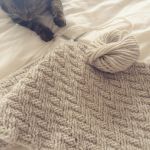
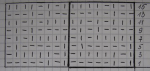
What a lovely knitting stitch! Pattern found over at Knitting&Crochet Obsession.
Key l = Knit — = Purl
Cast on a multiple of 16 stitches. Knit according to the diagram. Start at the bottom right corner. When knitting the wrong side of the scarf just follow the pattern of the previous row. Repeat every 15 rows. It’s just that simple!
I really appreciate how many traditionally feminine crafts boil down to: “here, please stab this thing several thousand times.”
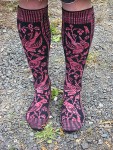
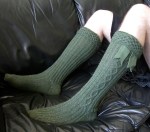

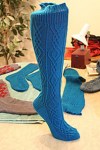
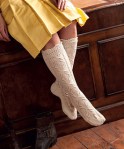

Because socks.
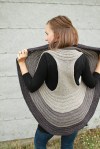

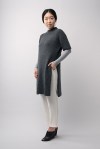
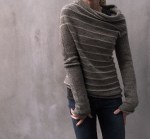

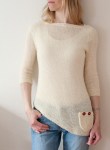
Decided to focus today’s collection on difficulty. All of these are rated as easy on Ravelry. Easy to make doesn’t have to mean boring to look at.


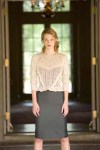


All of these are from my favorites on Ravelry.
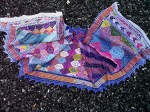
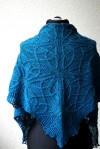
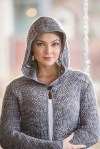
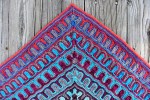
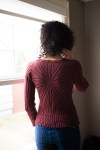
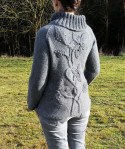
And on to the level sevens on the Ravelry difficulty rating.
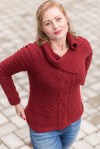
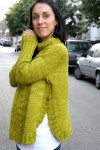
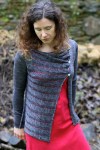
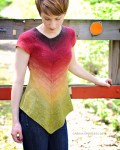
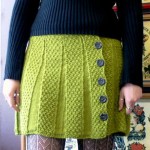
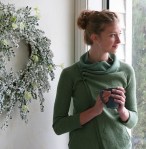
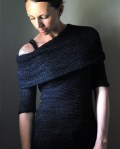
Ravelry has a difficulty level system that’s 1-10. Yesterday’s patterns were all level twos. Today’s are all level threes. A little bit more challenging, but still definitely on the easy side.
Watching Tudor Monastery Farm (yay comfort!) and it does totally strike me as a thought re clothing – was it just that dyes were very expensive that there isn’t (much?) dyed clothing for people or is it also a class thing? (Things I know – purple was a royal colour & cloth of gold was only for the nobility)
There were sumptuary laws that prohibited the wearing of certain fabrics and colours, yep. There’s also the part where most dyes faded pretty quickly; the nobility loved to wear black because there was no colourfast black then, so if something was black it couldn’t be very old or washed very many times.
(Also why I always make a face when someone in The Tudors is wearing a black doublet and nothing under it–by the end of the day their skin should be stained grey.)
Wow was fur a serious mark of status! (Also velvet it seems. And oh I’m reminded of reading a book in which the peasants daughter wore green and gold)
Fur came from hunting, and hunting was also reserved exclusively for the nobility! Which is also why in England it was deemed classy to stuff your house full of taxedermied deer heads–you had to have special status to come by that stuff. (But I’m from North America, land of Dead by Moose, where decorating with antlers and hunting a lot is a big sign of being rural and poor, so it always takes me a minute to remember that.)
Green and yellow were super easy dyes to make. You can dye stuff yellow with onions! It’s really pretty.
Australia as well ‘putting animals heads on wall/hunting’ is definitely the rural/poor thing. And oh, for some reason I thought the hunting only for the nobility was not a thing (or commoners could hunt on lands that weren’t owned by anyone) – which is silly because even in Victorian England that was a thing.
OOOOH 😀 (All kinds of vegetable and flower dyes?)
(I really do want to write a thing about a tenant farmer family on one of the estates granted to Anne Boleyn now. Just because contrasts interest me)
/Babbly glee
Dyeing was one of those things I’ve always had acquaintances who were crazy about, but I’ve never been crazy about myself. Here’s some stuff on medieval dyes: here and here.
 Kimchi and Justice