


Now, where’s the best place in the world to discover an entirely new species?
Basically, your own garden.
You may say, “Ah ha, there won’t be anything in my garden that hasn’t
been discovered.” You would be amazed. In 1971, Jennifer Owen, a
biologist, did a very long-term study of her ordinary garden in a
suburban house in Leicester. She discovered 533 species of ichneumon
wasp, just that family of parasitic wasp. Fifteen of these had never
been recorded in Britain; four of them were completely new to science.
In a suburban garden. So, in your garden, if you have a garden, there
will be things.
Gilbert White, the naturalist, said that nature is so full and so varied
that if you want to find the place with the most variety, it’s the
place you most study. It almost doesn’t matter: Just take a piece of
land and look at it hard enough.
The above moment from QI has stuck with me for years: I think of it almost every time I am outside.
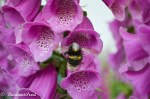
Accordingly, here are some of the bees I’ve observed in my garden. I’ve identified a few, but not with much confidence. I am hoping to get a proper book that goes into more depth about the 250+ species here in Denmark.
I have recorded almost 500 species of plants and animals in the garden to date, and over half of them are moths. Gardens are amazing reservoirs of diversity. Really.
WITHOU T DISTURBING THE BEES THAT IS FANTASTIC BEES ARE GREAT
You don’t understand how fabulous this is!!
This hive structure, if it works like the descriptions imply, would make beehives something super affordable, that just about anyone could install near their home and maintain. AND it would reduce the cost of harvesting honey by more than just the money-
A typical honey harvesting device costs $200-300, plus the time it takes to use to harvest. For a Langstroth hive, you have to suit up (gear which can be pricey), remove the comb (which is highly disturbing to the bees), install said comb in the extractor (scraping all the caps off the comb first), spin out the honey, RE-open the hive (after suiting up and again disturbing the bees), and put the comb back.
If you use a method that doesn’t require an extractor, you usually end up destroying the comb, which is damaging to the hive and intensively laborious for your bees because they have to completely remake the combs from scratch.
What this looks like is that you probably wouldn’t even need to suit up any time you wanted to harvest honey (though you would still need the equipment for installation of the colony and for inspections, etc, or if you’re still getting used to the colony). Removing the viewing window on a hive doesn’t disturb the bees at all (ours hardly even notice us), and the shift in the comb to start extraction is unlikely to cause enough disturbance to merit a response.
The bees get to keep/recycle all the materials they created (aside from the honey), and you get fresh, almost-effortless honey.
Perhaps the most important and AWESOME thing about this?? The “Flow Frames” that allow for this type of extraction can be used with pre-existing hive boxes. This means that folks who already own bees that are being kept in most kinds of hives, especailly the standard Langstroth hive boxes, can replace their old frames with Flow frames without having to start from scratch.
The Indiegogo campaign to start production on these launches in just a few hours (11AM AU EST, Feb. 23rd, 2015), so if you want to help these folks revolutionize bee-keeping, I would suggest signing up for their mailing list!