“Authors can’t use it in fantasy fiction, eh? We’ll see about that…”
–Terry Pratchett, probably
Try to implement anything but a conservative’s sixth grade education level of medieval or Victorian times and you will butt into this. all. the. time.
There was a literaly fad in the 1890′s for nipple rings for all genders(and NO, it was NOT under the mistaken belief that it would help breastfeeding–there’s LOTS of doctors’ writing at the time telling people to STOP and that they thought it would ruin the breast’s ability to breastfeed well, etc). It was straight up because the Victorians were freaks, okay Imagine trying to make a Victorian character with nipple rings. IMAGINE THE ACCUSATIONS OF GROSS HISTORICAL INACCURACY
people just really, REALLY have entrenched ideas of what people in the past were like
tell them the vikings were clean, had a complex democratic legal system, respected women, had freeform rap battles, and had child support payments? theyd call you a liar
tell them that chopsticks became popular in china during the bronze age because street food vendors were all the rage and they wanted to have disposable eating utensils? theyll say youre making that up
tell them native americans had a trade network stretching from canada to peru and built sacred mounds bigger then the pyramids of giza? you are some SJW twisting facts
ancient egypt had circular saws, debt cards, and eye surgery? are you high?
our misconception of medieval peasants being illiterate and living in poverty in one room mud huts being their own creation as part of a century long tax aversion scam? you stole that from the game of thrones reject bin
iron age india had stone telescopes, air conditioning, and the number 0 along with all ‘arabic’ numbers including algebra and calculus? i understand some of those words.
romans had accurate maps detailing vacation travel times along with a star rating for hotels along the way, fast food restaurants, swiss army knives, black soldiers in brittany, traded with china, and that soldiers wrote thank-you notes when their parents sent them underwear in the mail? but they thought the earth was flat!
ancient bronze age mesopotamia had pedantic complaints sent to merchants about crappy goods, comedic performances, and transgender/nobinary representation? what are you smoking?
The Image of the Black in Western Art Research Project and Photo Archive, W.E.B. Du Bois Institute for African and African American Research, Harvard University
I honestly always find the term ‘spinster’ as referring to an elderly, never-married woman as funny because you know what?
Wool was a huge industry in Europe in the middle ages. It was hugely in demand, particularly broadcloth, and was a valuable trade good. A great deal of wool was owned by monasteries and landed gentry who owned the land.
And, well, the only way to spin wool into yarn to make broadcloth was by hand.
This was viewed as a feminine occupation, and below the dignity of the monks and male gentry that largely ran the trade.
So what did they do?
They hired women to spin it. And, turns out, this was a stable job that paid very well. Well enough that it was one of the few viable economic options considered ‘respectable’ outside of marriage for a woman. A spinster could earn quite a tidy salary for her art, and maintain full control over her own money, no husband required.
So, naturally, women who had little interest in marriage or men? Grabbed this opportunity with both hands and ran with it. Of course, most people didn’t get this, because All Women Want Is Husbands, Right?
So when people say ‘spinster’ as in ‘spinster aunt’, they are TRYING to conjure up an image of a little old lady who is lonely and bitter.
But what I HEAR are the smiles and laughter of a million women as they earned their own money in their own homes and controlled their own fortunes and lived life on their own terms, and damn what society expected of them.
I hope this a shit post cause that’s not even close to being true.
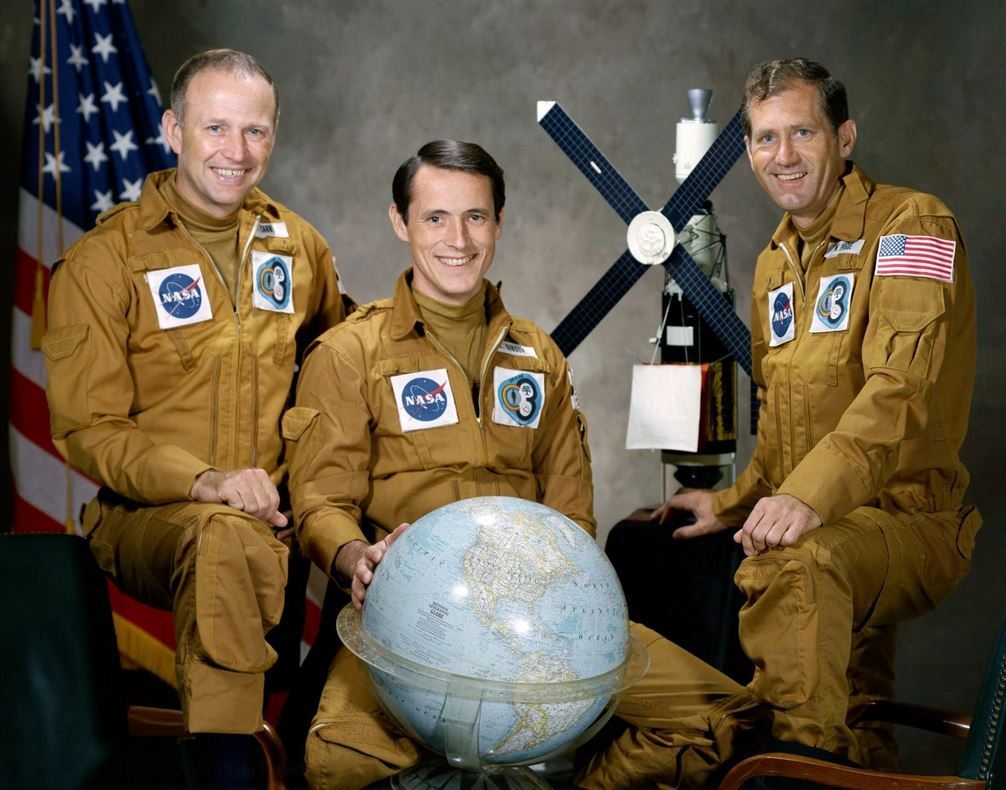
Happy Labor Day. Today I learned about probably the first strike to happen IN SPACE.
[image is of three white men wearing brown NASA uniforms, posing with an American flag, a model of a space station, and a globe.
Text reads: “Early Labor Day post:
In 1973, three astronauts (Gerald P. Carr, Edward G. Gibson, and William R. Pogue) staged a strike in space on the US space station Skylab. Every hour of their day had been scheduled for weeks. They were given no time to rest. They told mission control to fix that and stopped talking to them for a day. As a result, astronauts now have time to rest between mission tasks. However, in an act of clear retaliation, none of the “mutinous” astronauts were allowed to fly into space again. They are largely unrecognized, despite the fact that the Space Strike is arguably the first assertion of human rights against authority made in space. These men deserve to have their names written into the stars as the people who helped make space a place for humans to be human. I’m going to make this a project to have either the US or International space halls of fame recognize their contributions.”]
(I added links to the men’s wikipedia pages)
Apparently Carr and Gibson are still alive (Pogue died in 2014). Hey @nasa, how about organizing a public honor for them? At minimum, how about updating their NASA biographies to include information about the strike?
Medieval ruins found under high school gym in Finland
Located adjacent to the Aboa Vetus history museum, also built over medieval ruins, the plot on which the Cathedral School stands has been the site archaeological digs for the past three years.
That was a big problem with the Qin dynasty. So many things were punished by death that not only did officers often find themselves on the run and in minor rebellions, but had many willing recruits because the only other option was execution.
Remember, if it seems like you’ve fucked everything up and have nowhere to go, you can always SEIZE THE MANDATE OF HEAVEN
another weird thing about beer is that it has weird masculinity connections to it. “ya i’ll get a beer, i don’t want none of them girly drinks” Jimothy, you’re drinking wheat juice with a 5% alcohol content and my mixed, fruity, “girly” drink is 40% alcohol and tastes great
O.KAY *CRACKS KNUCKLES* I AM ABOUT TO GIVE YOU AN EDUCATION
BEER IS TRADITIONALLY A WOMAN’S DRINK, IT IS THE MOST FEMALE OF ALL OF THE DRINKS. FOR THOUSANDS AND THOUSANDS OF YEARS, BEER WAS MADE AT HOME BY WOMEN, TO BE CONSUMED BY WOMEN AND CHILDREN–IT WAS ACTUALLY A SOURCE OF NUTRIENTS FOR MANY HOUSEHOLDS. WOMEN CREATED THE CRAFT OF BEER, AND FOR MOST OF HUMAN HISTORY THAT IS WHO YOU’D BUY IT FROM: MANY WOMEN MADE ADDITIONAL INCOME BY BREWING AND SELLING BEER FROM HOME. IT WASN’T UNTIL THE ERA OF INDUSTRIALIZATION THAT BEER BEGAN TO BE BREWED IN FACTORIES. AND ONCE BEER WAS BEING BREWED ON A LARGE SCALE, IT MADE TO START MARKETING IT TO ALL THE MALE FACTORY WORKERS WHO SUDDENLY HAD EXTRA INCOME. HENCE AN AGGRESSIVE MARKETING CAMPAIGN TO RE-BRAND BEER, A DRINK INTRINSICALLY TIED WITH WOMEN’S HISTORY, AS A ‘MASCULINE’ BEVERAGE.
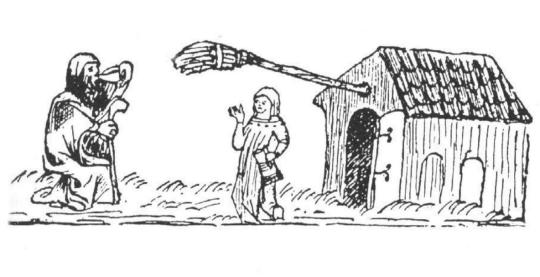
EVEN BETTER, FEMALE BREWSTERS WERE THE ORIGINAL WICKED OLD WITCH. THE TROPES WE COMMONLY ASSOCIATE WITH STEREOTYPICAL WITCHES ARE ACTUALLY BASED ON THE TRADITIONAL BREWSTER. CAULDRONS & HOT STEAMING POTIONS = BEER BREWING. THE WITCH’S HAT: BELIEVE IT OR NOT POINTY HATS WERE ACTUALLY WORN BY BREWSTERS WHEN SELLING THEIR PRODUCT AT MARKETS: THE ENORMOUS HEADGEAR HELPED THEM STAND OUT, AND CLEARLY TOLD EVERYONE ‘YO MOTHERFUCKA GET YOUR BEER HERE’.
CATS AS FAMILIARS: CATS WERE COMMONLY USED TO PREVENT RODENTS FROM GETTING INTO THE WHEAT. EVEN THE BROOMSTICK IS RELATED TO BEER: A BUNDLE OF TWIGS RESEMBLING A BROOM WAS USED AS AD FOR ALEHOUSES
so basically, beer is the ultimate woman’s and witch’s drink
REBLOG ME
fuck u guys, i didn’t spend 20 min fact checking for 3 notes
I am impressed at this much knowledge
Also, anthropologists say there is much evidence that women invented agriculture, and that the first semi-permenant agricultural villages were established for the primary purpose of facilitating beer-brewing.
That’s right: Civilization was invented by women. For beer.
I love this. Everything toxic about western male identity can be traced back to some sort of caveman ad campaign.
LISTEN UP MY BITCHES THERE IS MORE!
i love it when sexists use caveman ‘it’s just biology’ to justify misogyny because there’s growing evidence that ancient humans split childcare evenly. to be precise, men were probably in charge of majority of child care, due to the fact that through pregnancy women already put in disproportionate effort to reproduction: even distribution of labor is evolutionarily advantageous.
a lot of what we ‘know’ about ancient humans is the interpretations of male scientists looking at the past through the lens of a modern patriarchal society. as womens’ voice become more heard, within and outside of the field, we’re getting new interpretations that are based on science and not prejudice.
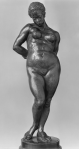
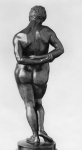
ancient ‘Venus’ figurines, some of the oldest artworks in existence. so named for the ‘ideal woman,’ the roman goddess of beauty, as it was assumed they were made through male carvers (google ‘the male gaze’), and therefore erotic.
NOPE
a newer (and way more compelling) theory is that they are self-depictions by female artists. ancient humans didn’t have mirrors, obviously. notice the way the breasts and stomachs bulge? that’s what happens when you look down at your own body. instead of the male gaze, these figurines come from the female’s self-gaze, so to speak–it is from women’s literal viewpoint of their own bodies.
society insists on sexualizing women, but these statues were probably meant to reflect womanhood, fertility, and motherhood.
most of history is written and interpreted by men. it’s not that men have more influenced the world, it’s that the spectacular contributions of women have been erase. Women’s absence in history is artificially created by men.
Millionth thought about “Burn” I’ve had this month: Eliza goes for Hamilton’s jugular – but not by repeating the insults we’ve heard before, (arrogant, loud mouthed, obnoxious, son of a whore, bastard, etc…) She rips Hamilton up on the thing he’s most known for, what he’s most proud of – his WRITING. His SENSELESS sentences, his SELF OBSESSED and PARANOID tone. She’s tearing him up about not just the CONTENT of the Reynolds Pamphlet, but the way in which he wrote it. She takes the time in the middle of her rage to mock his style, which is such a rap battle move.
And what is she going to do with all of the beautiful writing he gave her over the years, his letters?
Burn them.
I think about this LITERALLY of the time. About how she pushes the button she knows will kill him.
“not only did you totally drag our names through the mud, and ruin our reputation, it wasn’t. even. your. best. work.”
^^^^^^^^^ killed ‘em ^^^^^^^^^
Okay but that isn’t even the most hardcore part:
The entire play is a fourth wall-breaking battle for narrative control of personal and professional legacy. That’s what it’s about. Conventional wisdom — and basic logic — states that history is written by the winners. Hamilton: An American Musical shows us the battle for that proverbial quill.
Literally the first song tells us “His enemies destroyed his rep/America forgot him” because up until the release of this play, Alexander Hamilton’s legacy was mostly overlooked by the average American, largely thanks to folks like Jefferson and Madison underselling his contributions after he died.
(This is also why Jefferson isn’t shy and awkward in the play. While that would have been historically accurate, the point is that the modern perception of Jefferson is that he’s a Big Fucking Deal. Because he made himself look that way.)
So the characters on stage are constantly fighting to make their version of events the version of events.
Burr is the narrator because this is his opportunity to tell his side of things. “History obliterates in every picture it paints, it paints me in all my mistakes.” He’s saying that in the end he LOST the fight for narrative control. And yet — and here’s the fucking amazing part — the mere act of explaining this to the audience CHANGES OUR PERCEPTION OF BURR and alters his place in history. God Lin is too smart for his own goddamn good.
(“History has its eyes on you,” Washington says, putting a very fine point on things. And if you don’t think he also means there’s an audience sitting watching this play, you’re not paying attention.)
So, let’s talk about Alexander, his obsession with legacy, and his tried and true method for controlling the narrative:
Writing.
In “Hurricane” he says “I’ll write my way out! Write everything down far as I can see! … Overwhelm them with honesty! This is the eye of the hurricane, this is the only way I can protect my legacy!”
“It doesn’t work” you might say, going by the contents of “The Reynolds Pamphlet.” Except… it kinda does. “At least he was honest with our money!” the company sings. Which was really Alexander’s main concern, after all. Think of his priorities in “We Know” where his first instinct is to gloat because “You have nothing!” It’s not until a beat later that he even considers Eliza.
He published the Reynolds Pamphlet because he didn’t want people to think he was disloyal to the United States. His concern was with his professional legacy. And in that sense… he succeeded.
(He succeeded in another way, too. Listen to “Say No To This.” (God I could write a 40 page paper on that song alone.) This is where we actually hear the contents of the Reynolds Pamphlets. And how does the song begin? With Burr explicitly handing narrative control to Alexander Hamilton. “And Alexander’s by himself. I’ll let him tell it.”
Every line of dialogue from Maria is prefaced with Hamilton saying “she said.” That’s because HAMILTON IS WRITING HER DIALOGUE. Hamilton is creating this character of a sultry seductress in red, coming to him when he was weak and luring him to adultery. Maria Reynolds in the play not a character, she’s a fantasy, created to excuse Hamilton’s transgressions.
It’s worth noting at this juncture that Maria Reynolds, the real woman, wrote her own pamphlet. No one would publish it. She was silenced. And Hamilton’s depiction of her as a morally corrupt temptress became the dominant narrative.
So suck on that literally any time you want to fucking blame Maria for Hamilton’s affair: good job, you’ve bought into a serial adulterer’s lies about a battered woman. Also don’t do that, I swear to god I will come for you.)
SO. What does any of this have to do with Burn?
In the very end, it’s revealed that it wasn’t Jefferson or Burr or Hamilton in control of the Almighty Narrative.
It was Eliza.
The very last second of the play is Alexander Hamilton turning Eliza to face the audience. She sees the people watching, and she gasps. Because she did this. She’s the reason this play exists. She’s the reason Lin Manuel Miranda is telling us a damn thing about Alexander Hamilton, she’s the reason Hamilton got a massively popular zeitgeist musical.
Now. Throughout the course of the play Eliza sees all these people weaving their important stories and she thinks she’s somehow… outside. She’s not a statesman, she’s not brilliant like Angelica, she’s just a wife and a mother and she has no place among these giants. At one point she LITERALLY ASKS HER HUSBAND TO BE INCLUDED I’M GONNA SCREAM.
And yet she never had to ask. She was in control the whole time.
And how, how did she do it? How did she “keep” Alexander’s “flame?” By collecting and preserving everything he WROTE, of course. Making sense of it all. She spent fifty years on the project. Everything she collected BECAME THE NARRATIVE.
But you know what wasn’t in there?
That’s right: those letters she burned.
So she didn’t just insult him, oh noooo. Eliza WHOLESALE OBLITERATED A PIECE OF ALEXANDER HAMILTON FROM THE NARRATIVE.
And not just any piece. “You built me palaces out of paragraphs, you built cathedrals,” she sings. In “Hurricane” Hamilton lists his letters to Eliza among his greatest accomplishments, (conflating his writing them with actually BEING HER HUSBAND, god what a self-centered prick). “I wrote Eliza love letters until she fell.”
Eliza says: “I’m burning the memories, burning the letters that might have redeemed you.”
The best pieces of Alexander Hamilton: gone.
God I’m gonna go curl up in a ball and freak out about this some more. FUCK.
Excellent discussion here. One fine point, though. I read an article that indicated Maria did have a publisher who was basically itching to publish it, was holding on to it till she felt the time was right, and she never did. Men defended their honor with pamphlets. Women had virtue, not honor, to defend. As we can well imagine, publishing a pamphlet about her extramarital affair could have backfired mightily for her, so it’s easy to understand why she never did. Instead, she regained her virtue by marrying an honorable man. I don’t think there was a deliberate effort to silence her. Hamilton’s enemies would have loved to publish something like that, and a publisher would have had dollar signs in his eyes. I could be wrong, because I don’t have the article on hand to check, though.
Medrano noticed that the way each cord was tied onto the khipu seemed to correspond to the social status of the 132 people recorded in the census document. The colors of the strings also appeared to be related to the people’s first names. The correlations seemed too strong to be a coincidence. After spring break, Medrano told his professor about his theories.
“I just remember being pretty excited, that, ‘Wow! I think the guy’s got it,’” Urton says. “There were a couple of things that didn’t add up and I’d point that out and he’d take it back and work on it for a week or two and come back and he would have understood something about it at a deeper level.”
Medrano worked with Urton over the next several months and the two compiled their findings into a paper which will be published in the peer-reviewed journal Ethnohistory in January. Medrano is the first author on the paper, indicating he contributed the bulk of the research, something Urton notes is extremely rare for an undergraduate student.
Sabine Hyland researches Andean anthropology at the University of St. Andrews. She has read Medrano and Urton’s forthcoming paper and describes their discoveries as “thrilling.”
“Manny has proven that the way in which pendant cords are tied to the top cord indicates which social group an individual belonged to. This is the first time anyone has shown that and it’s a big deal,” Hyland says.
Urton is now optimistic that the six khipus examined in the research could serve as a key to decode the hundreds of others he has in his database. The colors of the cords as they relate to first names could hint at the meanings of colors in other khipus, for example.
“There’s a lot we can draw on from this one case,” Urton says.
But what’s most exciting to Urton and Medrano is the potential to better understand Inca history from the indigenous point of view. As Medrano puts it, “history has been written from the perspective of the conquerors and to reverse that hierarchy is what I see this project as doing.”
Freddie Mercury (debatable, but considering he had had a long-term relationship with Mary Austin and he tended to keep quiet on matters of his private life, we’ll never know for sure)
All or which have either been given the name “gay” or “straight“ by the media despite coming out. There are more than two sexualities and this is a fact that most people (even on Tumblr nowadays) forget. People tend to assume that since someone is with a person of the same gender, they’re gay. (Or vice versa in Angelina or P!nk’s case) This is incorrect to assume because you’re erasing their identities in the process. The people on this list aren’t gay or straight, they’re bisexual.No matter how much the media tries to erase that.




 Kimchi and Justice