star-anise:

Today Google is honouring Charles Perrault.

Since i had to be reminded, here’s a friendly reminder that I HATE CHARLES PERRAULT AND EVERYTHING HE STANDS FOR.

Which is, basically, being a guy and sauntering in at the tail end of more than a century of aristocratic women developing a rich aesthetic and literary culture that uses fairy tales to talk in a coded fashion about politics and gender…

Rewriting a lot of those tales to be sexist as fucking fuck…  (Seriously, the moral he appends to Bluebeard is “Curiosity has ruined many a marriage”)

Attributing the tales to an old peasant woman telling stories to children and failing to acknowledge the incredibly educated and refined women* he stole those tales from…

AND THEN BEING PRESENTED AS THE FIGUREHEAD OF THE ENTIRE MOVEMENT.

*Not because the tales would be less awesome if they were authentic peasant stories, which some collected stories are–but Mother Goose effectively obliterates the actual authors Perrault was working from, the precieuses, as role models for female writers.

YES I WANT TO TALK ABOUT CITIZENSHIP AND BLOOD RIGHTS AND WHAT THAT SAYS ABOUT ATTITUDES TOWARDS EXTRAMARITAL AFFAIRS AND BY EXTENSION FEMALE SEXUALITY DO IT DO THE THIIIIING

latining:

OKAY! I do NOT have access to JSTOR or any of my textbooks/notes since I moved, so this is all from memory. Classics side of Tumblr, spank me with sources.

So the thing about citizenship is that it’s important for a whole host of reasons. You need to know who to tax, who to back politically and financially, and whether or not that smashed cart is an international incident. (Well, international as far as city-states go. ANYWAY.) As such, the leaders of city-states had a vested interest in knowing who was a citizen.

The Speech Against Neaira (Wikipedia, Greek text, English text) is a speech from the Athenian courts that claims Neaira was a Corinthian courtesan who married an Athenian and proceeded to pass her children off as full Athenian citizens. Under Athenian law, citizenship only counted if both parents were Athenian citizens. Neaira’s past jeopardises not just herself, but her entire family. Let us also consider The Murder of Eratosthenes (Wikipedia, Greek text, English text), a murder trial which hinges on the Athenian distinction between (and attitudes towards) seduction and rape. To summarise Athenian attitudes, rape is crime of passion against one’s property, whereas seduction is the systemic corruption of the family unit and by extension the city-state itself. Yikes.

Given this context, it is easy to understand the excessive misogynistic suppression of Athenian women. But what about the other city-states?

Thebes, Corinth, and Argos had much more reasonable citizenship requirements, usually requiring one parent to be a citizen. This makes sense, as it was common for men to purchase their favourite courtesan and either marry them or integrate them into their households. For heterosexual unions, it’s natural to want any offspring to have the benefits of citizenship and inheritance, so as long as one parent is a citizen, the child is granted citizenship. (Citizenship laws varied; sometimes marriage conveyed citizenship to the wife (or not), some local cultures required a physical inspection, etc.)

Basically, outside of Athens, infidelity was regarded as a personal affront instead of a political threat. Culturally diverse attitudes to sex work, religion, parenthood, and the gender divide mean that Athenian writing cannot and should not be used to generalise for all of Greece. I don’t have any sources offhand, but lots of Greeks thought it was pretty fucked up the Athenians married twelve year old girls.

Finally, most of what we know of other city-states comes from Athenians writing about those stupid backwoods people with their dumb loose morals and stupid buttfaces. I cannot for the life of me understand why serious academics take it as gospel.

I’m kind of skeptical for asking this because there has been so much information that had come out about Laurens to be false, but do you have any actual evidence that he might have been queer! Also, love your blog. Followed immediately!

john-laurens:

*pulls out several binders of information regarding Laurens’s non-heterosexuality and drops them with a loud thud in front of you*

I have plenty of evidence as to why Laurens was likely queer (I think he was gay, but if you think he may have been bisexual or something else, I’m cool with that too).  Here we go –

On October 13, 1767, Henry Laurens wrote the following to James Grant:

Master Jack is too closely wedded to his studies to think about any of the Miss Nanny’s I would not have such a sound in his Ear, for a Crown; why drive the poor Dog, to what Nature will irresistably prompt him to be plagued with in all probability much too soon.

John was born on October 28, 1754, so he was just a couple of weeks shy of being 13 years old when this was written.  Thirteen is a typical age for people to be going through puberty and figuring out who they are (and aren’t) attracted to, so the fact that John has shown zero interest in girls at this point (and for his whole life, really) suggests that he likely wasn’t attracted to them.  I understand that sexuality is fluid and that this isn’t 100% definitive, irrefutable proof that Laurens was gay, but I do think it is an important piece of information from John’s early teenage years.

John also didn’t form many close relationships with women.  He was close with his sisters and other female family members, but outside of that, he didn’t really seem to interact with women.  Even Massey acknowledges this in his biography of Laurens:

In Geneva John worked hard, but he did not let his studies prevent him from forming close ties with fellow students and teachers.  It marked the beginning of a pattern: he continually centered his life around homosocial attachments to other men.  A handsome young man, properly genteel in his comportment, intellectually stimulating in his conversation, John never had difficulty attracting women and men.  Women played important roles in his life, but he reserved his primary emotional commitments for other men.

Of course Massey, being the homophobe that he is, classifies these relationships as “homosocial,” but the point still stands that John enjoyed spending most of his time with men.

Now we get to John’s relationship with Martha Manning.  A lot of historians like Massey like to use his marriage to Martha as absolute proof that Laurens was straight.  There are a lot of issues with that.

1. We have no idea what went down in the bedroom on the night(s) John and Martha had sex.  It is quite possible (and, in my opinion, the most likely explanation) that Martha led their bedroom activities and that John followed in the hopes that he could convince himself that he could love/have sex with a woman.  Heterosexuality was the only acceptable sexuality then, so John likely would have felt compelled to hide his queerness and put on an appearance of heterosexuality in order to be accepted.

2. Laurens wrote to his uncle that he married Martha out of pity for her situation:

I should inform you of an important change in my circumstances_ Pity has obliged me to marry_ but a consideration of the duty which I owe to my country made me choose a clandestine celebration, lest the father should insist upon my stay in this country as a condition of the marriage_ the matter has proceeded too far to be longer concealed, and I have this morning disclosed the affair to Mr. Manning in plain terms_ reserving to myself the right of fulfilling the more important engagements to my country.  It may be convenient on some accounts that the matter should be kept secret till you hear next from me, & you will oblige me by keeping it so.

Laurens clearly married Martha to preserve the honor of her and their child.  Laurens had quite an obsession with honor, and he could not allow himself to dishonor these people.  But Laurens left before his daughter was born, making it clear that he cared more about his country than his new family.  Laurens would never see his wife or child again.  Martha would die near the end of 1781, and Laurens would die in August 1782.  He did make some attempts to bring them over the America, but since their countries were in the middle of a war, this was difficult.  He seems to have only written a few letters to her during the war, and we only have one that survived.  It also seems that Martha wrote him more often than he wrote to her. And even though John was in France in 1781 (before Martha died) to gain more aid from France, it does not appear that he made any attempt to meet with his wife or daughter during this visit.

Now we get to everyone’s favorite 18th century bisexual – Alexander Hamilton.  Laurens’s relationship with Hamilton pretty much screams, “not straight.”

First of all, Laurens never told Hamilton about his wife and child.  Not even when Laurens got into a duel with Charles Lee and asked Hamilton to be his second.  Laurens literally could have died, and Hamilton probably would have been the one to handle the stuff surrounding that, and at this time, Hamilton was completely unaware that Laurens was married and had a kid.  Very not-gay of you, Laurens.  Hamilton only happened to learned about Mrs. Laurens and child when he was asked to forward some letters from Martha to John – and this happened one and a half years after Hamilton and Laurens met.  It’s not like John would have any reason to keep his wife and kid secret from Hamilton, right?  Just guys being dudes.  No homo.

When Laurens left Washington’s camp to head south, he wrote the following to Hamilton:

Ternant will relate to you how many violent struggles I have had between duty and inclination_ how much my heart was with you, while i appeared to be most actively employed here_

Hamilton was also begging Washington for leave to head south and get a field command during this time, so it would appear that Hamilton and Laurens could not bear to be separated.

We also have this lovely gem from Hamilton to Laurens, written when Laurens was a POW and Hamilton was soon to be married:

In spite of Schuylers black eyes, I have still a part for the public and
another for you; so your impatience to have me married is misplaced; a
strange cure by the way, as if after matrimony I was to be less devoted
than I am now. Let me tell you, that I intend to restore the empire of
Hymen and that Cupid is to be his prime Minister. I wish you were at
liberty to transgress the bounds of Pensylvania. I would invite you after the fall to Albany to be witness to the final consummation.
My Mistress is a good girl, and already loves you because I have told
her you are a clever fellow and my friend; but mind, she loves you a l’americaine not a la françoise.

Clearly, Laurens had believed that marriage might be able to “cure” Hamilton of something going on between them.  And Hamilton just invited Laurens to a threesome on his wedding night.  Just another example of bros doing bro things.

One of my favorite examples of Laurens’s queerness is his use of the phrases “dear girl” and “dear boy.”  In the one surviving letter we have from Laurens to his wife, he used this phrase:

Reflect for a moment into how much misery we might both be plunged by your captivity, and say dear Girl whether it will not be better to endure the pain of absence patiently, ‘till some eligible opportunity offer.

From Laurens to Hamilton, we have this phrase (there may be more uses of “dear boy” in Laurens’s letters to Hamilton, but this is the only one I can think of at the moment):

Adieu, my dear boy. I shall set out for camp tomorrow.

Bolding in both is mine.  To my knowledge, Laurens only ever used “dear girl” to address his wife, and he only ever used “dear boy” to address Hamilton.  He saved these terms of endearment for these two people.  So for Hamilton, Laurens used the male equivalent of a term of endearment he used to attempt to express his care and affection for his wife.

Finally, we get to Laurens’s last letter to Hamilton.  Laurens closed this letter with the following:

Adieu, my dear friend; while circumstances place so great a distance between us, I entreat you not to withdraw the consolation of your letters. You know the unalterable sentiments of your affectionate Laurens.

Most of John’s closings, to Hamilton or anyone else, were often something simple such as, “Adieu” or “Yours ever.”  This is by far the most emotionally expressive of Laurens’s closings.  Also note his use of “dear friend,” which brings us back to the discussion of “dear boy.”

This covers just about everything in regards to Laurens’s queerness.  I have a lengthy post here that discusses the Hamilton-Laurens relationship further.  I hope this convinces you that Massey is not to be trusted in his interpretations of Laurens’s sexuality.

medievalpoc:

maggie-stiefvater:

destielhiseyesopened:

umiko-hitara:

poisonpawz:

zftw:

voyagebysexualdiscovery:

Uh oh

wouldn’t that be awkward

Can I get some credible sources?

Here’s one

and another

and one more for the road

Theology nerd side of Tumblr, reporting for duty!

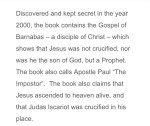
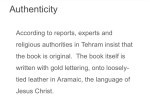
There are roughly five and a half fucktillion extracanonical gospels out there. For the first couple centuries after Jesus bit it, his followers wrote a ridiculous amount of fanfic. There were a gajillion different headcanons floating around about exactly who and what he even was (God pretending to be human? human who got possessed by God at his baptism? human who got promoted to demigod after his death? simultaneously God and human all along??) and lots of early Christian communities ~conveniently~ discovered a Totally 100% Authentic Eyewitness Account that supported their pet theory (and also, proved that their fave disciple was clearly the best).

Big Name Fans argued about all the major disagreements, periodically throwing conventions specifically to bicker until they reached some sort of consensus (more or less – sometimes the hold-outs ended up saying “screw you guys, we’re gonna go form our own church!”) Toward the end of the second century, a guy named Irenaeus wrote a meta arguing that there were four fics worth reading – no more, no less – and they were ones that folks somewhere along the line started to claim were written by Matthew, Mark, Luke, and John. This idea caught on as a popular bit of fanon, and over the next couple of centuries it gained so much support that it was declared canon.

So, what’s the point of this Jesus fandom history lesson? Basically, that the discovery of yet another extracanonical text isn’t particularly earth-shattering. Headlines like “Ancient Bible changes everything! Pope freaking out!” are bullshit, but that’s how it’s always framed cause more accurate headlines like “Old manuscript discovered – Historians say ‘Ooh, nifty!’” aren’t very good click-bait.

The actual history and politics of the various gospel texts are really fascinating though (if you’re a huge fucking nerd, like me). In the Gospel of Judas, he’s the only disciple who really understands Jesus, who told Judas to “betray” him. Also, God’s a Glow Cloud. The Infancy Gospel of Thomas has kid!Jesus smite other kids for being little shits. The Gospel of Peter is hella anti-Jewish, but has one cool bit with a character that’s literally a walking, talking cross. There’s a whole book called “Q” which has never even been found, but scholars are pretty sure exists cause Matthew and Luke copied a lot from it.

Seriously, leaning about this stuff made me go “woah, this is freaking awesome – why the hell did my parents’ church make the Bible seem so damn boring??” Well, probably cause all those white upper middle class folks didn’t want us kiddies to dig too deep and find out what a radical, anti-establishment bamf Jesus really was, but that’s another rant for another time…

Reblogging because this is what I live for. As a medieval history major, I got taught first and foremost that we’d be spending four years reading lies and biased half-truths and mythologies. Our job was to find the places they agreed and work the rest out from there. “Do the edge pieces first, Maggie.” I took an entire seminar on forgeries, because so many of the sources historians use to piece together the past are known fakes, but the best they can do is read between the lines or have no lines at all. There’s a reason why medieval historians read farm reports featuring travel descriptions and saints’ lives involving demons-living-in-buckets with the same attention to detail. Every dry history text you’ve read in your life comes from a pile of sources like this, bits of maybe-truth cobbled together with toothpaste and narwhal horn dust.

The moral of the story is be curious, and look for the lies in truth and the truth in lies. It’s pretty great: hello, history, riddle me this.

I want to reblog this as a reminder to people what I’m really working with here, and why I tend to be so critical of those who claim there’s only one answer to the question of what we do know, and what we CAN know about history. To reiterate the above:

Every dry history text you’ve read in your life comes from a pile of
sources like this, bits of maybe-truth cobbled together with toothpaste
and narwhal horn dust.

The moral of the story is be curious, and look for the lies in truth and
the truth in lies. It’s pretty great: hello, history, riddle me this.

The further you go down the research rabbithole, the weirder and more exceptional and amazing and interesting the narrative becomes. What we know about these times and places has been contingent upon the judgement of whoever has access to the primary sources, the dusty piles and the scraps of maybe-truths.

Now, with more and more libraries and museums digitizing their collections, we can all access these sources. We can watch or participate in the discovery of these narratives, which have long been pushed to the margins because those who had power to decide what is and is not “important” about history declined to mention them. Now we have the access to dig through it ourselves, for those who have the ability and the interest to do so, and see what amazing people, events, and narratives there are to be shared that we have decided are interesting and important.

I think that’s just amazing.

kimikomuffin:

OK I was reading about Teddy Roosevelt’s “Big Stick ideology” and it talks about how he resolved the Anthracite Coal Strike: the peaceful talks went badly, so the mining companies asked the government to send in the military. Roosevelt sent in the military … to do the mining work, which meant that the mining companies weren’t actually profiting, so they caved to the unions.

God damn is that a passive-aggressive application of “speak softly and carry a big stick.”