koiotchka:

scriptmedic:

fvckthisreality:

zacharielaughingalonewithsalad:

cellarspider:

twinkletwinkleyoulittlefuck:

purrsianstuck:

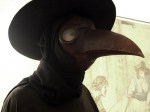
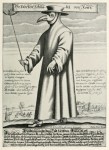
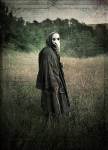
During the Bubonic Plague, doctors wore these bird-like masks to avoid becoming sick. They would fill the beaks with spices and rose petals, so they wouldn’t have to smell the rotting bodies.

A theory during the Bubonic Plague was that the plague was caused by evil spirits. To scare the spirits away, the masks were intentionally designed to be creepy.

Mission fucking accomplished

Okay so I love this but it doesn’t cover the half of why the design is awesome and actually borders on making sense.

It wasn’t just that they didn’t want to smell the infected and dead, they thought it was crucial to protecting themselves. They had no way of knowing about what actually caused the plague, and so one of the other theories was that the smell of the infected all by itself was evil and could transmit the plague. So not only would they fill their masks with aromatic herbs and flowers, they would also burn fires in public areas, so that the smell of the smoke would “clear the air”. This all related to the miasma theory of contagion, which was one of the major theories out there until the 19th century. And it makes sense, in a way. Plague victims smelled awful, and there’s a general correlation between horrible septic smells and getting horribly sick if you’re around what causes them for too long.

You can see now that we’ve got two different theories as to what caused the plague that were worked into the design. That’s because the whole thing was an attempt by the doctors to cover as many bases as they could think of, and we’re still not done.

The glass eyepieces. They were either darkened or red, not something you generally want to have to contend with when examining patients. But the plague might be spread by eye contact via the evil eye, so best to ward that off too.

The illustration shows a doctor holding a stick. This was an examination tool, that helped the doctors keep some distance between themselves and the infected. They already had gloves on, but the extra level of separation was apparently deemed necessary. You could even take a pulse with it. Or keep people the fuck away from you, which was apparently a documented use.

Finally, the robe. It’s not just to look fancy, the cloth was waxed, as were all of the rest of their clothes. What’s one of the properties of wax? Water-based fluids aren’t absorbed by it. This was the closest you could get to a sterile, fully protecting garment back then. Because at least one person along the line was smart enough to think “Gee, I’d really rather not have the stuff coming out of those weeping sores anywhere on my person”.

So between all of these there’s a real sense that a lot of real thought was put into making sure the doctors were protected, even if they couldn’t exactly be sure from what. They worked with what information they had. And frankly, it’s a great design given what was available! You limit exposure to aspirated liquids, limit exposure to contaminated liquids already present, you limit contact with the infected. You also don’t give fleas any really good place to hop onto. That’s actually useful.

Beyond that, there were contracts the doctors would sign before they even got near a patient. They were to be under quarantine themselves, they wouldn’t treat patients without a custodian monitoring them and helping when something had to be physically contacted, and they would not treat non-plague patients for the duration. There was an actual system in place by the time the plague doctors really became a thing to make sure they didn’t infect anyone either.

These guys were the product of the scientific process at work, and the scientific process made a bitchin’ proto-hazmat suit. And containment protocols!

reblogging for the sweet history lesson

Reblogging because of the History lesson and because the masks, the masks are cool

Humans, you all know historical medicine ain’t my Thang™, but if any of you have any interest about plague times or just want to understand these bitchin’ get ups, this post is for you!

What a great lesson 😀
narwhalninja:

violent-darts:

shadow27:

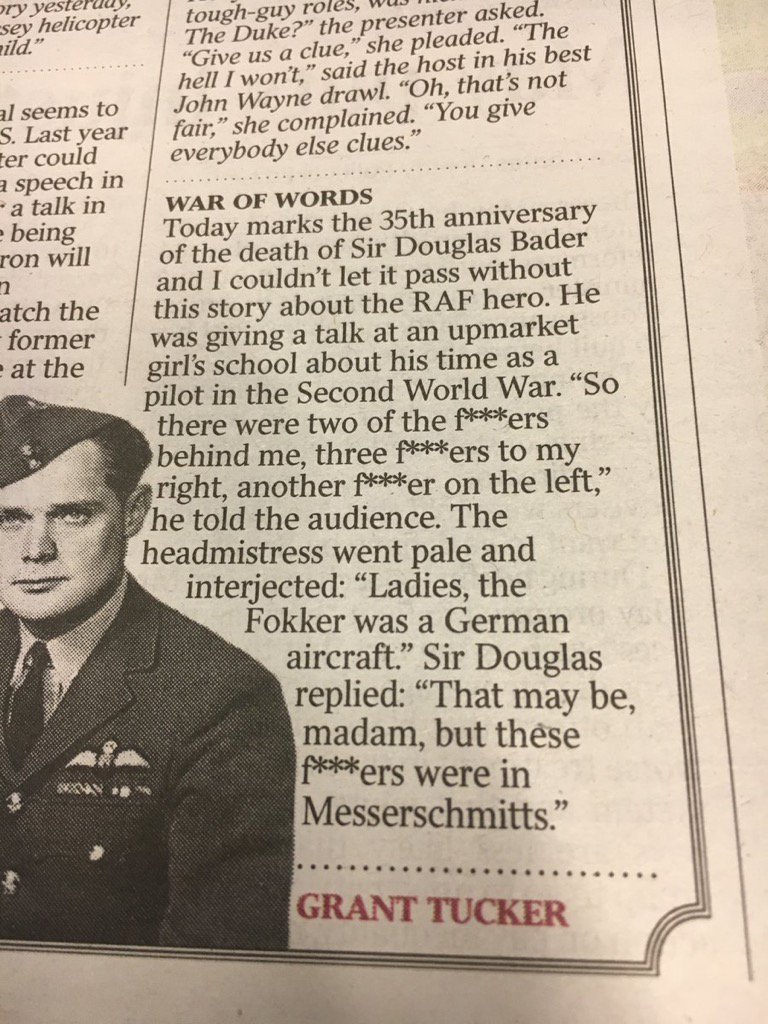
Fokking Messerschmitts

Anyone who tries to tell you that WWII soldiers didn’t use “fuck” as punctuation is lying.

No, guys Douglas Bader is the best!

In 1931,at age 21 (!!) Bader crashed after attempting some aerobatics too low to the ground, and he had to be rushed to hospital, and the plane crash pulverized the bones in his legs. 

Bader woke up in the hospital to find that one of his legs had to be amputated. Several days later, his other leg was removed. Now a double amputee, Bader was told he could never do anything he loved again. Rugby, dancing, flying, let alone walking. Yet that didn’t stop him. When his legs healed enough to allow for prosthetics, he told the men building them that he needed to get them done quickly, as he “would need them to take someone out dancing later that week”. They laughed at him, as no one had ever walked without a cane, or even regained full mobility with TWO prosthetic legs. 

Bader, basically saying ‘fuck you i can do what i want’, then went on to never EVER use the cane. A few months after the initial fitting, he took his sweetheart, Thelma Edwards, dancing in his own, specially modified car. 

Eventually he got a job doing desk work at Shell, as the RAF gave him as Medical Discharge, due to the loss of both legs (one above and one below the knee). He was unhappy with this, as he LOVED flying, and knew he could fly the planes if there were only some minor modifications. But the RAF didn’t want, or need, less than 100% physically fit men in these interwar years. Yet Bader kept petitioning the RAF commanders to let him fly, and they eventually agreed reluctantly, if Bader could only prove to them he was physically fit.

To the RAF’s surprise, he passed the tests with flying colours, and basically demanded a plane. Then WWII started, and the RAF needed experienced, trained, officers.

During the Battle of Britain, he pioneered some innovative new flying tactics (called the Big Wing), and  Bader was given command after command. He was eventually given command of a motley unit of Canadians who had lost most of their numbers and supplies in the Battle of France. He pulled them together into an effective fighting force, and was commonly seen wandering around with his distinctive rolling gait, yelling at the supply distributors, and with a massive cigar in his lips.

Though, while on one of his flights over Nazi-occupied France, he got shot down. The way the plane went down however, if he didn’t have detachable legs he would have been unable to bail and would have died. 

Then Bader was captured by Germans and sent to a hospital, where he received a new prosthetic leg from a German official (who found him hilarious, a pilot with no legs!)

Bader escaped the hospital but was recaptured due to his distinctive gait and relative slowness of walking pace (just wait this is a pretty common theme from here on out). 

He was then transferred to Stalag Luft III (a POW camp lead by the Luftwaffe (German version of RAF)), where he was involved with, and had so many escape attempts the Germans threatened to take his legs away.

After a final, most nearly successful escape, Bader was transferred to the Colditz Castle, six hundred and fifty kilometers from non-Nazi occupied land. With walls two meters thick, and which sat on a cliff seventy-five meters above the River Mulde, this castle was escape-proof. 

For officers deemed an escape risk, Like Bader, this castle was the last stop. It held the worst of the escape prone POWs. Several other POWs in the castle had ridiculous plans to escape, ranging from paragliding, to using contortion and gymnastics. Yet Bader, with his instantly recognizable gait and lack of legs, would only be a hindrance at best, and would ensure they would all be recaptured, and killed as spies at worst. So Bader spent the rest of his time in Colditz, from Aug 1942-April 1945, when the castle was liberated by the US Army. 

Bader was given many awards and distinctions, yet after the war he left the RAF (for good this time) and went on to work at Shell again, this time flying around the world in his own plane with his wife.

More than that he became an activist and a hero for disabled people. 

Before, if someone had lost both of their legs, they would have been told, like Bader, that they would have no options but to walk with a cane, or be wheelchair bound, and live a drastically limited life to what they lived before. 

After Bader, when kids asked if they could ever walk again, their nurses and doctors would point at Bader and say “Well, if he can, there is no reason why you cannot”.

He was eventually knighted, not for his leadership in war, or his medals, but due to his massive work in propelling disabled activism and repelling the stigmas around the ‘limitations’ of disabled people.

(There is a great biography of his life by Paul Brickhill, called Reach for the Sky, and he is pretty great. I did a book report on it in grade 11 and it is very, very interesting, if you are interested at all in WWII, or stuff like that!)

TL;DR – Man looses both legs in a plane accident at 21, told he could never walk again. Through sheer stubbornness and ‘Fuck You.’ energy, he becomes a pilot and the squadron leader/group leader of many different units in WWII, before becoming POW in the most inescapable POW camp–due to proclivity to escape–until the end of the War. 1976, was knighted for his work on behalf of disabled people, and being a disabled activist.

And yeah, I think he is pretty great.

My grandfather, one of the politest and most genteel men who ever lived, referred to his war comrades as “those motherfuckers.” He said, “it’s a word i haven’t used since, but it’s the only thing they ever called each other.”

elodieunderglass:

madgastronomer:

systlin:

darkersolstice:

max-vandenburg:

eldritchscholar:

So the other night during D&D, I had the sudden thoughts that:

1) Binary files are 1s and 0s

2) Knitting has knit stitches and purl stitches

You could represent binary data in knitting, as a pattern of knits and purls…

You can knit Doom.

However, after crunching some more numbers:

The compressed Doom installer binary is 2.93 MB. Assuming you are using sock weight yarn, with 7 stitches per inch, results in knitted doom being…

3322 square feet

Factoring it out…302 people, each knitting a relatively reasonable 11 square feet, could knit Doom.

Hi fun fact!!

The idea of a “binary code” was originally developed in the textile industry in pretty much this exact form. Remember punch cards? Probably not! They were a precursor to the floppy disc, and were used to store information in the same sort of binary code that we still use:

image

Here’s Mary Jackson (c.late 1950s) at a computer. If you look closely in the yellow box, you’ll see a stack of blank punch cards that she will use to store her calculations.

image

This is what a card might look like once punched. Note that the written numbers on the card are for human reference, and not understood by the computer. 

But what does it have to do with textiles? Almost exactly what OP suggested. Now even though machine knitting is old as balls, I feel that there are few people outside of the industry or craft communities who have ever seen a knitting machine. 

image

Here’s a flatbed knitting machine (as opposed to a round or tube machine), which honestly looks pretty damn similar to the ones that were first invented in the sixteenth century, and here’s a nice little diagram explaining how it works:

image

But what if you don’t just want a plain stocking stitch sweater? What if you want a multi-color design, or lace, or the like? You can quite easily add in another color and integrate it into your design, but for, say, a consistent intarsia (two-color repeating pattern), human error is too likely. Plus, it takes too long for a knitter in an industrial setting. This is where the binary comes in!

image

Here’s an intarsia swatch I made in my knitwear class last year. As you can see, the front of the swatch is the inverse of the back. When knitting this, I put a punch card in the reader,

image

and as you can see, the holes (or 0′s) told the machine not to knit the ground color (1′s) and the machine was set up in such a way that the second color would come through when the first color was told not to knit.

tl;dr the textiles industry is more important than people give it credit for, and I would suggest using a machine if you were going to try to knit almost 3 megabytes of information.

@we-are-threadmage

Someone port Doom to a blanket

Once again, knitting machines are not the origin of punch cards. Looms are.

^ yes, looms! 

Chaining together several punch cards was the clever part of the Jacquard loom. Here’s a picture of chained punchcards, ready to instruct a pattern. This is the forerunner of a computer program:

From the 1700s to the 1960s, punched cards were a Thing Used to Store Data. The early association of women with computer programming was possibly due to the fact that women were already familiar with creating and using textile punch cards. 

And then we all forgot. 

And then we apparently all decided that computing must have been invented by men in the 1980s, in a single bolt of enlightenment, when Bill Gates had a dream?? I don’t know, it seems to be how people treat it.

But anyway, yes, textiles are absolutely the origin of the data entry methods we use today, though to be perfectly accurate, the craft was weaving.

the-mad-prince-of-denmark:

thefingerfuckingfemalefury:

talisguy:

thefingerfuckingfemalefury:

cheskamouse:

thefingerfuckingfemalefury:

andsomeampersands:

the-mad-prince-of-denmark:

Fun Fact Time:

Oscar Wilde had a lesbian niece

Yea

YEA

Her name was Dolly Wilde. She was the daughter of Oscar Wilde’s older brother, and was born about 3 months after he died. She worked as an ambulance driver during WW1 and spent most of her free time banging rich ladies. And guys. GUYS.

SHE

LOOKS

JUST LIKE

HER UNCLE

They both have That Face.

I’m so, so happy I know this now.

I would like everyone to know that she went around telling everyone that she was her uncle reincarnated. OK have a good day.

A M A Z I N G

Oh my God, Oscar Wilde and family had Resting Bitch Face.

😀

Resting Wilde Face

That “I’m a gay, Irish socialist in the Victorian era” face.

“Fuck everything about this world”

Side note: it wasn’t just the face. People who knew both Dolly and Oscar Wilde said that they sounded very similar and carried themselves in the same manor.

Both were pretty avid smokers. They both appreciated decadence. They both had very similar lovers.

Also, because history is insane, Dolly Wilde once hit on Zelda Fitzgerald, writer and wife of F. Scott Fitzgerald.

Dolly once said of herself, “I am more like Oscar than Oscar.” And honestly yea, I get why.

thefallingdream:

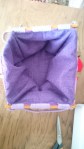
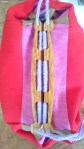
So here it is. Remember how I said I have a lot of feelings about archaeology and handbags? Well, this is the particular handbag I was having a lot of feelings about at the time. This is a reimagining of a Viking age frame bag, generally referred to as a Hedeby bag (although the frames have been found elsewhere the Viking world).

This one is fancy af, it’s wool, linen, and silk, in period-expensive colours and weights, fully lined, even though I actually believe that these bags would’ve been more utilitarian, unlined and made of plain undyed linen, but that’s not an argument I’m especially well positioned to make right now and anyway I wanted a pretty Viking handbag for Moesgaard. Also this belt loop arrangement (you can sort of see in the second pic, the cord runs through loops along the side) is a concession to stitch-fascists, because I need evidence for eyelets, but I reckon it was eyelets, based on my experiments eyelets work the best. This bag is already going to be a cat among the pigeons though, it upends decades of accepted knowledge, so as it is I expect pushback from a certain type of douchebag (the ones who run on equal portions woefully outdated info and shit they made up, and try to enforce it). Hence I stuck with what I can support the most strongly, and begrudgingly conceded the rest for the time being.

I’m not going to dump all my evidence and results here, I’m working on a proper report that I’ll be releasing soon, but basically this is a bag that both fits the material evidence and IS USEFUL. It actually WORKS as a BAG. You can CARRY stuff in it. All kinds of stuff. This is not true of the conventionally accepted interpretation of the material evidence.

I don’t want to be an ass and like, pull an example from google image
search and shame some other reenactor who was only going along with what they’d been told, so if you want to compare this to
a conventional Viking age frame bag reconstruction, just google hedeby bag
and you’ll get the idea. And look I’m not blaming reenactors for the uselessness of the conventional interpretation,
this

is entirely academia’s doing.

Handbags are a very gendered item in our time, but they weren’t so in
the Viking period, because Vikings didn’t have pockets. In our time, a certain percentage of adults have no
concept of what
makes a handbag functional, simply because they have never habitually used one. It
was such a person who originally interpreted the Hedeby bag frames, and
IN MY NOT AT ALL HUMBLE OPINION, IN MY ACTUALLY VERY ARROGANT OPINION, they got it ass backwards. The simple fact is that women know a lot of shit that men just don’t even know that they don’t know and when women’s voices aren’t heard and respected in research and academia, as was very much more the case when the Hedeby frames were initially recovered and interpreted, the results suffer. This feminist rage part isn’t going
in the report of course,

the evidence will speak for itself or it won’t. But it does. I mean you can see how much it does. BECAUSE I KNOW HOW HANDBAGS WORK. BECAUSE, LIKE A VIKING, NONE OF MY CLOTHES HAVE FUCKING POCKETS.

Anyway those are some of my feelings about archaeology and handbags. And this is my fancy Viking handbag. It’s pretty damn good.

animatedamerican:

ruffboijuliaburnsides:

animatedamerican:

jenroses:

animatedamerican:

Playback
to the tune of Billy Joel’s “We Didn’t Start the Fire
filk lyrics by Andrew Ross

Mary Shelley, HG Wells, people meeting at hotels 
Rudyard Kipling, people singing ditties at the bar
Gilbert, Sullivan, rounds of Young Man Mulligan
Poul and Karen Anderson, songs in Key of R

Martha Keller, Tolkein, songs of worlds as yet unseen
TH White’s Arthurians, Frederick Pohl’s Futurians
Tom Lehrer, Mondegreens, Slan Shacks, fanzines
Music circles, Reprints, Jacobs has a misprint!

We shouted “MacIntyre!”
It’s our cry of battle for the Old Dun Cattle
We shouted “MacIntyre!”
And we haven’t parted since the circle started

Amazing Stories Annuals, Pelz’s Filksong Manuals
Dr. Demento tunes, Callahan’s Crosstime Saloons
Hope Eyrie, Leslie Fish, bounced potatoes off the dish
Robert Aspirin, Gwen Zak, Dawson’s Christian, Captain Jack

Off Centaur, Teri Lee, making love in zero-G
Filthy Pierre, Longcor, black market Tullamore
Juanita Coulson, Red Lions, badges marked with Dandelions
Dorsai have a Fan Club! Jello in the bathtub!

Don’t set the cat on fire
It will only fight it if you try to light it
Don’t set the cat on fire
And we haven’t parted since the circle started

Peter Beagle, Consonance, chili cursed with sentience 
HOPSFA, NESFA, ConChord, and the Pegasus Award
PFNEN, Ose, Amway, Talk Like a Pirate Day
Dandelion Digitals, Julia Ecklar and the gulls

Bob Laurent, Asimov, Jeff and Maya Bohnhoff
Rocky Horror Muppet Shows, Frank Hayes feeling indisposed
Bill Sutton DIY, Marischiello goodbye
Challenger! Final tour! What else must we all endure?

We saw the sky on fire
While the world was staring, we were Jordin Karing
We saw the sky on fire
And we haven’t parted since the circle started

Kathy Mar, Next Gen, Tullamore is back again
Steve Macdonald, Elfquest, Interfilk funds a guest
Tom Smith, 307 Ale, Lee Gold, Heather Dale
Phoenyx, Keepers of the Flame, Filkontario’s Hall of Fame

Echo’s Children, Bab-5, need a fool to feed the drive
Hamlet done by John Woo, Marilisa Valtazanou 
GaFilk, Urban Tapestry, lives rich in fantasy
Airwalls down at Orycon! Firebells at Baycon!

We didn’t start a fire
We were all but deafened, and began Kanefin’
We didn’t start a fire
And we haven’t parted since the circle started

Blake Hodgetts, Proteins, Vixy, Tony, Thirteen
Stone Dragons, Moxie, Zander, Heather into Alexander
Bill and Gretchen, dead mouse, alligators in the house
ConFlikt, Judi Filksign, Tragedy at East Hill Mine

Mary Crowell, Faerieworlds, brony boys and Wicked Girls
Britain’s Talis Kimberly, Seanan’s Kellis-Amberlee
Doubleclicks! Browncoats! Cats! FuMP! Toy Boat!
Release the Cello! Sasquon! Thor! Pass another Tullamore!

We didn’t start the choir
It’s been so cathartic for the longest bardic
We didn’t start the choir
But when our turns have gone, it will still go on and on until the dawn… 

If you want to start to comprehend filk, this might not be the easiest place to start just listening. Once you’ve been in filk for 10 or 20 years, this is one of the funniest songs you’ll hear. 

If you wanted a list of things to google? This would be a phenomenal treasure hunt. 

Some of the things won’t be findable on Google, but if you can find an older filk enthusiast, they’ll tell you all about it. (The Airwalls at Orycon was one of those legendary disasters that ended up sparking the best filk circle I’ve ever been at.)

One of these years, I’m gonna make a fully annotated/hyperlinked version of this post.  (It’ll take some doing; I’m old enough to count as an “older filk enthusiast” but a bunch of the references here are before my time.)

I wonder if genius lyrics would let you put it up on their site, that’d make it easy for all filkers to help annotate…

OH HEY I COULD DO THAT

I’d want to get Andrew Ross’s permission first, but then? ahahahahahaha 

llywela13:

bogganbeliefs:

cosmogyros:

seonaxus:

rubidium118:

stephrc79:

crystalpoints:

When people assume Celtic = Irish I get a strong urge to stab myself in the eye.

No no no no no no. 

Sit down we must have a conversation.

There were 6 Celtic nations.

Éire, Cymru, Alba, Kernow, Breizh, and Ellan Vannin.

Ireland, Wales, Scotland, Cornwall, Brittany, and the Isle of Mann respectively.

They’re all related, but not the same. They all have different languages descended from a similar group, Irish (Gaeilge), Scottish (Gàidhlig), Manx (Gaelg), Welsh (Cymraeg), Cornish (Kernowek), and Breton (Brezhoneg). Some are more widely spoken than others, for example Welsh is still commonly spoken in Wales, whereas hearing Cornish in Cornwall instead of English is rare. 

All Celtic nations have varied mythology and culture.

Irish Mythology is different from Breton Mythology, and even Welsh and Cornish mythology (arguably the most related Celtic Nations) have subtle differences to each other. I wish I could add more about the cultures at this time but my knowledge of Celtic nations is primarily made up of the history and languages of those regions, particularly Cornwall. 

You might have notice that England and English are missing from this, because the English descended from Anglo-Saxons, who were German invaders that came to the isles right around the Fall of the Roman empire in the 5th Century, erasing the Celtic influence in what is now England. 

So what this all really means is that Celtic is an umbrella term, and just because it’s Celtic doesn’t mean it has anything to do with Ireland at all. So don’t assume that just because someone’s talking about something Celtic that they’re talking about something Irish.

I actually didn’t know this. Thank you, tumblr person

I love you for this. I love learning and this day started in a good note.

Furthermore there are currently six modern Celtic languages divided into two families. The Goidelic or Gaelic languages: Irish, Scots Gaelic and Manx, which are all descended from Middle Irish; and the Brythonic languages: Welsh, Cornish and Breton all descended from Common Brythonic. It should be noted that both Manx and Cornish are revived languages, that is they effectively died (There were no living native speakers) for a time, but revitalisation efforts amongst the communities to learn the languages as second languages resulted in children picking up the languages as their first language, thus returning the languages to living languages with communities of native speakers. Although all of the languages are growing in number of speakers at each count, only Welsh is not counted as being endangered. This revitalisation is part of why the written form of Manx is so different to that of its sisters, despite the close similarity of the spoken form; its spelling is designed to make sense to a native English speaker, whereas Irish and Gaelic use a more traditional phonetic spelling system which only makes sense if you are used to the concept of a séimhiú being represented by the letter h. The Manx for “Isle of Man”, for example, is “Ellan Vannin” whereas the Irish name is “Oileán Mhanann” while the spelling is very different the actual pronunciation is almost identical. Both refer to Manannán mac Lir of the Tuath dé Danann, an ancient race of supernatural creatures, often interpreted as a christian retelling of the ancient Gaelic gods.

Also, depending on who you ask, there’s a seventh Celtic nation! It’s Galicia, a region in northwestern Spain. Opinions are divided as to whether it’s Celtic enough to “count”, but here are some sources for further reading:

BBC: Where is the seventh Celtic nation?
Spain Then and Now: The Celts in Spain
Journal of Interdisciplinary Celtic Studies: Celtic Legacy in Galicia
University of Pennsylvania Museum: The Modern Celts of Northern Spain

…and I can’t help but link to my own post of the beautiful song “Va unan,” sung in Breton and Spanish by the chorus “L’Ensemble choral du bout du monde” with the Spanish guest vocalist Jesús Cifuentes from the band Celtas Cortos.

I think I’m honor bound to always repost this.

It’s easiest to think of the difference between Goidelic and Brythonic languages as q-Celts and p-Celts. Take the word ‘son of’, for instance, which we’ve all seen in names like MacDonald or MacGregor. Mac. That’s a q-Celtic word, Goidelic, ending in a ‘c’. In Welsh, which is a Brythonic or p-Celtic language, the same word became ‘map’ or ‘ap’. So where the son of Donald in Scotland became MacDonald, in Wales the son of Rhys became ap Rhys became Prys became Price or Preece. Same original root, leading to a very different linguistic end.

sevdrag:

seriesofnonsequiturs:

lizzywhimsy:

megcubed:

The average age in Boston in the early 1770s was 14. More than half the population of Boston was under 21 in the events leading up to the American Revolution.

It really puts everything into a completely different context, doesn’t it?

 #England: YOU DO YOUR CHORES LIKE I ASKED YOU #America: YOU’RE NOT MY REAL MOM #*slams door* #England: OOOHH YOU’RE GONNA GET IT #America: EAT MY SHORTS (beggars-opera)

oh, and they complain about millennials shutting down a few colleges and highways

get some perspective!

EAT MY SHORTS I’m crying

Honestly this explains like… All of medieval Europe too. Everybody acted like a jerk with no impulse control because they were all TEENAGERS, and in fact DID NOT HAVE impulse control because what frontal lobes?

reapingwithjoy:

tarastarr1:

thecoggs:

So apparently last year the National Park Service in the US dropped an over 1200 page study of LGBTQ American History as part of their Who We Are program which includes studies on African-American history, Latino history, and Indigenous history. 

Like. This is awesome. But also it feels very surreal that maybe one of the most comprehensive examinations of LGBTQ history in America (it covers sports! art! race! historical sites! health! cities!) was just casually done by the parks service

This is really great??

I would like to add that this isn’t odd.

The Park Service is more than just Yellowstone and the Everglades, the National Park Service has custody over hundreds, if not thousands of historic sites, houses, and battlefields. It’s part of their mission to interpret US history and make it available to its citizens. They have completed studies for African American history, Native American history, women’s history, and more.

It’s sad that people let this aspect of the Park Service fall through the cracks.

laphamsquarterly:

laphamsquarterly:

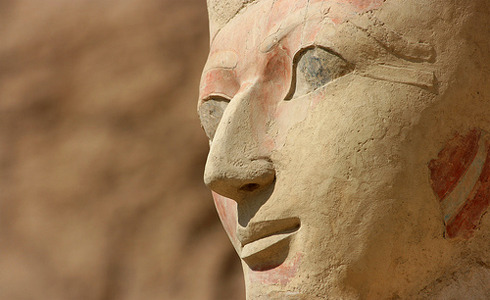
“It is not precise to call Hatshepsut a queen, despite the English understanding of the word; once she took the throne, Hatshepsut could only be called a king. In the ancient Egyptian language, the word queen only existed in relation to a man, as the “king’s woman.” Once crowned, Hatshepsut served no man.”

We’ve got a brand-new essay on the kick-ass, cross-dressing Egyptian ruler Hatshepsut. Just don’t call her a queen.