Will we see the discourse goalposts move to pre-historical accuracy?
Snarkiness aside, I really wish the disciplines would communicate more in matters like these, because I think that the implications for our greater cultural consciousness regarding human mythology and modern sociological structures are kinda cool?
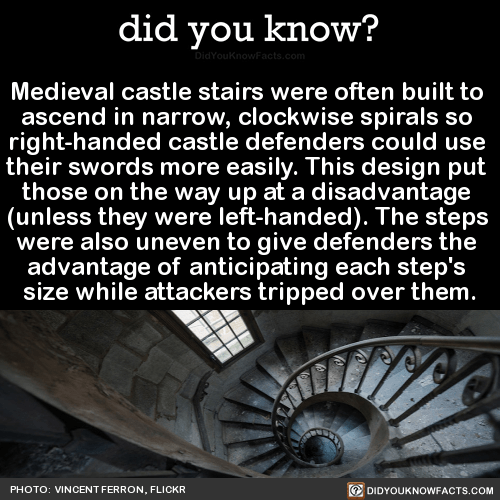
Medieval castle stairs were often built to ascend in narrow, clockwise spirals so right-handed castle defenders could use their swords more easily. This design put those on the way up at a disadvantage (unless they were left-handed). The steps were also uneven to give defenders the advantage of anticipating each step’s size while attackers tripped over them. SourceSource 2Source 3
Not really the best illustration since it totally negates the effect by having a wide open space for those ascending. Castle tower staircases tended to look like this:
Extremely tight quarters, with a central supporting pillar that is very, very thoroughly in the way of your right arm.
Wider, less steep designs tend to come later once castles moved away from being fortresses to simply noble family homes with the advent of gunpowder.
Oh! Pre-gunpowder military tactics are my jam! I don’t know why, but this is one of my favorite little details about defensive fortifications, because the majority handedness of attackers isn’t usually something you think about when studying historical wars. But strategically-placed walls were used basically worldwide as a strategy to secure gates and passages against advancing attackers, because most of the world’s population is right-handed (and has been since the Stone Age).
Pre-Columbian towns near the Mississippi and on the East coast did this too. They usually surrounded their towns with palisades, and they would build the entrance to the palisade wall in a zigzag – always with the wall to the right as you entered, to hinder attackers and give an advantage to the defender. Here’s some gates with some examples of what I’m talking about:
Notice that, with the exception of the last four (which are instead designed to congregate the attackers in a space so they can be picked off by archers, either in bastions or on the walls themselves) and the screened gate (which, in addition to being baffled, also forces the attackers to defend their flank) all of these gates are designed with central architectural idea that it’s really hard to kill someone with a wall in your way.
In every culture in the world, someone thought to themselves, “Hey it’s hard to swing a weapon with a wall on your right-hand side,” and then specifically built fortifications so that the attackers would always have the wall on their right. And I think that’s really neat.
Ooh, ooh, also: Bodiam Castle in Sussex used to have a right-angled bridge so any attacking forces would be exposed to archery fire from the north-west tower on their right side (ie: sword in the right hand, shield on the useless left side):
These tactics worked so well for so long because until quite recently lefties got short shrift and had it trained (if they were lucky) or beaten out of them.
Use of sword and shield is a classic demonstration of how right-handedness predominated. There’s historical mention of left-handed swordsmen (gladiators and Vikings), and what a problem they were for their opponents, but that only applies to single combat.
A left-handed hoplite or housecarl simply couldn’t fight as part of a phalanx or shield wall, since the shields were a mutual defence (the right side of the shield covered its owner’s left side, its left side covered the right side of his neighbour to the left, and so on down the line) and wearing one on the wrong arm threw the whole tactic out of whack.
Jousting, whether with or without an Italian-style tilt barrier, was run shield-side to shield-side with the lance at a slant (except for the Scharfrennen, a highly specialised style that’s AFAIK unique.) Consequently left-handed knights were physically unable to joust.
The construction of plate armour, whether specialised tournament kit or less elaborate battle gear, is noticeably “right-handed“ – so even if a wealthy knight had his built “left-handed” it would be a waste of time and money; he would still be a square peg in a world of round holes and none of the other kids would play with him.
Even after shields and full armour were no longer an essential part of military equipment, right-hand use was still enforced until quite recently, and to important people as well as ordinary ones – it happened to George VI, father of the present Queen of England. Most swords with complex hilts, such as swept-hilt rapiers and some styles of basket-hilt broadsword, are assymetrical and constructed for right handers. Here’s my schiavona…
It can be held left-handed, but using it with the proper thumb-ring grip, and getting maximum protection from the basket, is right-handed only. (More here.) Some historical examples of left-hand hilts do exist, but they’re rare, and fencing masters had the same “learn to use your right hand” bias as tourney organisers, teachers and almost everyone else. Right-handers were dextrous, but left-handers were sinister, etc., etc.
However, several
predominantly left-handed
families did turn their handedness into advantage, among them the Kerrs / Carrs, a notorious Reiver family along the England-Scotland Borders, by building their fortress
staircases with a spiral the other way to the OP image.
This would seem to be a bad idea, since the attackers (coming upstairs) no longer have their right arms cramped against the centre pillar – however it worked in the Kerrs’ favour because they were used to this mirror-image of reality while nobody else was, and the defender retreating up the spiral had that pillar guarding his right side, while the attacker had to reach out around it…
For the most part Reiver swords weren’t elaborate swept-hilt rapiers but workmanlike basket-hilts. Some from Continental Europe have the handedness of my schiavona with thumb-rings and assymmetrical baskets, but the native “British Baskethilt” is a variant of the Highland claymore* and like it seems completely symmetrical, without even a thumb-ring, which gives equal protection to whichever hand is using it.
*I’m aware there are those who insist “claymore” refers only to two-handers, however the Gaelic term claidheamh-mòr
– “big sword” –
just refers to size, not to a specific type of sword in the way “schiavona” or “karabela” or even “katana” does.
While the two-hander was the biggest sword in common use it was the claidheamh-mòr; after it dropped out of fashion and the basket-hilt became the biggest sword in common use, that became the claidheamh-mòr.
When Highlanders in the 1745 Rebellion referred to their basket-hilts as claymores, they obviously gave no thought to the confusion they would create for later compilers of catalogues…
Also, muskets had their whole “Flint and steel and gunpowder” thing on the right side so if you tried firing it lefty you’d get a face full of fire. More recently, rifles eject their spent shell casings to the right, so if you’re a lefty you get some hot metal in your eye.
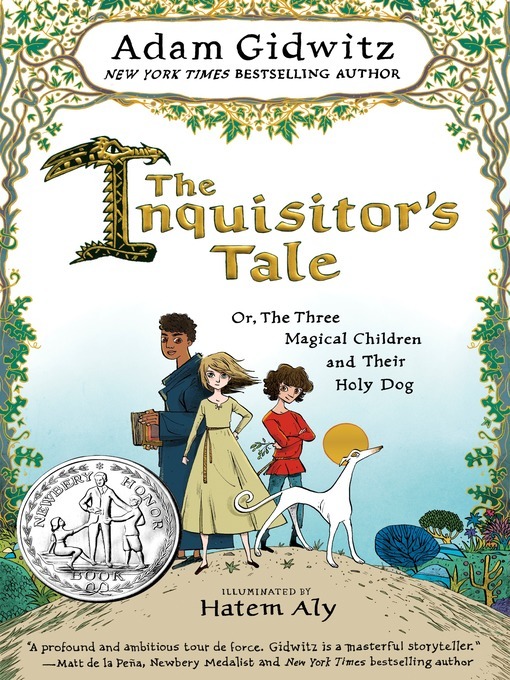
1242. On a dark night, travelers from across France cross paths at an
inn and begin to tell stories of three children. Their adventures take
them on a chase through France: they are taken captive by knights, sit
alongside a king, and save the land from a farting dragon. On the run to
escape prejudice and persecution and save precious and holy texts from
being burned, their quest drives them forward to a final showdown at
Mont Saint-Michel, where all will come to question if these children can
perform the miracles of saints.
Join William, an oblate on a
mission from his monastery; Jacob, a Jewish boy who has fled his burning
village; and Jeanne, a peasant girl who hides her prophetic visions.
They are accompanied by Jeanne’s loyal greyhound, Gwenforte …
recently brought back from the dead. Told in multiple voices, in a style
reminiscent of The Canterbury Tales, our narrator collects their stories and the saga of these three unlikely allies begins to come together.
From Downton Abbey to Call the Midwife and now Jamestown, period dramas always fall into the classic trap – characters with laughably liberal values for their day. Stop the madness, TV-makers!
Golden girls – These four women exploited the opportunities presented when the plague struck
Agnes Ramsey: Mason
Agnes, who never used her husband’s name, was the daughter of the famous architect and mason William Ramsey, who was killed by the Black Death in 1349. Though married to another mason, Robert Hubard, Agnes continued to run her father’s business, entering into a contract with the dowager Queen Isabella, widow of Edward II, to build her fine tomb at the enormous cost of £100.
Alice Holford: Bailiff
Alice took over the post of bailiff of London Bridge on the death of her husband, Nicholas, in 1433, and continued in office for over 20 years. The bailiff collected the tolls due from boats passing through the bridge, and from carts that crossed it into London. The task was a complicated one – charges varied according to the goods and the person transporting them – and Alice must have had some literacy skills.
Johanna Hill: Bell-founder
On the death of her husband in 1440, Johanna took full charge of their bell-founding business till her own death in 1441. Seven of her bells still exist as far away as Ipswich, Sussex and Devon. Johanna continued to use her husband’s mark – a cross and circle within a shield – but surmounted with a lozenge to indicate that the workshop was now under her authority.
Ellen Langwith: Silkwoman
Ellen, who died in 1481, was a London silkwoman. When her first husband, cutler Philip Waltham, died she was left to train their three female apprentices. She later married a tailor, John Langwith, but continued with her own craft. She was recorded as buying gold thread and raw silk direct from Venetian merchants, and in 1465 supplied saddle decorations and silk banners for the coronation of Elizabeth Woodville, wife of Edward IV. She was courted by both the Cutlers’ and Taylors’ companies.
Humans are a communal species that have banded together and cared for their sick, disabled, and elderly since before we were ever modern man. Resources were shared even as skills specialized.
Capitalism isn’t natural. A community should not have members dying of starvation or exposure while there is an abundance of resources. That isn’t how it works. That isn’t how it’s supposed to work.
ok so my roommates are anthropology students and their favorite example for debunking the ‘survival of the fittest’ bs is shanidar 1. (x, x, x)
shanidar 1 is a neanderthal who, at a pretty young age, was hit in the head hard enough to blind him. this also led to that side of his brain shutting down and withering his right arm, and possibly crippling his entire right side. not only that but his skeleton also shows that at some point, he broke a bone in his foot and, in addition to the other factors, resulted in a noticeable limp. there are some sources which say he likely had degenerative diseases. (arthritis was really common in neanderthals)
going off of widespread ideas of “”primitive”” (no longer the word used in anthropology/academia to describe early-modern humans) societies, shanidar probably died really young, deliberately abandoned or killed. i mean, he was severely crippled, blind, etc., he couldn’t contribute anything, he would have been a “”burden to society””, right?
except he lived to be between 40 and 50 years old. (about ~80 in human years)
this means that his social group had to have taken care of him for a minimum of two or three decades without his ‘contributing’ anything significant to the group. this discovery (and Shanidar III’s) was huge because it basically proves that early humans had a concept of hospice. early modern humans cared for the sick and the elderly, greatly extending their lifespan, simply because they cared.
tl;dr: the concept of someone needing to be ‘’useful’’ or ‘’’productive’’’ in society in order to be valued and cared for is a very modern concept and our quasi-predecessors would be ashamed
Also, Shanidar I was buried with flowers. They cared about him after he was dead, too.
So this is a Chistmas story my mom told me while I was home recently and i thought y’all might enjoy.
So, one Christmas back in the 60′s, my great-grandmother was reminiscing about Christmas in England, and how they used to have pheasant for Christmas, but Ohio sucks and they’d never get to do something like that.
Well Shit! goes my grandfather, them woods are full of pheasants, I’ll get you one. So grandpa and a dubiously related man named “uncle popeye” went out with shotguns to get great-grandma a pheasant for Christmas dinner.
They’re gone for a LONG time. according to mom, they were basically expecting grandpa and Popeye to be gone for a few hours and come back with a store-bought chicken and apologies.
Instead, they come back eight hours later, covered in mud and freezing cold from the Cleveland winter, but Surprise! they have a Pheasant. Great-grandma gives them a lecture about staying out so long and worrying her, but agrees to dress the bird so they can all have a traditional English Roast Pheasant. Grandpa and Popeye retire to the living room to drink beer and talk about what great woodsmen they are when Great-grandma screams from the kitchen.
“TOM!!” She bellows and literally every male in the house jumps because literally every man has been named “Tom” for three generations at that point. “THERE’S NO BULLET HOLE IN THIS BIRD.”
They both look massively sheepish and eventually admit that they hadn’t had much luck finding pheasants in the woods and were about to go to the store to get her a chicken when they… backed over the pheasant.
“Then what were you idiots doing in the woods for eight hours?”
“We weren’t out there for THAT long-” Popeye starts before grandpa decks him. Grandma and Great-grandma have to menace them with wooden spoons to get the truth out, but eventually they take thier oversize hiking boots off to reveal bandages.
Turns out they had only been in the woods for Two hours looking for pheasants before LITERALLY tripping over one, and they both reflexively aim at the ground and… Shoot each other in the foot. They hadn’t backed over the Pheasant in the woods. They’d backed over it in the Hospital parking lot.
And that’s the story of how my great-grandmother made a Roast Pheasant and the ladies of the house got to eat the whole thing while Grandpa and Popey had to watch.
“dubiously related man named uncle popeye” wasn’t even close to the wildest part oh my god! This is such a good story!!!!
So you prompted me to call my mother and ask how Popeye was related to them, and apparently he’s my great-grat-grandmother’s first-husband’s cousin’s son.
The First Husband is the whole reason my mother’s family came to america in the first place apparently. in 1902, he decided he didn’t want to be father to 9 girls anymore, so he went out for a pint one night and fucked off to Chicago without actually divorcing GGG. For a few years she thought he’d been killed and dumped in the Thames (these things happened in Liverpool in the 1900′s) and shortly re-married, and Second Husband fathered two more daughters with her, including my Great-Grandmother.
In 1908, First Husband wrote from Chicago for money. This was a problem because despite fucking off to another continent, they were still married, and GGG was committing bigamy. Despite pleading her case before the courts that Really, Y’all gave me his death certificate when he didn’t turn up after a month, they fined her an outrageous amount of money and only commuted her prison sentence because “her brood would place undue stain on the orphanage”.
Yes, really.
Second Husband, who was a halfway decent man that only beat her sometimes, suddenly dies of knife wound in a Pub fight, and GGG is left up shit creek with 10 girls and nobody willing to hire a bigamist maid. So GGG attempts to woo First Husband back to England. She goes so far as to pay a photographer to take Nudes of her to remind him what he left.
That was an exciting Christmas, going through an old album and finding THOSE.
Despite GGG’s heartfelt efforts and godlike booty, First Husband remained in the US, enjoying his new life of running credit scams and bootlegging.
After another 4 years of this nonsense, GGG gets the money to ferry herself and her brood across the atlantic to America, where they weren’t so uptight about the sex lives of domestic workers and she could probably get a job. The ALMOST come on the Titanic- we found the tickets next to the nudes- but at the last moment, Great-Aunt Liz catches the Measles, forcing everyone into quarantine and saving them from an icy death. They instead come on the next boat, and have to pick up the survivors of the Lusitania. Everyone gets lice and has to be shaved at Ellis Island.
Once in america, GGG finds out First Husband has died, For Realsies, please come identify his corpse and also he owes the state of Illinois like $500 in court fees so-
To which GGG goes “LOL, NO.” and moves to Cleveland with her Youngest daughter (my great-grandmother) and her new Russian husband, and takes over as manager of the local grocery store and leads a life of relative american-lower-middle-class comfort until her death in 1928 at age of 58.
…So you understand our confusion that GG knew of Popeye’s existence at all.
This is the quality content I am on tumblr for! 😂👍🏻 Thank you for sharing this and bless you and your family! 💕
I just wanna know why GGG’s nude photos were just tossed in a family album along with all the other special pictures. Did they just stumble across them between a great-aunt’s baptism pic and another’s wedding photo?
They were in a plain brown envelope tucked in with the 1963 Christmas photos.
Right between the pictures of Grandma’s Dog Spooky wearing like seven christmas decorations (So named because she was totally black except for a white mark on her chest and a propensity for 4AM garbage disposal noises) and of Grandpa getting smashed on Great-Aunt Liz’s Rumballs, to be precise.
This person needs to write a book about their family stories. It would sell like wild.
I want to hear more every time this post comes around XD
Art. Pure art is what this is.
Ok, because several people in the tags have pointed out that the Thames is nowhere near Liverpool:
I called mom, again, to ask why the hell i would write that, because I distinctly recall the phrase “GGG was certain he’d been thrown in the Thames” when Grandma repeated the tale for me, but I am also ADHD as fuck and my brain might have invented that sentence.
Turns out, the truth is another Hot Mess.
The WHOLE line is “GGG was certain he had been thrown in the Thames like his brother, Who ran afoul of several criminal organizations while running cons in London and we’re not sure WHO actually did him in but it was a big affair to travel to London when they fished his body out with the eels.”
So “Thrown in the Thames” was GGG’s colloquialism for “was murdered due to gambling debts”
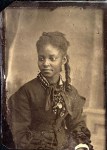
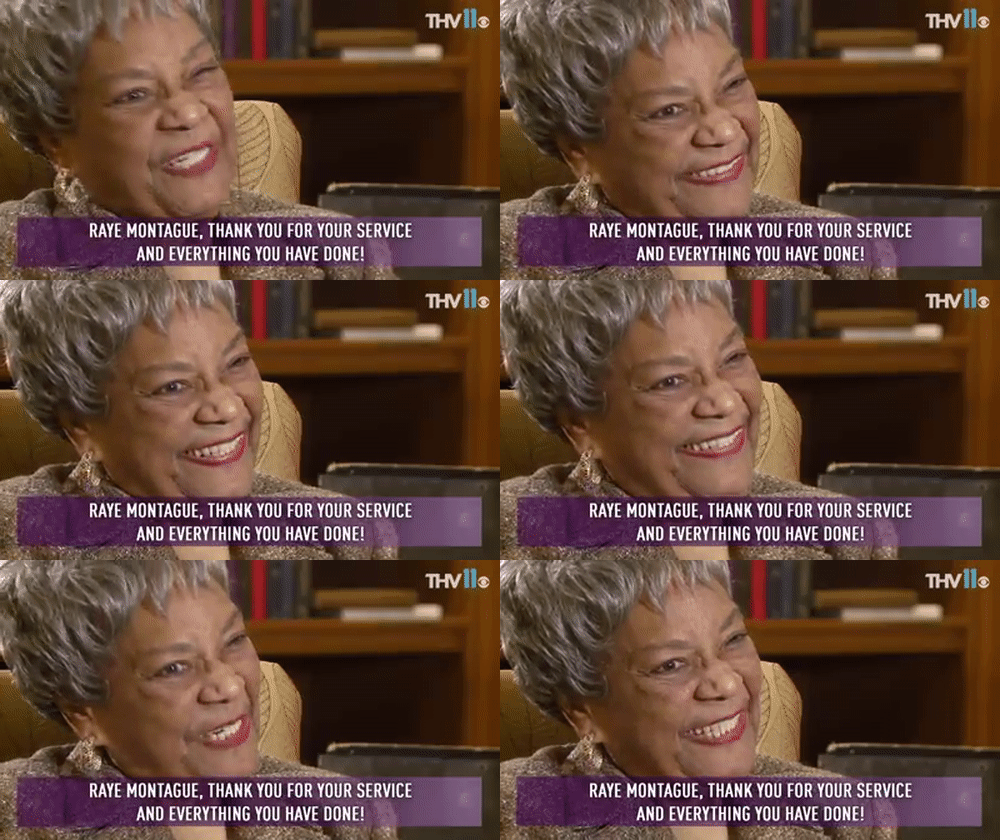
We need more stories like this to be revealed. These “Hidden Figures” we never knew about have done so much that we can’t even imagine. And noone knows about them! People need to know their heroes. This is one more story , where we see the miracle when a black person is given a chance to shine. Incredible story. I want a movie about this ,too.



















 Kimchi and Justice