On September 26, 1983, Duty Officer Stanislav Petrov, stationed at the Oko nuclear early-warning system command center, saw that his computer system was reporting that six missiles had been launched from the United States towards Russia.
Mr. Petrov correctly judged that the system was experiencing a malfunction and that the missile strike was a false alarm, and did not call for retaliatory launches of Soviet missiles, thereby preventing what would have been large-scale nuclear war.
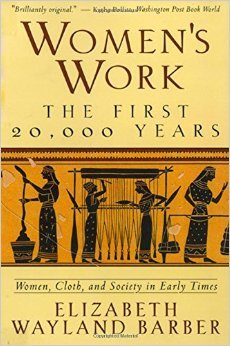
This is a great book, all about the work of spinning and weaving, how it developed, and how and why it was women’s work. It makes the great point that women’s work is ephemeral – food, cloth, it’s all things that don’t survive archaeologically, so that it’s something that gets overlooked. The author also knows how to weave herself, and has tried out weaving some ancient cloths, pointing out that it’s only by doing something like that that you can work out practical issues.
One of the things that was really great was the author pointing out that the most plausible reconstruction for the Venus de Milo is of her spinning:
Even better, is that since the book has been written, an artist who makes 3D printed sculpture has made a 3D model of what she would have looked like – and you can buy one for yourself:
I love this concept
OKAY Tumblr, I’m gonna try this one more time. The tags for this post haven’t been working properly and more people need to see this, darn it!
Let’s try linking some good people in and see if that makes it play along.
Oh I love this! I would 100% want a spinning venus in my life….
Thanks for the tag!
Also if you have access to an academic library they may have the same author’s Prehistoric Textiles, which is both broader and more in-depth and tells you about the domestication of sheep and terms for weaving in pre-Hellenic languages and is amazing.
When programmers at the MIT Instrumentation Laboratory set out to develop the flight software for the Apollo 11 space program in the mid-1960s, the necessary technology did not exist. They had to invent it.
They came up with a new way to store computer programs, called “rope memory,” and created a special version of the assembly programming language. Assembly itself is obscure to many of today’s programmers—it’s very difficult to read, intended to be easily understood by computers, not humans. For the Apollo Guidance Computer (AGC), MIT programmers wrote thousands of lines of that esoteric code.
Here’s a very 1960s data visualization of just how much code they wrote—this is Margaret Hamilton, director of software engineering for the project, standing next to a stack of paper containing the software:
The AGC code has been available to the public for quite a while–it was first uploaded by tech researcher Ron Burkey in 2003, after he’d transcribed it from scanned images of the original hardcopies MIT had put online. That is, he manually typed out each line, one by one.
“It was scanned by an airplane pilot named Gary Neff in Colorado,” Burkey said in an email. “MIT got hold of the scans and put them online in the form of page images, which unfortunately had been mutilated in the process to the point of being unreadable in places.” Burkey reconstructed the unreadable parts, he said, using his engineering skills to fill in the blanks.
“Quite a bit later, I managed to get some replacement scans from Gary Neff for the unreadable parts and fortunately found out that the parts I filled in were 100% correct!” he said.
As enormous and successful as Burkey’s project has been, however, the code itself remained somewhat obscure to many of today’s software developers. That was until last Thursday (July 7), when former NASA intern Chris Garry uploaded the software in its entirety to GitHub, the code-sharing site where millions of programmers hang out these days.
Within hours, coders began dissecting the software, particularly looking at the code comments the AGC’s original programmers had written. In programming, comments are plain-English descriptions of what task is being performed at a given point. But as the always-sharp joke detectives in Reddit’s r/ProgrammerHumor section found, many of the comments in the AGC code go beyond boring explanations of the software itself. They’re full of light-hearted jokes and messages, and very 1960s references.
One of the source code files, for example, is called BURN_BABY_BURN--MASTER_IGNITION_ROUTINE, and the opening comments explain why:
About 900 lines into that subroutine, a reader can see the playfulness of the original programming team come through, in the first and last comments in this block of code:
In the file called LUNAR_LANDING_GUIDANCE_EQUATIONS.s, it appears that two lines of code were meant to be temporary ended up being permanent, against the hopes of one programmer:
In the same file, there’s also code that appears to instruct an astronaut to “crank the silly thing around.”
“That code is all about positioning the antenna for the LR (landing radar),” Burkey explained. “I presume that it’s displaying a code to warn the astronaut to reposition it.”
And in the PINBALL_GAME_BUTTONS_AND_LIGHTS.s file, which is described as “the keyboard and display system program … exchanged between the AGC and the computer operator,” there’s a peculiar Shakespeare quote:
This is likely a reference to the AGC programming language itself, as one Reddit user . The language used predetermined “nouns” and “verbs” to execute operations. The verb pointed out 37, for example, means “Run program,” while the noun 33 means “Time to ignition.”
Now that the code is on GitHub, programmers can actually suggest changes and file issues. And, of course, they have
You can find the official Apollo 11 AGC source code on GitHub here
I just read this article in the Smithsonian Magazine and I just
This is a real person who existed. His name was Baron Franz Nopcsa von Felo-Szilvas. He had a castle, Sacel Castle, near Deva, Romania, which is in Transylvania.
He hypothesized that dinosaurs were related to birds in 1906. THIS IS LITERALLY A CENTURY BEFORE JURASSIC PARK CAME OUT. Remember: around the time JP was released, there was STILL a lot of debate as to whether dinosaurs were “really” related to birds. In Nopcsa’s time, everybody was still in the tail-dragging big slow lizard camp.
Did I mention he was hella gay? he was really hella gay. His first lover was Count Louis Draskovic. Later, he’d shack up with his young Albanian secretary, Bajazid Elmaz Doda, who he said was “the only person who has truly loved me.” He named a species of prehistoric turtle after the guy: Kallakobotion bajazidi. They lived together for 30 years.
Poor guy also probably had bipolar disorder–his work was characterized by periods of frenzied fieldwork, and then he’d have to retreat into isolation for weeks due to an illness he’d describe as “shattered nerves.”
So yeah let’s remember this pioneer of paleontology because he’s cool as heck.
His Ojibway name was Binaaswi, translating roughly to “the wind that blows off.”
How apposite it is, then, that a hard wind was blowing off the choppy waters of Ontario’s Georgian Bay when the most decorated Indigenous soldier in Canada’s history was finally given an honour befitting his story.
History largely remembers him as Corp. Francis Pegahmagabow — the deadliest sniper and scout of the First World War, credited with 378 kills and 300 captures.
On Tuesday, National Aboriginal Day, a life-sized bronze monument of Pegahmagabow was unveiled in Parry Sound, Ont., almost 100 years after he earned his first medal for courage in battle. It was a tribute that many believe should have come sooner.
“He was a warrior chief,” said Perry Bellegarde, National Chief of the Assembly of First Nations, before a packed crowd — one that included Lt.-Gen. Marquis Hainse, commander of the Canadian Army — gathered at the shores of the bay. The wind carried his words into the distance.
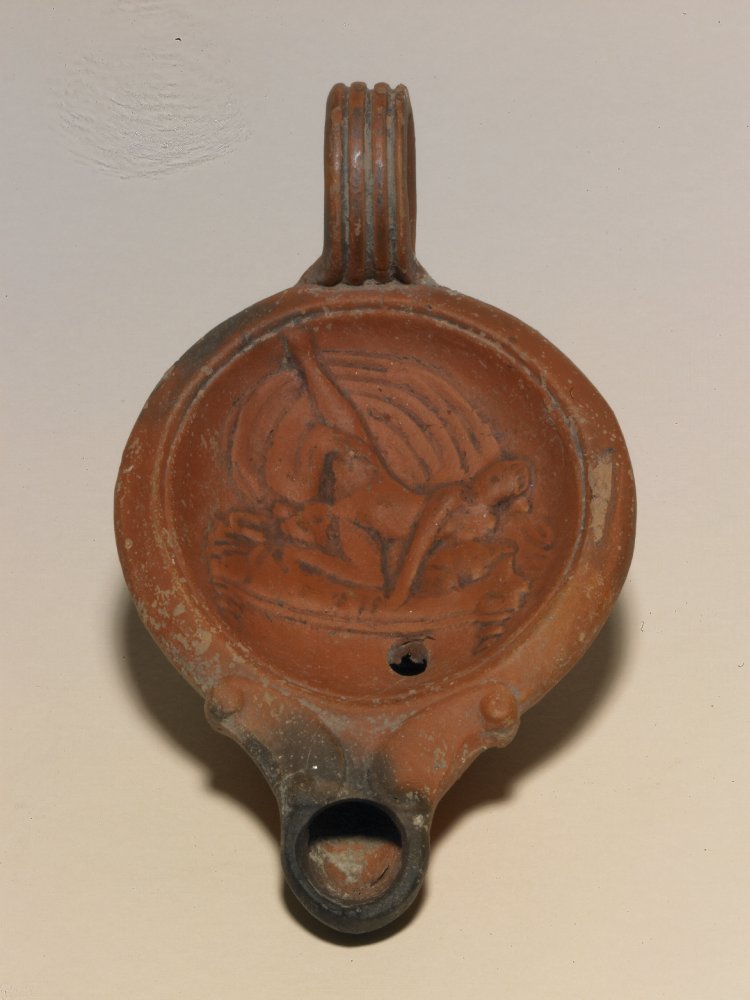
Scenes showing two women together are rare, but this first century oil lamp from Roman Turkey shows two women having oral sex together on a couch. While sex was frequently shown on everyday domestic items, it is uncertain who would have used or seen this lamp. It may have been made to titillate male viewers, rather than to appeal to women.
This is Roman!
It was Roman custom to greet companions with a kiss on the cheek or mouth, as a result, oral sex was the most taboo sexual act, because nobody wants to go in for a polite greeting and get a face full of dick breath.
I disagree that this was intended to titillate men for a few reasons:
These lamps are small, portable, and relatively replaceable/disposable. They cover scenes from daily life with no exceptions.
There was a HUGE slave trade in the Roman empire. Selecting slaves for domestic and sexual labour was completely normalised and there is no reason or evidence that women didn’t participate.
Classics over-relies on Martial’s nutty MRA epigrams because they’re the only references to lesbians we have. Counterpoint: they’re the only references to wlw that we have because bisexuality (as the modern world would define it) was the norm for Ancient Rome, and nobody else thought women having sex with other women (instead of them) was a problem.
The Romans considered women the seat of sexual desire. It was impossible for a woman to control her raging lust, and a man’s noble duty to resist spilling his manly essence unnecessarily, lest he end up a ridiculous, emasculated brute like Hercules.
FINE I’ll just do your homework for you. Trust me, it’s not just “what we think”, we have ample evidence and it’s pretty much unanimously agreed upon among brewers that women were traditionally the ones brewing and often drinking the beer. So long long story short: yes, brewing was very much a women’s craft in the majority of cultures worldwide pre-industrialisation. A couple of popular brewing textbooks state:
“Initially, brewing was carried out as home brewing by women for domestic use only. It was part of the daily housework next to cooking and baking bread.” (Handbook of Brewing, Priest and Stewart, 2006)
“Traditionally, [African] beers are made by women brewsters, as was the case medieval Europe, and they may be consumed with some ceremony.” (Brewing, Briggs, Brookes, and Stevens, 2003)
Honestly though, just google “women brewing history”.
lol wow thank you!!! i will spread this information in the world
also will use it to shut down Manly Beer Drinker of all sorts
THIS IS USEFUL! I SHALL BE TAKING THIS INTO MY LOCAL MICROBREWERY AND BEING OBNOXIOUSLY FEMINIST. I LOVE YOU FOR THIS SO MUCH!
Fun fact: men (specifically, monks) started adding hops to beer. Hops makes beer taste bitter – the tast men today insist is the “true” tast of beer which makes it a masculine drink. The fun part of it is that hops is a phytoestrogen which is (according to some sources – there are disproving articles so I won’t say it’s absolutely true) responsible for low sex drive, lower energy, man boobs, and abdominal fat. Actually, monks started using hops in beer in order to lower libido of men in the monastery.
yeah, at least it’s what we think, since women were the ones who started brewing shit. the goddess of brewery and beer is, well, a goddess and not a god, which is probably because women were the ones starting it historically.
“Women’s role in the history of beer is often forgotten,” says Sofie Vanrafelghem,
author and master beer sommelier. “One of the very first written
documents to refer to beer,” she says, “was an ode written 3,800 years
ago to the Sumerian goddess Ninkasi, whose priestesses brewed beer in
her honour.”
This data’s been on my radar for a while now. I remember being in one of our favorite places in Dublin, Porterhouse Central, and spotting a sign hanging up above one of the aisles that said BEERS BREWED BY MEN, NOT MACHINES. A nice enough sentiment, but unfortunately / unnecessarily gendered.
I was in a bit of a mischievous mood and said to the barman, “No women?” “Nope,” he said.
I said, “You should really get at least one woman brewer in here. For historical reasons if nothing else. Didn’t you know that until a couple of centuries ago it was illegal for men to brew in Dublin?”
He was kind of stunned. True, though. It was traditional in the city from Viking times that only women should brew. In fact there was a sense that it was unlucky for men to brew, that the beer would fail, that it didn’t like them.
My bartender was a little bemused by this. “But why would that be?”
I just kind of laughed. “Women,” I said. “Yeast. We have a relationship.”
I wish I could describe the series of expressions that went across his face. 🙂
Also really cool info: In medieval Europe, women would sell their excess home-brewed beer. They would identify themselves by wearing pointed hats at market and by placing broomsticks outside of their doors. Surprising absolutely no one, the Church was not really into female entrepreneurs and/or women having power and respect in the community. Church officials spread word that these women were evil servants of the devil and should be avoided because they would bewitch you with their potions. This is where we get much of the iconic Western European witch imagery ie. broomsticks, pointed hats, cauldrons. Basically the Church got pissy because women had power in their communities and basically started the a ridiculously long-lasting smear campaign against female beer-brewers. link to a full article: http://www.stylist.co.uk/life/recipes/women-and-beer-a-snap-shot-history
Okay so you know those poofy old timey renaissance pants that looked totally ridiculous?
Well in my history of fashion class we learned that the bright stripes are called slashes, and are actual slashes in the outer layer that mimic slashes from swordfighting, and they were added as a stylistic flair to make it look like the men had been in battle.
Guys.
Distressed Jeans aren’t just ‘our generation’
Absolutely.
Most to the point: this could get to be an incredibly expensive form of detailing. People slashed doublets and pantaloons in all kinds of rare and pricey fabrics.
There’s this too: slashing (in some jurisdictions) was a way to exploit loopholes in the local sumptuary laws. Until the powers that be got off their butts and actually amended the existing laws to forbid slashing with what they considered over-expensive fabrics that common folks shouldn’t be allowed to wear, you got to wear them – with a little extra frisson of being just that far away from breaking the law – and get away with that year’s hot fashion statement.
(For reference purposes, look at some of the articles linked to at the bottom of this page on Elizabethan sumptuary law. The title “Controlling the uncontrollable” is very much to the point. Morality-based or politically-based legislation against fashion trends rarely turns out well…)
Here’s Anne of Austria with fashionably slashed sleeves.
See also this page (source of the image above) for more examples. Google will show you lots more if you go looking. One could slash very subtly or very extravagantly: there was a wide range of possibilities, depending on your rank / station and how punk you felt like looking…
Native Americans weren’t allowed US citizenship until 1924.
Let that sink in. We lived here first…for thousands of years. And less than a hundred years ago we were finally given citizenship.
We also fought in WWI despite not being US citizens.
In Arizona, natives weren’t granted the right to vote until 1948. Think how that type of neglect ties into resource colonization as infrastructure was developed within years prior.
In addition: the indigenous peoples of Canada were not recognized as Human Beings until the year 1960. Now let that shit sink in.
In the US it wasn’t until 1968 that the Indian Civil Rights Act was passed and allowed for the right to freedom of speech / assembly / press, a jury trial, the right to an attorney etc. It’s so fucking frustrating.
and it wasn’t until 1978 that we were legally allowed to practice our own religions. in a nation founded on religious freedoms, it was illegal to practice our own religions. in our own country. how fucked up is that?
Aaaand Native Americans weren’t entitled to their own languages (had no legal rights to teach them in their schools, use them in business) until the Native American Language Act of 1990.
All my white followers: keep in mind your ancestors were evil.
Ancestors? This stuff is fifty years ago. This is our parents and grandparents.



 Kimchi and Justice