People in the Middle Ages valued sweet smelling breath and bodies, seeing them as desirable, so there is a great deal of evidence from the period of tooth pastes, powders and deodorants.
Contrary to the typical Hollywood depiction of medieval peasants with blackened and rotting teeth, the average person had teeth which were in fairly good condition, mainly due to the rarity of sugar in the diet. Most medieval people could not afford sugar and those who could used it sparingly.
Archaeological data shows that only 20% of teeth had signs of decay, as opposed to 90% in the early twentieth century. The main dental problem for medieval people was not decay but wear, due to a high content of grit in the main staple, bread.
For deodorants, soap was available for the wealthy, but a variety of herbs and other preparations were also used. Soapwort is a plant native to Europe and Asia which, when soaked in water, produces an effective liquid soap. Mint, cloves and thyme were also extensively used by simply rubbing into the skin, and alum (hydrated potassium aluminium sulphate) was an effective deodorant.
I am trying to keep to 14th century technology on my pilgrimage to Canterbury, which gives me various options when looking at hygiene. In the middle ages people generally cleaned their teeth by rubbing them and their gums with a rough linen cloth, or the chewed end of a stick. There are various recipes for pastes and powders that could be put on the cloth to help clean the teeth, but I have chosen simple salt to whiten them and to aid fresh breath. I will also be using the stick method, and will be taking along a supply of liquorice root sticks for that purpose.
I also have a few blocks of alum, which when rubbed into wet skin has a deodorising effect. Alum, like beeswax, was used extensively in the middle ages for a variety of purposes, also being useful:
* in the purification of drinking water as a flocculant * as a styptic to stop bleeding from minor cuts * as a pickling agent to help keep pickles crisp * as a flame retardant * as an ingredient in modelling clay * as an ingredient in cosmetics and skin whiteners * as an ingredient in some brands of toothpaste
The photograph shows my wash kit including home made olive oil soap, salt for the teeth, a block of deodorising alum, cloves, a boxwood comb made for me by Peter Crossman of Crossman Crafts and some liquorice root sticks, all on a woollen ‘towel’. Note that the cloves are kept in a ventilated box….this is because insects hate the smell of cloves and so a perforated box will keep them out of my kit and food bag when I am sleeping rough. TIP: If you steep some cloves to obtain the oil and put the liquid around the doors and windows of your house, it keeps spiders and insects out.
Pay attention medieval-ish fantasy authors- filthy people without any cleaning or self care is Not Historical.
Welcome back to FRIDAY FASHION FACT! Today’s topic is one
that seems to be quite the curiosity to many people, or, more
accurately, to many women. That’s right, I’m finally covering maternity
wear in the age of corsets! It’s no wonder why this topic is so
perplexing to so many people- it is a shockingly un-discussed area of
fashion history. We rarely, if ever, see images of pregnant women
throughout history. What we commonly see, though, is women with
teeny-tiny waists that are caged in and perfectly flattened by stays and
corsets. Clearly, those styles didn’t leave much room for a little
alien growing in a woman’s belly. Yet the fact that we all here today is
proof that the vast majority of women throughout history were pregnant
at some point in their lives. This means that some sort of clothing
accommodating a rapidly growing midsection had to exist. So what did it
look like?
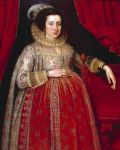
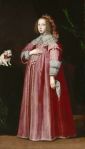
Up until the Renaissance, maternity wear was
barely, if at all, different from regular dress. This is because in these early
days, clothing was not fitted to the body. Fabric was cut in rectangular
pieces that were laced together, making it easy to tighten or loosen a
dress. During pregnancy, women would simply loosen the lacing, allowing
more of her underlayers of clothing to be visible, possibly adding additional layers. Later in a
pregnancy, women simply stayed at home, meaning they could just wear
loose undergarments and open robes. During the late Middle Ages, it was
in fact fashionable for a woman to appear pregnant, whether or not she
actually was. They would wear high waisted gowns with extra fabric
gathered around her belly, thus making specific maternity wear unnecessary.
By the Renaissance, though, seams and
structure became integral parts of fashion. Stays came into fashion
(read here) resulting in a restricted bodice. During this era, women
would loosen the bottom of their stays as much as possible during the
early part of their pregnancy, thus causing the bump to appear rather
low. Those who could afford new clothing would wear shortened bodices as
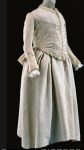
their stomachs grew larger. Those who could not had two options. One,
they would wear a man’s waistcoat paired with their loose underlayers
and skirts. This is because during this era men’s waistcoats had vents
in the back, held together by lacing which could be loosened. The other
option was to wear a bodice that laced in the front, leaving the lacing
around the belly open. This would then be covered up with an apron. Using an apron to cover an open bodice that accommodated a full belly remained the go-to style for the pregnant poor for the next couple of
centuries.
The first official pregnancy garment was created
in the 17th century. Known as the Adrienne dress, the style had loose
folds of fabric where normally a fitted waist would be found. The
Adrienne developed throughout the next century, and by the 18th century
it often included a bib that could be folded down for breastfeeding. In the
early 19th century Neoclassical era, fashion was once again in a style
that easily accommodated a pregnant figure. By the 1820s, though,
structured undergarments made their way back into style, soon becoming
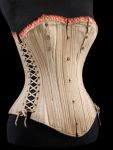
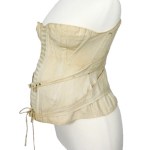
the cinched-waisted corsets we associate with the word today. However, maternity corsets
were also created around this time. These garments were created to
shape, support, and minimize the appearance of a belly. They were
adjustable, and some had flaps for breastfeeding. There were countless
styles created, all boasting some new-found advantage.
Throughout
the 19th and early 20th centuries, maternity wear would either raise or
lower waistlines, depending on which was more fashionable at the time,
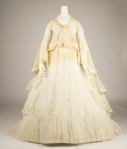
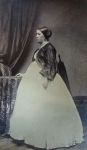
to accommodate the shape. The crinoline era used empire waists, as
well as separate blouses and skirts, often covered by a large jacket to
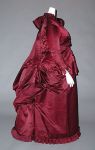
hide the bump. At home, wrappers and robes were extremely common. The bustle era, with its drop waists, attempted to hide
the shape by smoothing it down into folds of fabric by the hips. When
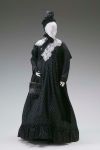
tea gowns- unstructured, flowing dresses- were developed towards the end
of the Victorian era, they became the fashionable choice for women at
home, particularly towards the end of their term. Yet the birth (get it??) of the ready to wear
industry (read here) and the downfall of the corset shortly after caused
maternity wear to shift towards the distinctive garments we often think
of today. That, however, is a topic for another day.
Have a
question about fashion history that you want answered in the next FRIDAY FASHION FACT? Just click the ASK button at the top of the page!
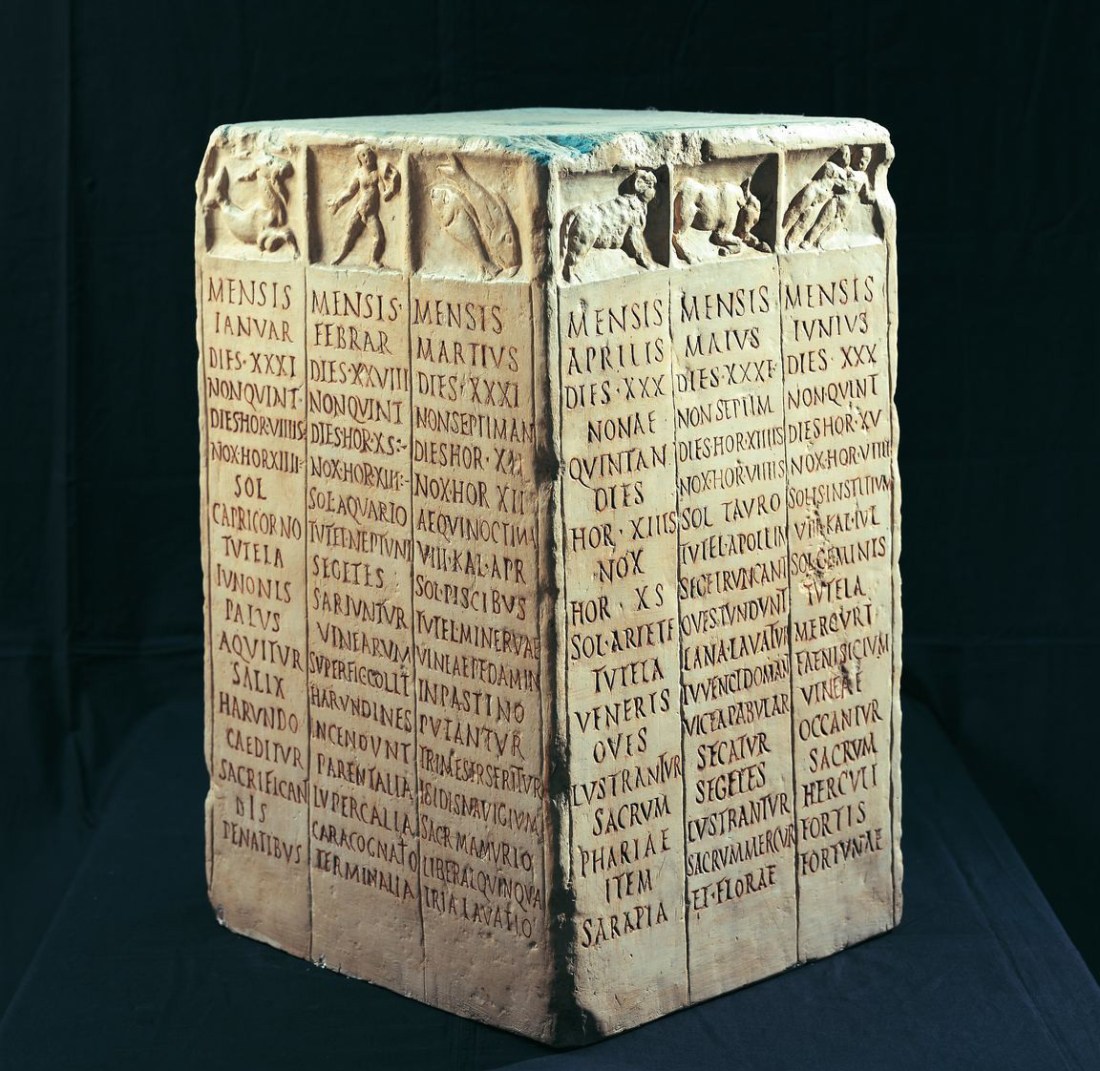
Roman Farmer’s calendar. Rome, Museo della Civiltà Romana, inv. M.C.R. n. 3485 Each side bears the names of three months of the year. For each month we can see, starting from the top: the number of days in it; the day on which the Nones (the day of the Moon’s first quarter) falls; the duration of the day and night expressed in hours; the sign of the zodiac; the protecting divinity; work to be attended to in the fields; and the most important festivities.
Imagine hearing about a play that ran for one night only.
Everything you know about it is second-hand at best. If you’re lucky, you might be able to talk to someone who saw it. If you’re really lucky, they’ll even be telling the truth. More likely, everything that comes to you is of the “I know a guy whose second cousin’s former roomate was in the audience” variety.
With a bit of digging, maybe you can get your hands on some of the props and costumes, though there’s nothing to tell you how they were used. Maybe even a few pages of the script – though as any student of theatre can tell you, what it says in the script and what actually went down on stage are often two very different things.
Now: imagine writing fanfic based on this play you’ve never seen and never will, without so much as a decent plot summary to guide you.
If that sounds reasonable to you, congratulations: you may have what it takes to be an historian.
That, my friend, is exactly the question you have to ask.
YOU LEFT OUT THE MOTHERFUCKING CRYSTAL PYRAMIDS THEY FOUND ON THE FLOOR OF THE BERMUDA TRIANGLE
OLDER THAN THE AZTECS AND COMPLETELY SMOOTH AND 3 TIMES BIGGER THAN THE EGYPTIAN CHEOPS AND NO ONE KNOWS HOW IT GOT THERE.
IM SORRY BUT WHY IS THIS THE FIRST TIME IVE HEARD OF THE CRYSTAL PYRAMIDS WHAT IS THIS SHIT
OKAY HERE’S YOUR DEBRIEFING OF THE CRYSTAL PYRAMID BECAUSE THAT IS SOME CRAZY SHIT.
IN 2012 FRENCH AND AMERICAN SCIENTISTS STUDYING THE BERMUDA TRIANGLE STUMBLED UPON THIS HUGE TRANSLUCENT PYRAMID
THIS THING MEASURED 300 METERS WIDE AND 200 METERS TALL. THAT’S BIGGER THAN THE PYRAMIDS OF GIZA SO YOU COULD IMAGINE HOW CRAZY THIS WAS TO THE SCIENTISTS
NOW THIS IS ALL 2000 METERS UNDERWATER. THE SCIENTISTS THEN DISCOVERED TWO HOLES AT THE TOP OF THE PYRAMID THAT MOVE WATER THRU AT AN EXTREMELY FAST RATE. THIS CAUSES MASIVE SURGE WAVES AND MIST ON THE SURFACE. THAT MAY BE THE REASON FOR THE INCIDENTS WITH BOATS AND PLANES CRASHING THERE
THEY’RE SAYING THAT THIS PYRAMID COULD BE FROM THE TIME BEFORE THE BIBLE SAYS NOAH’S ARK HAPPENED
OR ALIENS
BUT WHATEVER IT IS THE BERMUDA TRIANGLE JUST GOT LIKE A BILLION TIMES CREEPIER
The reason why the pyramids are the same shape in three different places is the same reason why wheels are round, daggers are pointy, and so-on: Because pyramids are stable. If you built an upside-down pyramid, it would fall-over. If you built something rectangle-shaped, the bottom-part would be crushed under the weight of the top-part if you made it too high, if the materials aren’t strong enough (the same thing happens if you try and make a pyramid too steep)
Being amazed that three different civilisations were smart enough to work out that tall buildings should be pyramid-shaped is like being amazed that 1 + 1 = 2 no matter where you are.
I always see shit from old classicists demonizing Calypso for holding Odysseus hostage in a land that wasn’t his own and not allowing him to return to his family for years, yet I never see shit from old classicists demonizing Paris for doing the same thing to Helen.
#oh do let’s talk about female ptsd in the Iliad (latining)
Zachar: Usually translated as “male” in English. Nekevah: Usually translated as “female” in English. Androgynos: A person who has both “male” and “female” sexual characteristics. [Source: 149 references in Mishna and Talmud (1st-8th Centuries CE); 350 in classical midrash and Jewish law codes (2nd -16th Centuries CE).] Tumtum: A person whose sexual characteristics are indeterminate or obscured. [Source: 181 references in Mishna and Talmud; 335 in classical midrash and Jewish law codes.] Ay’lonit: A person who is identified as “female” at birth but develops “male” characteristics at puberty and is infertile. [Source: 80 references in Mishna and Talmud; 40 in classical midrash and Jewish law codes.] Saris: A person who is identified as “male” at birth but develops “female” characteristics as puberty and/or is lacking a penis. A saris can be “naturally” a saris (saris hamah), or become one through human intervention (saris adam). [Source: 156 references in mishna and Talmud; 379 in classical midrash and Jewish law codes.]
Our Sages non-judgmentally explore the role of intersex people in regards to many facets of ritual and civil law such as circumcision, redemption, oath-taking and menstruation.
The midrash, in Bereshit Rabah, posits that Adam, the first human being, was actually an androgynos. While in the Babylonian Talmud (Yevamot 64a-64b) the radical claim is made that Abraham and Sarah were tumtumim, gender non-conforming people. According to our tradition the first human being and the first Jews were gender outlaws. This teaches us that it is those that transgress the apparently rigid lines of Judaism that have caused the tradition to grow.
I just discovered foodtimeline.org, which is exactly what it sounds like: centuries worth of information about FOOD. If you are writing something historical and you want a starting point for figuring out what people should be eating, this might be a good place?
if you ever think history isn’t an important subject just remember that my friend’s solution to poverty was to “just print more money”
Well isn’t it?
tell that to the weimar republic
[horrified german screaming in the distance]
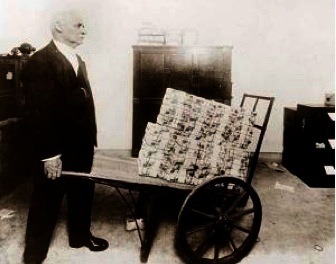
Ok so many people may not know what this is about. After World War I in Germany the country was pretty much bankrupt and on top of that they were being forced by the allies to pay restitution for the war. In order to try to fix these problems the Weimar Republic which was the government that took over after the war decided to just print more money. Because of this the country faced hyperinflation which basically means that everything became majorly expensive and the money was pretty much worthless. This is a picture of a man that is literally carrying money around in a wheelbarrow because that is how much money it took to pay for things:
These are some children playing with stacks of money because they were cheaper than toys:
And here is another:
So in short no you cannot fix poverty by printing more money.








 Kimchi and Justice