Until 1890, the minority party in the U.S. House of Representatives could block a vote by “disappearing.” A minority party member would demand a roll call, all the minority party members would remain silent when their name was called, and then the minority party would declare that too few members were “present” for the House to conduct its business. To incoming Speaker of the House Thomas Brackett Reed, who was the head of the majority party, this was a “tyranny of the minority.“ Within the first month of his term, on January 28th, he resolved to break it. When Democrats demanded a roll call and refused to answer to their names, Reed marked them present anyway. When Kentucky representative James B. McCreary objected, Reed said sweetly, “The Chair is making a statement of fact that the gentleman from Kentucky is present. Does he deny it?”
There followed a sort of ontological shooting gallery. Democrats hid under their desks and behind screens to avoid being observed to exist. When they tried to flee the chamber entirely, Reed ordered the doors locked, which started a scramble to get out before the next vote. Representative Kilgore of Texas had to kick open a locked door to escape. Amid the howled objections, Confederate general “Fighting Joe” Wheeler came down from the rear “leaping from desk to desk as an ibex leaps from crag to crag,” and one unnamed Texas Democrat “sat in his seat significantly whetting a bowie knife on his boot.” Finally the Republicans mustered a majority even with the Democrats entirely absent, and the battle was over: Reed’s new rules were adopted on February 14.
I read about this in History of California class last semester. They also had a Filipino Repatriation Program where the U.S. government gave Filipino-Americans the choice to stay in America or get paid thousands of dollars to return to the Philippines and not be allowed to go back to America as a resident. Being that Japan invaded and colonized the Philippines after Pearl Harbor, repatriated Filipino-Americans were basically being sent into a war zone.
how is it possible to love fictional characters this much and also have people always been this way?
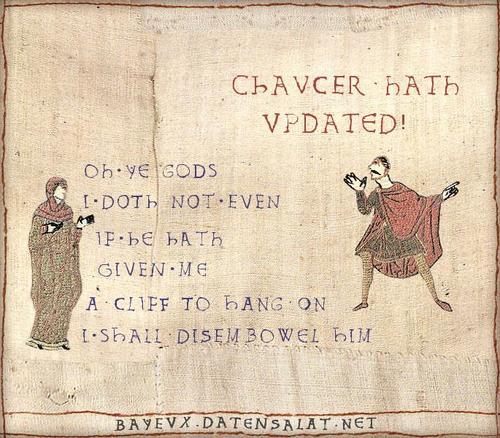
like, did queen elizabeth lie in bed late sometimes thinking ‘VERILY I CANNOT EVEN FOR MERCUTIO HATH SLAIN ME WITH FEELS’
was caesar like ‘ET TU ODYSSEUS’
sometimes i wonder
oh my GOD
the answer is yes they did. there’s a lot of research about the highly emotional reactions to the first novels widely available in print.
here’s a thing; the printing press was invented in 1450 and whilst it was revolutionary it wasn’t very good. but then it got better over time and by the 16th century there were publications, novels, scientific journals, folios, pamphlets and newspapers all over Europe. at first most were educational or theological, or reprints of classical works.
however, novels gained in popularity, as basically what most people wanted was to read for pleasure. they became salacious, extremely dramatic, with tragic heroines and doomed love and flawed heroes (see classical literature, only more extreme.) books in the form of letters were common. sensationalism was par the course and apparently used to teach moral lessons. there was also a lot of erotica floating around.
but here’s the thing: due to the greater availability of literature and the rise of comfy furniture (i shit you not this is an actual historical fact, the 16th and 17th century was when beds and chairs got comfy) people started reading novels for pleasure, women especially. as these novels were highly emotional, they too became…highly emotional. there are loads of contemporary reports of young women especially fainting, having hysterics, or crying fits lasting for days due to the death of a character or their otp’s doomed love. they became insensible over books and characters, and were very vocal about it. men weren’t immune-there’s a long letter a middle-aged man wrote to the author of his favourite work basically saying that the novel is too sad, he can’t handle all his feels, if they don’t get together he won’t be able to go on, and his heart is already broken at the heroine’s tragic state (IIRC ehh).
conservatives at the time were seriously worried about the effects of literature on people’s mental health, and thought it damaging to both morals and society. so basically yes it is exactly like what happens on tumblr when we cry over attractive British men, only my historical theory (get me) is that their emotions were even more intense, as they hadn’t had a life of sensationalist media to numb the pain for them beforehand in the same way we do, nor did they have the giant group therapy session that is tumblr.
(don’t even get me started on the classical/early medieval dudes and their boners for the Iliad i will be here all week. suffice to say, the members of the Byzantine court used Homeric puns instead of talking normally to each other if someone who hand’t studied the classics was in the room. they had dickish fandom in-jokes. boom.)
I needed to know this.
See, we’re all just the current steps in a time-honored tradition! (And this post is good to read along with Affectingly’s post this week about old-school-fandom-and-history-and-stuff.
Ancient Iliad fandom is intense
Alexander the Great and and his boyfriend totally RPed Achilles and Patroclus. Alexander shipped that hard. (It’s possible that this story is apocryphal, but that would just mean that ancient historians were writing RPS about Alexander and Hephaestion RPing Iliad slash and honestly that’s just as good).
And then there’s this gem from Plato:
“Very different was the reward of the true love of Achilles towards his lover Patroclus – his lover and not his love (the notion that Patroclus was the beloved one is a foolish error into which Aeschylus has fallen, for Achilles was surely the fairer of the two, fairer also than all the other heroes; and, as Homer informs us, he was still beardless, and younger far)” – Symposium
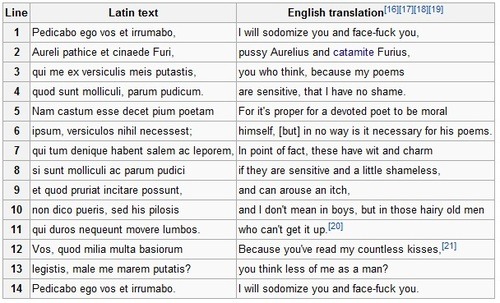
That’s right: 4th Century BCE arguments about who topped. Nihil novi sub sole my friends.
More on this glorious subject from people who know way more than I do
Man I love this post.
And to add my personal favourite story: after reading Samuel Richardson’s Clarissa in the 18th century, Elizabeth Echlin decided that she was NOT HAPPY with the ending and basically wrote her own fix-it fic. No-one dies and Lovelace (the villain) was totally reformed and became a super nice guy. It’s completely OOC and incredibly poorly written and it’s beautiful.
Also, so many women fell in love with the villain, Lovelace, and wrote to Richardson about it, that he kept adding new bits with each edition to highlight what a hideous person Lovelace was. So it’s almost unsurprising that reading novels in this period was actually considered dangerous because it gave women unrealistic ideas about men and made them easier prey for rakes.
Basically, “I want my own Christian Grey” has been a thing for hundreds of years.
Also a thing with fix-it/everyone lives AUs: at various points in time but especially in the mid 1800s-early 1900s (aka roughly Victorian though there were periods of this earlier as well) a huge thing was to “fix” Shakespeare (as well as most theater/novels) to be in line with current morality. Good characters live, bad characters are terribly punished – but not, you know, grusomely, because what would the ladies think? So you have like, productions of King Lear where Cordelia lives and so do Regan and Goneril, but they’re VERY SORRY.
Aka all your problematic faves are redeemed and Everyone Lives! AUs for every protag.
Slightly tangential but I wanted to add my own favorite account of Chinese fandom to this~ I don’t know how many people here have heard of the Chinese novel A Dream of Red Mansions (红楼梦), but it is, arguably, the most famous Chinese novel ever written (There are four Chinese novel classics and A Dream of Red Mansions is considered the top of that list). It was written during the Qing dynasty by 曹雪芹, but became a banned book due to its critique of societal institutions and pro-democracy themes. As a result, the original ending of the book was lost and only the first 80 chapters remained. There are quite a few versions of how the current ending of the book came to be, but one of them is basically about how He Shen, one of Emperor Qian Long’s most powerful advisers, was such a super-fan of the book, he hired two writers to archive and reform the novel from the few remaining manuscripts there were. In order to convince the Emperor to remove the ban on the book, he had the writers essentially write a fanfiction ending to the book that would mitigate the anti-establishment themes. However, He Shen thought that the first version of the ending was too tragic (even though the whole book is basically a tragedy) so he had the writers go back and write a happier ending for him (the current final 40 chapters). He then presented the book to the Emperor and successfully convinced him to remove the ban on the book.
According to incomplete estimates, A Dream of Red Mansions spawned over 20 spin offs, retellings, and alternate versions (in the form of operas, plays, etc.) during the Qing Dynasty alone.
In 1979, fans (albeit academic ones) started publishing a bi-monthly journal dedicated to analysis (read: meta) on A Dream of Red Mansions. In fact, the novel’s fandom is so vast and qualified and rooted in academics of Chinese literature that there is an entire field of study (beginning in the Qing dynasty) of just this one novel, called 红学. Think of it as Shakespearean studies, but only on one play. This field of study has schools of thought and specific specializations (as in: Psych analyses, Economics analyses, Historical analyses, etc.) that span pretty much every academic field anyone can think of.
(That being said, I’ve read A Dream of Red Mansions and can honestly say that I’ve never read its peer in either English or Chinese. If for nothing else, read it because you would never otherwise believe that a man from the Qing dynasty could write such a heart-breakingly feminist novel with such a diverse cast of female characters given all the bitching and moaning we hear from male content-creators nowadays)
the beauty of archival research *sigh*
Not a really interesting addition to this post compared to the above comments, but Jane Austen’s Northanger Abbey has the effect of reading overly dramatic Gothic literature on an impressionable young girl’s state of mind as a major theme. And there was a lot of concern in the regency period about the suitability of these novels for young women, because there was a concern that they reacted to the stories too strongly. (Subtext here being that there was a certain amount of anxiety that some of the available works of fiction were FAR too salacious for ladies)
Allow me to add Goethe and the Werther Effect – people (young men) cosplayed as Werther and were absolutely obsessed, some apparently to the point of suicide (although there is little proof for that), people wrote fix it-fics, Goethe hated them for it (there’s nothing like a good literary feud), the book was banned, people wrote more fic in the style of Werther, so called Wertheriaden ect. The Sturm und Drang period is a really good one for such episodes – people were very, very passionate about their books.
This is why history is so important. I made it until COLLEGE before I was ever taught this happened in America. So many people I know say things like “if Donald Trump were president he could still never make ____ happen.” This has happened before, and this can happen again. Please get out and vote so that someone like Donald Trump never makes it into office.
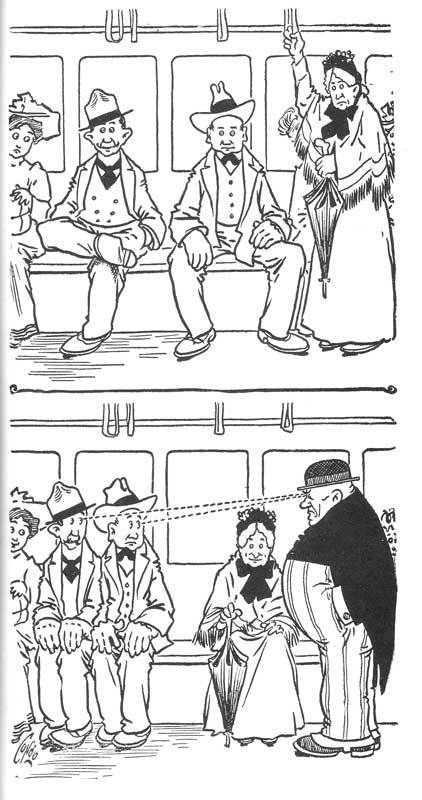
The Outbursts of Everett True was a comic strip that ran in papers from 1905 to 1927, wherein the aforementioned Everett True regularly beat the everliving shit out of rude people as a warning to anyone else who might consider being rude. Men have not only been taking up too much room on public transport for about as long as public transport has existed, but the people around them have been irritated about it for at least a hundred years. The next time someone tries to claim that manspreading is a false phenomenon, please direct them to this strip so that Everett True can correct their misconceptions with an umbrella upside the head.
The Victorian Era was not just a time of rampant colonialism, but of counter colonial movements and social justice. This was the time that saw the rise of Socialism, women’s suffrage movements as well as the first movements towards racial equality. Some of this shows up in the history as well as the literature.
This is something that gets buried, and something that fascinates me about this particular era in history.
If we’re rewriting the laws of physics, can’t we rewrite history so that the British Empire never existed and Britain made it’s wealth by selling awesome inventions and it’s cool and multicultural?
I started writing a buncha words about alternate history and then decided to make them their own post, but in essence: Yes.
Real life Victorian Britain was surprisingly diverse. There’s a veil that disguses the actuality of the day from us, and it’s the reams of writing that British Victorians produced about how they felt the world should be.
It was a world of unceasing change where strangers from overseas were moving into the “homeland” and life was becoming increasingly global. Third sons who once might have gone to London or the Continent were going to India to make their fortunes. Goods were being imported from across the ocean – by the end of the 19th century, meat was successfully being imported to London from America and Australia. It felt like the world had gotten bigger overnight, and that it was filled with people who shared no common customs with good ol’ Englishmen. Change was happening at what felt like an ever-increasing rate, and the human effects were visible all around. If you ventured into the East End of London, you would see a sea of non-English faces, and you might not hear English spoken all day.
And that was fucking terrifying to many middle-class white Britons. It felt like too much, too soon, and dozens of writers pushed back against the individual issues they were disturbed by. Sometimes this was poverty and the mistreatment of workers in an increasingly mechanized world. Sometimes it was non-white immigrants existing and women moving from at-home cottage-level work to factories.
If I had to define Victorian Britain in one word, it would be backlash. That intense focus on propriety, privacy, keeping oneself to oneself, all of it grew out of backlash against the rapidity of the industrial revolution going on all around, and to the “looser” moral codes of the 18th century. There was a feeling that things had gone much too far and it was time to refocus on the “traditional” home and traditional English way of life (do I have to tell you that they were inventing these things as they were praising them). And when I say English I mean English. Wales was pretty thoroughly Anglicized, ditto Scotland, and Ireland continually restless and very angry at being under the English thumb.
That’s why all those writers you read are hammering so hard for non-whites to be kept ground down, for women to stay in the home, for men to take up the white man’s burden, for “traditional Englishness” to remain paramount. They were scared of the progress that was actually happening.
A lot of steampunk writers stop at the surface layer of what writers wanted their time and place to be, and just rewrite every shitty Victorian novel you ever read, but with gears glued on things. Very few look further and realize that there was only a thin scrim of that uptight Victorianism, that its maintainers fought very hard to keep it there, and that there’s every bit as much exciting unrest and rapid change to pick at in Victorian London as there is in any given cyberpunk setting.
I love how humans have literally not changed throughout history like the graffiti from Pompeii has people from hundreds of years ago writing stuff like “Marcus is gay” “I fucked a girl here” “Julius your mum wishes she was with me” and leonardo da vinci’s assistants drew dicks in their notebooks just for the banter and mozart created a piece called “kiss my ass” so when people wish for ‘today’s generation’ to be like ‘how people used to’ then we’re already there buddy we’ve always been
The Hagia Sophia has inscriptions that were considered sacred for centuries until they were deciphered in the 70s to be Nordic runes saying “Halfdan wrote this”
Fucking Halfdan.
I’m just imagining future archaeologists thinking that Kilroy was some kind of all-seeing deity
Confusing archeologists of the future is a good reason to do something
That’s why I want my skeleton buried atop a horse skeleton with a shark skeleton posed like it was fighting us
When some douchebag digs up my bones in a few thousand years time I want them to be puzzled by why the horse/land shark battles were left out of the history books
Lately, I’ve run across complaints that modern depictions of the Knights of the Round Table are too “anime” – giving them all sorts of goofy powers, and sending them on weird, over-the-top adventures.
Allow me to point out that the following are all actual things that appear in the older tales about the Knights:
Sir Kay is said to have had the power to grow to giant size, hold his breath for nine days, and radiate supernatural heat from his hands.
Sir Bedivere openly practiced sorcery, and suffered from an accordingly sinister reputation; on more than one occasion, he was saved from being hanged as a witch only by King Arthur’s testimonly to his good character.
Sir Galahad possessed supernatural strength and speed by virtue of his moral and sexual purity – making him a rare example of a male character with virginity-fueled super powers.
Sir Balin once wielded the Lance of Longinus, and blew up an entire kingdom with a single blow. He also fought an evil knight with the power of invisibility.
Sir Marrock was a freaking werewolf.
Conclusion: modern depctions of the Knights of the Round Table aren’t anime enough.
I made this post two years ago, and while it’s never really taken off, it’s still getting a small burst of additional notes every couple of months. I wonder how folks keep finding it?
Anyway, the original post is hardly exhaustive – here are a few more fun examples:
Sir Gawain (you know, the guy involved in that whole mess with the Green Knight) is described as literally solar-powered in some tales, being three times as strong at high noon as he is at daybreak.
Sir Owain’s best friend and partner in battle is a talking lion. While his tales do include a sort of “origin story” explaining how he met the lion, the fact that it can talk isn’t remarked upon – it’s just a thing.
Sir Gwrhyr is able to speak every language, including those of animals, and in some versions can transform into various animals as well.
Though Lancelot isn’t usually described as having any specific supernatural powers or tools, he’s constantly described as “perfect” by everyone who sees him – you can practically see the bishie sparkles.
(Speaking of Lancelot, it’s interesting to note that in the earlier stories, his illicit romance with Guinevere is actually part of a love triangle involving another knight named Galehaut – and the focus of that love triangle isn’t Guinevere, but Lancelot himself! Galehaut has been quietly edited out of more modern retellings for sadly obvious reasons.)
whats up nerds i found a novelized historical slash fic about lancelot and galehaut written by two medieval scholars here it is youre welcome
Galehaut is a lord (and eligible for kingship based on his holdings), not a knight, and among other gestures, he straight-up asks Lancelot to do the closest thing to marrying him that was possible with the legal system of the time, which would have made Lancelot a king. I gave a talk about this before. Unlike some things that Tumblr latches onto without evidence, this one is very much true.
Also, it wasn’t “quietly edited out”, it was specifically not in Malory’s translation, which was the only direct English “translation” of these texts for hundreds of years. It was only in the 1990s that Dr. Lacy’s team actually translated it into modern English. You can’t blame other English-language writers for excluding it, as they had no way to know about it. Malory’s version is far more of an informed retelling than an actual translation of the texts.
Here are some snippets of the Lacy translation I put online, with key points highlighted. Importantly, the easy-reading version of Galehaut’s tale is also by Lacy and crew, but is still less homoerotic than the original.
Also didn’t Lancelot once punch somebody so hard their head fell off













 Kimchi and Justice