
Tag: latining
How to make super easy super delicious hot chocolate
I made chocolate-orange hot chocolate tonight and it was SO GOOD. And it has TWO INGREDIENTS (or three, depending on how thick you like your chocolate) and not very many steps. YAY!
INGREDIENTS:
*chocolate orange, or other tasty eating chocolate.
*heavy cream
*milk (optional)
EQUIPMENT:
*small saucepan
*stirring implement of some kind (i prefer a wire whisk)
*mug
INSTRUCTIONS:
1) Acquire chocolate orange. If you do not have/do not like chocolate oranges, other eating chocolate will do, although the higher quality the better. When not using chocolate oranges i usually use those little Dove Promises guys.
2) Acquire small saucepan. Larger saucepans (and more chocolate) are helpful if you’re making chocolate for more than one person.
3) spread the chocolate across the bottom of the pan.

This is about a quarter of a chocolate orange Please ignore how dirty my stove is. Note that I didn’t spread it all that carefully, figuring that the chocolate would melt pretty quickly (it did).
4) Turn the burner on AS LOW AS POSSIBLE. Chocolate burns easily, but it ought to behave itself if you turn the stove on as low as you can get it and pay attention to the pot.

here you see the mostly-melted chocolate. I whisked it a little to encourage the last bits to melt.
5) Once the chocolate is mostly melted, dribble in some cream.

Notice that the chocolate clumped up a bit and didn’t want to mix in (especially near the edges). Fear not! This is just a thing chocolate does sometimes. Keep stirring and it will incorporate.

Keep stirring….

THERE we go.
6) Keep adding cream by dribbles and mixing it in until the chocolate doesn’t do the clumpy thing anymore. This will probably take four or five sets of dribbles-and-stirring.
7) Taste the chocolate. You might, as i did, decide that you added an insufficient amount of chocolate – go ahead and put in some more if you want.

(yes, i put in most of the rest of the orange. shush.) Stir until it has melted all the way in.
8) add a little more cream if you want, depending on how thick you like your drinking chocolate. If you like it thick enough to stand a spoon in, you’re probably done. Otherwise, add a bit more cream.
9) If this concoction is just too rich for you (and it is pretty damn rich) or if you want to stretch it without using up your ENTIRE stash of heavy cream (which is expensive), now is the time to add some milk. Just pour it in and stir.
10) Continue to heat on ULTRA MEGA LOW until you have reached the desired temperature. (because chocolate has such a low melting point, it will probably happen that the top of the chocolate is just lukewarm even though the chocolate has all melted in.) Keep an eye on it though, so it doesn’t burn or develop a skin from getting too hot.
11) Pour into a mug. If you want, deglaze the pan with more milk (pour milk in to cover up all the chocolate sticking to the sides and bottom of the pan, heat GENTLY and stir to get the chocolate off the pot and into the milk) to get a much-more-diluted-but-still-tasty drink. Why waste chocolate, right?
AND THAT’S IT! Enjoy your delicious treat.
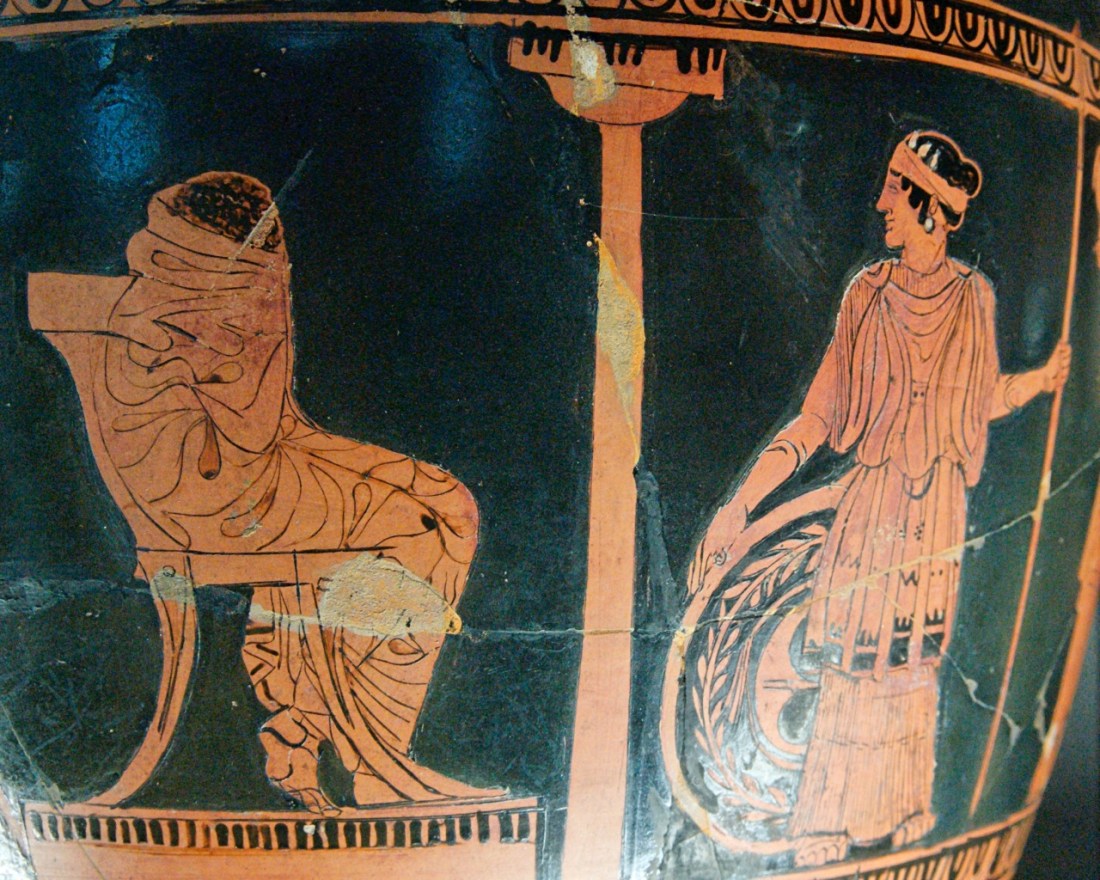
if achilles can wrap himself up in a blanket and ignore his problems then i should be allowed to as well
#justtrojanwarthings
Are some people still pronouncing Achilles as ah-chill-es? He’s no chill all kill.
YES I WANT TO TALK ABOUT CITIZENSHIP AND BLOOD RIGHTS AND WHAT THAT SAYS ABOUT ATTITUDES TOWARDS EXTRAMARITAL AFFAIRS AND BY EXTENSION FEMALE SEXUALITY DO IT DO THE THIIIIING
OKAY! I do NOT have access to JSTOR or any of my textbooks/notes since I moved, so this is all from memory. Classics side of Tumblr, spank me with sources.
So the thing about citizenship is that it’s important for a whole host of reasons. You need to know who to tax, who to back politically and financially, and whether or not that smashed cart is an international incident. (Well, international as far as city-states go. ANYWAY.) As such, the leaders of city-states had a vested interest in knowing who was a citizen.
The Speech Against Neaira (Wikipedia, Greek text, English text) is a speech from the Athenian courts that claims Neaira was a Corinthian courtesan who married an Athenian and proceeded to pass her children off as full Athenian citizens. Under Athenian law, citizenship only counted if both parents were Athenian citizens. Neaira’s past jeopardises not just herself, but her entire family. Let us also consider The Murder of Eratosthenes (Wikipedia, Greek text, English text), a murder trial which hinges on the Athenian distinction between (and attitudes towards) seduction and rape. To summarise Athenian attitudes, rape is crime of passion against one’s property, whereas seduction is the systemic corruption of the family unit and by extension the city-state itself. Yikes.
Given this context, it is easy to understand the excessive misogynistic suppression of Athenian women. But what about the other city-states?
Thebes, Corinth, and Argos had much more reasonable citizenship requirements, usually requiring one parent to be a citizen. This makes sense, as it was common for men to purchase their favourite courtesan and either marry them or integrate them into their households. For heterosexual unions, it’s natural to want any offspring to have the benefits of citizenship and inheritance, so as long as one parent is a citizen, the child is granted citizenship. (Citizenship laws varied; sometimes marriage conveyed citizenship to the wife (or not), some local cultures required a physical inspection, etc.)
Basically, outside of Athens, infidelity was regarded as a personal affront instead of a political threat. Culturally diverse attitudes to sex work, religion, parenthood, and the gender divide mean that Athenian writing cannot and should not be used to generalise for all of Greece. I don’t have any sources offhand, but lots of Greeks thought it was pretty fucked up the Athenians married twelve year old girls.
Finally, most of what we know of other city-states comes from Athenians writing about those stupid backwoods people with their dumb loose morals and stupid buttfaces. I cannot for the life of me understand why serious academics take it as gospel.



@summershine23 it’s me! 😅
I CANT WAIT FOR THIS MOVIEEEE
This is totally accurate for what dogs do when we are not watching O.O
I am a Dog Expert this is Dog Science
Can we talk about the lil guy on the sofa…
Getting so into it 😀











im crying
im so happy
The story of Cassandra, the woman who told the truth but was not believed, is not nearly as embedded in our culture as that of the Boy Who Cried Wolf—that is, the boy who was believed the first few times he told the same lie. Perhaps it should be.
In her cover essay on silencing women in the October 2014 issue of Harper’s, Rebecca Solnit once again proves that she is one of our era’s greatest essayist – further evidence here and here. (via asteropes)

Zorita became well known for her unique and naughty acts, including a kinky take on a vaudeville staple – the Half and Half. Taking gender bending to new levels, she dressed one half of her body as a male groom, and the other as a female bride. Always keeping one profile to the audience, the groom and bride gradually removed each others clothing, leading to a climactic “wedding night” romp.
Although Zorita dated men, and admitted she only spent time with the ones she could use, she was a lesbian and never married. Her unrequited love was fellow performer Sherry Britton, who she pursued relentlessly to no avail
i’ll be damned if that isn’t the most amazing and original striptease i’ve ever heard of. my mind is fucking blown.
 Kimchi and Justice