There’s no way to talk about rabbits without mentioning the ever-popular medieval attack rabbits.
The following images all come from The Smithfield Decretals, a copy of Pope Gregory IX’s treatise on medieval canon law. This version is believed to have been created in France in the 13th century, and the illustrations added in England decades later, at a new owner’s request.
Those illustrations include the famous Rabbit War sequence
some truly incredible birds
snails doing snail things
a man fighting a butterfly
and over 600 other images including sports, monks being pranked, a surprising number of stilts and the least impressed hermit of all time. They’re all available online here at the British Library.
If you’ve been around for a while you may have noticed that the medieval way is to pick one, or possibly two, activities for each animal, and make sure those activities are in every picture. So tigers stare in mirrors, griffins delicately cradle their prey, and the ibix… falls on its head.
This is actually something it does on purpose, as its primary defense mechanism. Its horns are strong enough for it to land unharmed even after jumping off the highest mountains.
This cat has problems of its own. I’d worry more about the featureless death orb. 1/10
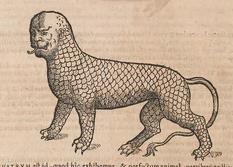
Absolutely draining Radical Humors from your lungs in the night, and will give you scurvy if you make eye contact. Do not make eye contact. Consider taking a long vacation. 6/10
4 on 1 is bad odds, but they’re distracted by levitating kittens. If you stay quiet and provide offerings of fish and cream you might survive. 5/10
This cat has killed before, and it will kill again. If it has found you don’t bother packing, just go. 10/10
You will not see these cats. You will just feel a growing unease. Dark spots in your peripheral vision. A smell of smoke. Fur against your cheek in the middle of the night. Maybe you’ll come home one day and find the house in flames and ruins, maybe they just want a friend. ???/10
When they say cat flesh is poisonous they are talking about this cat. It has hunted down a Toxic Sludge Rat and is absorbing it into its own body. Fortunately only found in chemical waste plants. No threat to you. 2/10
These cats know a dark magic. You will find fur in your food for the rest of your life, no matter how far you travel. 3/10
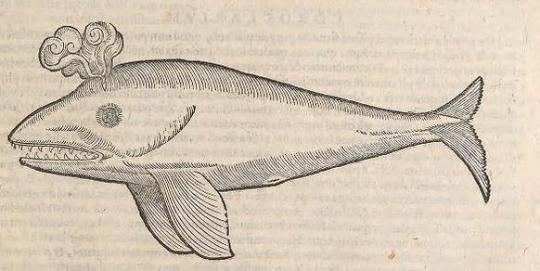
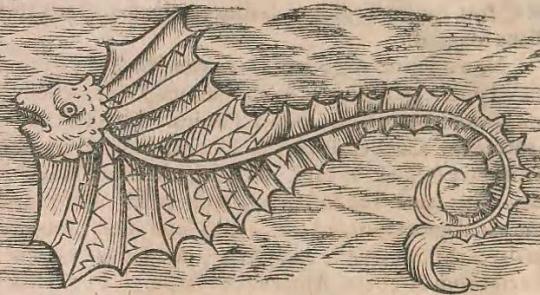
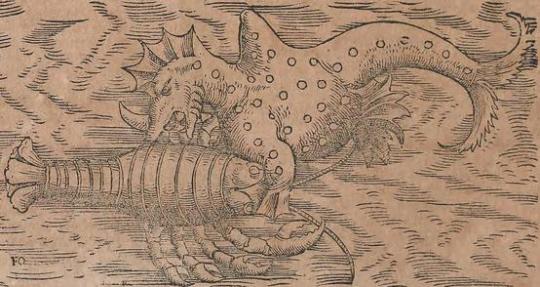
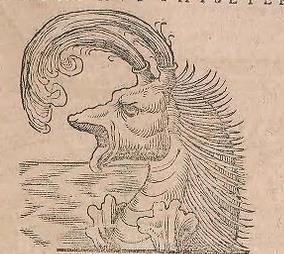
It’s been a while since we checked in on how the Renaissance is doing with its ocean mysteries, so here is a marine biology update circa 1550.
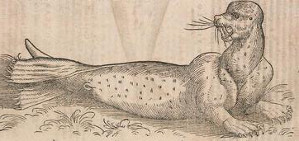
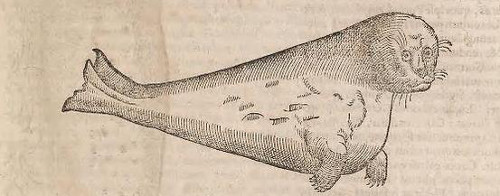
Seals come in two forms:
Buff
& Triangular
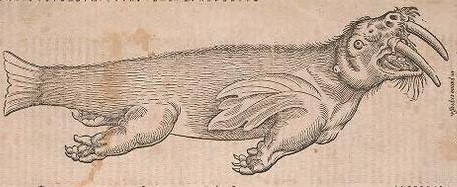
Walruses are horrifying
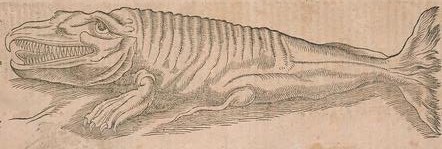
But whales are worse
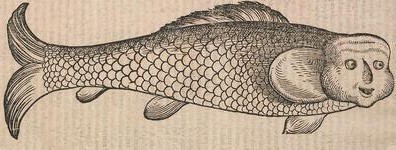
Fish can have human faces
but not always where you’d expect
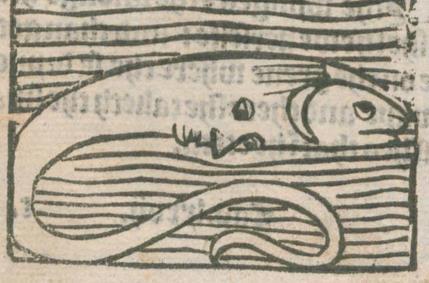
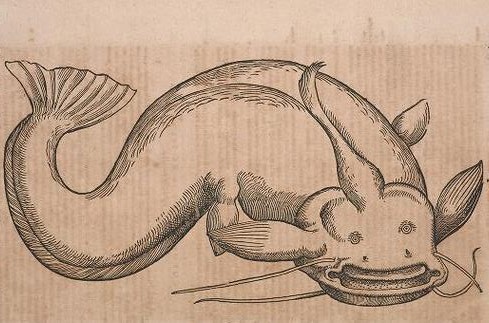
As for the rest
… it’s probably better left alone.
[All images except chest face fish from Historiae animalium liber IV : De piscium & aquatilium animantium natura. Chest face fish from The noble lyfe & natures of man of bestes, serpentys, fowles & fisshes yt be moste knowen]
So I was going to write a post talking about Jean-Honoré Fragonard’s painting The Swing, which is, as you all know, business as usual around here. Now, the first step in any art post is finding a high-quality image, which put me on Google, which in turn led me to this.
And this is–I mean. Look, this moment slipped my mind, all right? I saw Frozen once, was deeply unimpressed, and never thought about it again. I forgot that it contained a blissfully unaware nod to a dirty painting.
Yeah. Surprise! The Swing is a dirty goddamn painting.
Duh, you say, that guy’s looking straight up her dress, but that’s mid-range dirty at best, this is eighteenth century France, the aristocracy got dirtier than that on their way to breakfast. And presumably also at breakfast. A swing isn’t good enough! More filth! Better filth, you demand, beating your hands on the table.
Well, let me just assure you that you are looking at genuinely fun dirty, and hopefully that holds you over while we take a little trip into background. Buckle in for a very French story.
Sometime in the 1760s, painter Gabriel François Doyen, fresh off the success of several large-scale religious paintings, was contacted by a “gentleman of the court”, who had seen his work and been moved by it. Pleased by the attention, Doyen went to meet this courtier, and discovered him at what he later described as “a pleasure house”, entangled an an amorous embrace with his mistress. The following exchange, related by Doyen to a writer friend of his several years after the fact, went something like this:
“Monsieur Doyen, I was so moved by your work! The angels, the colors, the piety. Its beauty is unrivaled!”
“Well, that’s–very kind of you. Although I do…that is. If you and your–ah, young lady would rather I returned later–”
“Nonsense, sit down, sit down! You should be as comfortable as we are.”
At which point Doyen, more or less trapped, did pull up a chair, although presumably not without giving it a surreptitious wipe with his handkerchief first.
The young aristocrat, whose identity is unknown, was apparently so impressed by Doyen’s religious work that he hoped to commission the artist for something decidedly less religious.
Just try to imagine it: Doyen sitting on the edge of some louche-looking parlour chair while a young man in a highly noticeable state of undress cuddles with his equally nude lady friend and describes what will surely be a masterpiece.
“I should like to see madame–” (history doesn’t tell us if he booped her nose here, but I like to imagine he did) “On a swing, being pushed by a bishop. But you will place me in such a way that I will be able to see the legs of the lovely girl, and better still, if you would like to enliven your picture a little more…”
Now you’d think, wouldn’t you, that Doyen would have gone a little pale at this and made his excuses, but hilariously, he appears to kind of get into it, all of a sudden suggesting, "Ah Monsieur, it is necessary to add to the essential idea of your picture by making Madame’s shoes fly into the air and having some cupids catch them.”
Flying shoes, he said. Essential, he said. Remember that for later.
In the end though, for whatever reason, Doyen decided not to take the commission, and passed it to Jean-Honoré Fragonard, who took the idea, looked at it, decided “too tame.”
Now, the only thing he really changed from the initial idea was the bishop. The man pushing the swing is now just a dude. A significantly older dude than the young man in the foreground, though, which is notable. We don’t know for certain why this alteration was made, maybe Fragonard didn’t want to get on the wrong side of the church. Or maybe he just sucked at drawing vestments.
The old not-bishop is hidden in shadow, holding the rope of the swing, his age and restraint rendering him unimportant. This is an image for the young and passionate. The girl on the swing leaves the trees behind, flying with her knees open towards the statue of Cupid, who holds a finger to his lips, signifying the illicit nature of this encounter. And like, make no mistake, this is an encounter. Our unnamed aristocrat lies on the ground, twined around with blossoming undergrowth, his eyes directed beneath her skirts, and his arm erect, reaching for what he sees. He holds his hat in his hand, a funny little detail until you remember that in late 18th century erotic art, men’s hats (and their bared heads) were often directly analogous with their dicks. No one ever said Rococo was subtle, okay.
The swing (and the young lady on it) are at the peak of their movement, all fluttering pinks and the soft, sinuous curve of her body beneath the glistening silk, and just as she’s gone as far as she can go, positioned over her lover’s outstretched arm, with her toes pointed at Cupid–her shoe flies off. (A missing shoe, by the way, and a bare foot, were neck-and-neck with the broken pitcher in the French Symbols Of Lost Virginity Sweepstakes.)
All of which is to say, The Swing is a painting of an orgasm.
I almost don’t know where to take it from here. Um, let’s see. Well, this became an iconic image of the Rococo period, thanks to the rich colors, freedom of movement and the finished image’s contagious joy. Mostly-contagious, anyway, Enlightenment philosophers hated it, presumably because they weren’t getting laid. But it really is hard not to smile looking at it. That girl’s having a great time.
Such a great time, in fact, that Anna from Frozen probably shouldn’t be reenacting it. Even with both her shoes on.
Well. She is actually talking about how desperate she is for the chance to find some male companionship and affection at that point.



 Kimchi and Justice