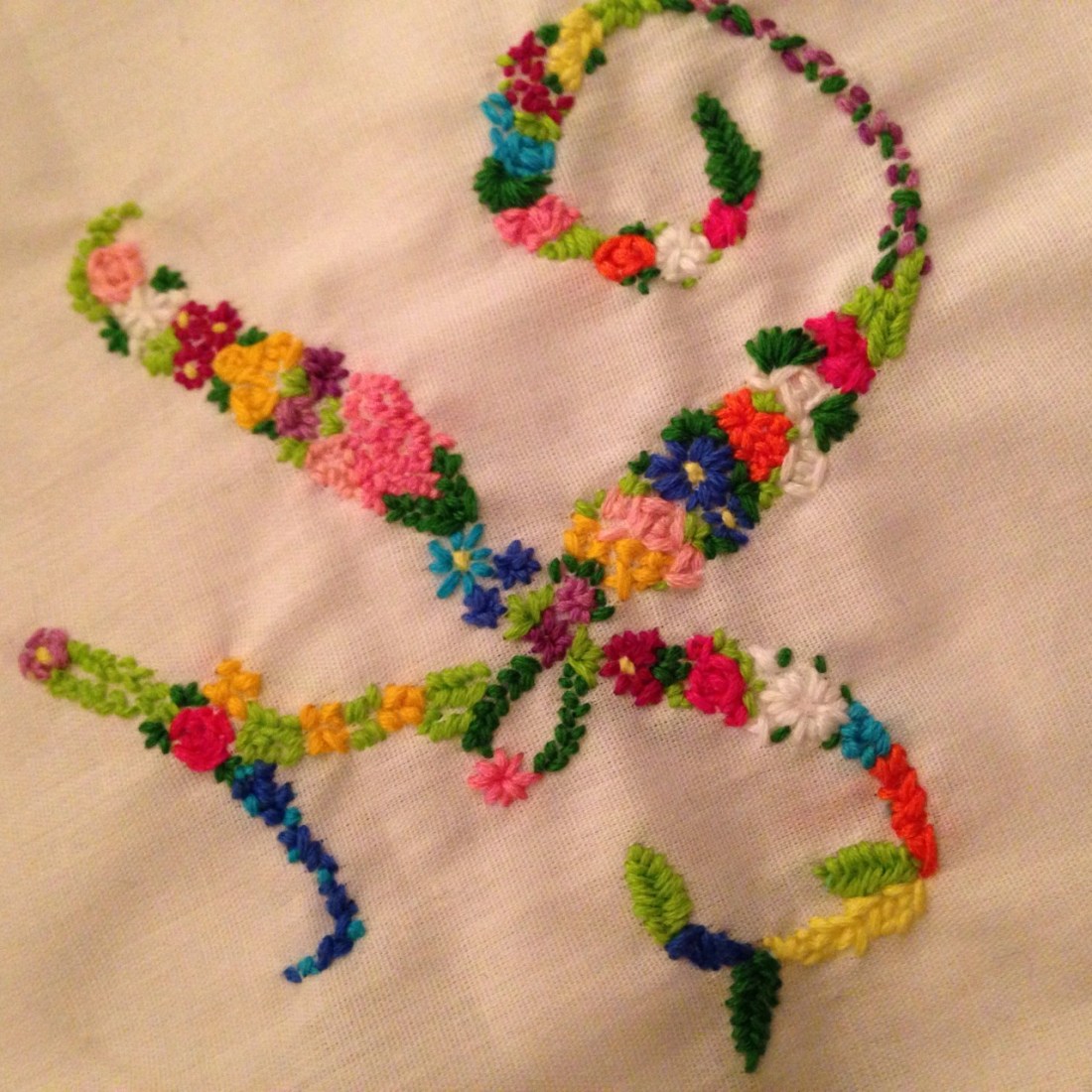
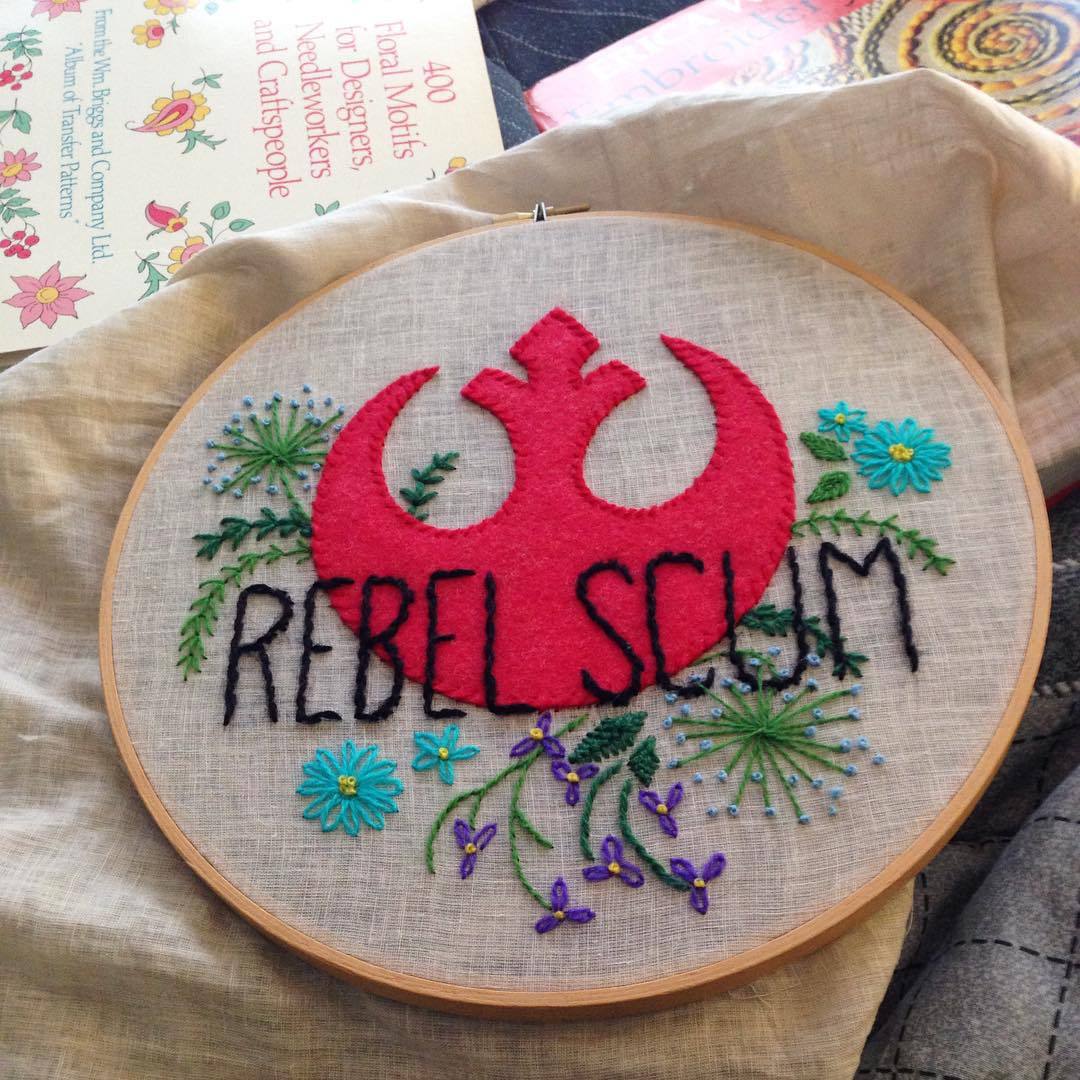
I don’t know why it’s sideways??? But this is the first thing I’ve done that I’ve actually been proud of and I still kinda like it. 😊
I don’t know why it’s sideways, either, but I do know that it’s lovely and you should be proud of it.
I don’t know why it’s sideways??? But this is the first thing I’ve done that I’ve actually been proud of and I still kinda like it. 😊
I don’t know why it’s sideways, either, but I do know that it’s lovely and you should be proud of it.
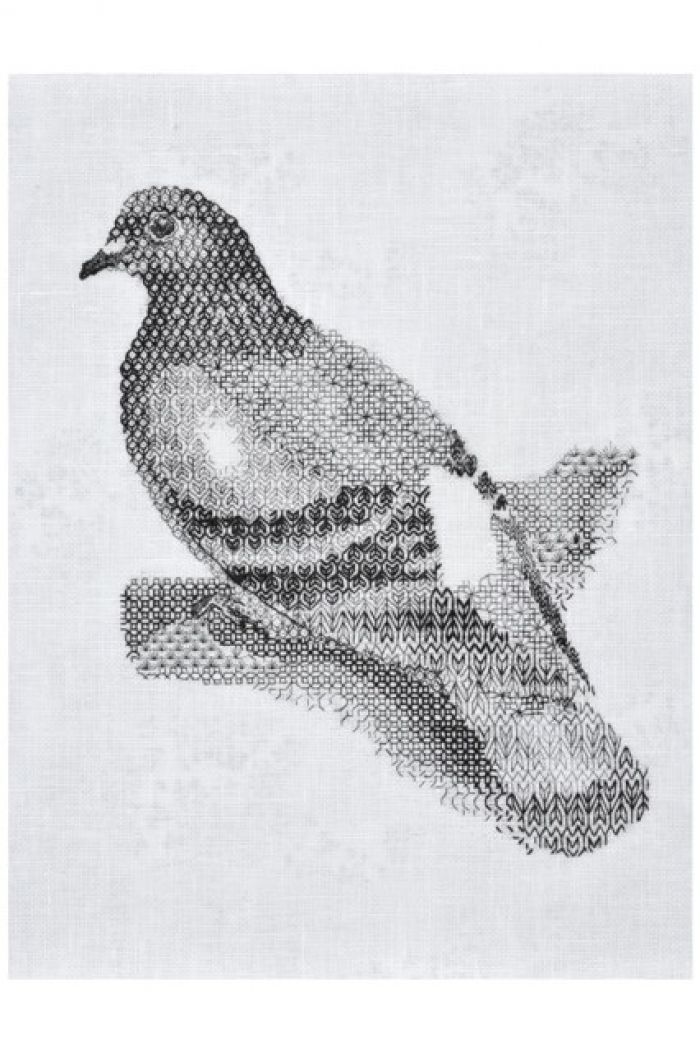
Here’s a beautiful piece from
Dagmar Steffelbauer (
royal-needlework.org.uk). It shows how terrific blackwork can be. I’ll have my Norwegian Stave Church blackwork piece done soon for you to have a look at too.



Textile Artist:
Kelly Darke
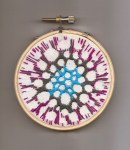
“Explosion embroidery”
“A mini (3 inch diameter) and a 7 inch embroidery wall art inspired by Orchid, a 15 inch square fiber art piece created for a solo show.”
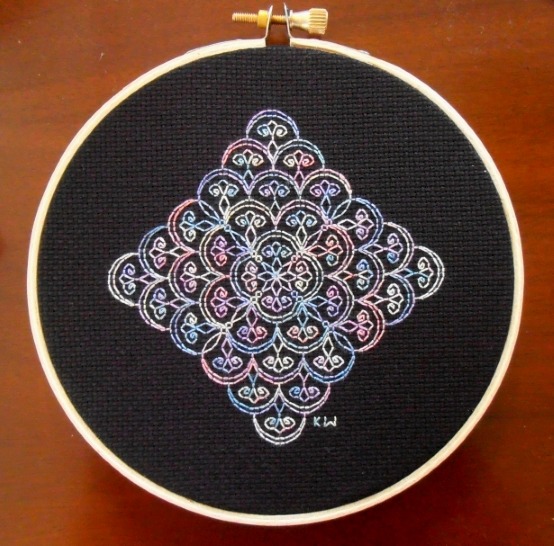
Wyrdbyrd’s doily pattern stitched with ColourCompliments’ hand-dyed embroidery thread (#161). 18ct, 5″ hoop, single strand.
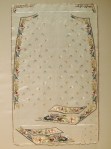
Uncut waistcoat fabric 18th century (possibly 1770/80s?) In the 18th century a gentleman who wanted a new suit would not likely go to a tailor for all his needs. He’d buy the fabric from one shop, buttons from another, lace from another, etc. He’d take the suit to his favorite tailor (or have the materials shipped to him if he lived on a colonial plantation) and the tailor would cut the suit to fit.
Very likely another person would do the buttons, as each part of making a suit tended to be highly specialized. In the collection of the Kent State University Museum:
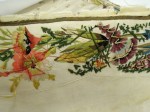
This 21′ x 35″ embroidered silk panel has all the pieces required to construct a finished waistcoat. The left and right sides of the standing collar are at the top corners of the panel, the right front is in one piece, the left front is two. The lower portion of the left side would be stitched to the body of the waistcoat below the waist. The embroidery to cover the buttons is found in the lower right corner. The pocket flaps have already been cut and basted into place. A gentleman could purchase an embroidered panel and take it to his tailor for cutting and fitting. The tailor would add lining and provide fabric for the back of the waistcoat. The dark vertical line at each side of the panel is the selvedge. Below is a detail showing the reverse side of the embroidery.
 Kimchi and Justice