In the same vein as other ‘things humans do that aliens might be weirded out by’ what if human pattern recognition skills were the thing? Like the ability to see a cloud resolve into a dog, or faces in wall patterns. Stuff that evolved from predators having camouflaging abilities, or let’s face it, bugs that can look basicaly like a leaf to prey ON.
Imagine an alien being super confounded by a human being like ‘oh, that control board looks like a face’ and it’s just this big grouping of random lights and line but no ALL the humans on board think it looks like a FACE and theyve started NAMING it. And it just seems so confusing- is there anything on this flat painted wall? ‘No of course not’ HOW IS THERE AN OF COURSE NOT. What about in that galaxy? And the human squints and stares at it and says ‘yeah, it looks like a cat.’
And they an draw out what they’re recognizing in the lines but it’s just so strange.
And then an enemy develops ‘cloaking technology’ that’s based on camouflaging and are so angry that every single human is able to point it out because it’s a completely obvious moving shape to them.
or: alien species are introduced to leaf insects, tigers, and that one octopus that imitates a coconut and freak the heck out.
god I love this kind of post
The Girrami had never known deception until they started expanding into the greater galaxy. They did not like it. The closest word in their home language for deception translated roughly to “speaking before having all the facts”. It had taken time to learn that other races would outright hide information, or worse, speak untruths for their own ends.
It was fortunate, the Girrami thought, that they had resources that the race who called themselves “Humans” desperately needed for medical supplies. The fact that the Girrami had (in line with their overarching philosophy of sharing what was needed) offered these resources freely, without (as the Humans would say) “strings attached”, had made many the Humans quickly warm to the Girrami, and in turn, freely offer the Girrami advice on how to better negotiate.
Human: “Honestly, that was almost embarrassing to watch. Tell you what, you said that you had contact with the Farop?”
Cappa Girrami: “Yes. We have had… difficulties in our dealings with that race.”
Human: “Yeah that must have been like watching puppies walk through a meatgrinder. Those guys are total assholes. Tell you what, your medicine saved my little boy, so I’m willing to do a little quid pro quo. Are you people familiar with the concept of a corporate lawyer? Because I am willing to offer you my services for cheap. No, don’t thank me, this will be my pleasure.”
Humans sometimes had the most odd and upsetting turns of phrase. But once the Girrami started contracting these… lawyers and businesspeople to conduct major negotiations, many of their dealings with other races did seem to be flowing a lot more smoothly.
It did however make the Girrami wonder just how it was that the humans had become so adept at sensing deception. It seemed natural to them to start learning to “lie” and detect untruths from an early age.
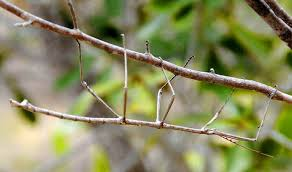
And then the Girrami scientists were invited to observe a collection of specimens kept in a “natural history museum” and suddenly it all made sense.
Girrami Scientist 1: “Wait, what is that!?”
Human: “It’s a stick insect.”
Girrami Scientist 2: “And that?”
Human: “A leaf insect.”
Girrami Scientist 1: “…your insects practice deception?”
Human: “… I guess you could call it that? It’s a form of camouflage.”
Girrami Scientist 2: “What is this…’camouflage’?”
And then the Girrami realised that the Humans came from a planet where deception was so endemic that even plants practiced it.
No wonder the Humans were so good at detecting it.
Splitting at the seams like sections of sun-baked desert, this expansive park opens to the sky between a network of gaps and provides shade for people and plant life below. A sunken oasis designed by Thomas Heatherwick Studios, this massive Al Fayah Park will span over 1.3 million square feet and feature play and picnic areas, performance spaces and festival venues, vegetable gardens and native flowers amid rivers and other water features.
Anyone familiar with places like Black Rock City, Nevada will recognize the shape driving the design concept, but these are more than just an architect’s affectation. Beyond its naturalistic source of visual inspiration, the landscaping strategy speaks to climactic conditions in the United Arab Emirates – the sheltering dome of leaf-like decks keeps things cool below, but also helps prevent moisture loss.
From the designers: “By creating partial shade for plants, the canopy reduces the amount of water lost to evaporation, improving the park’s energy efficiency and sustainability. Whilst providing shade in the daytime, the elevated plates also become a network of unique meeting places in the cooler evening hours.”
‘This sunken oasis becomes a landscape of plants, mature trees and a cluster of public recreational spaces. The 20-metre-high shaded garden is conceived as a place for families to gather and picnic, as well as a place for learning and festivals.”
For those potential critics who still see the structure as somewhat too literal, it is worth noting the wide-ranging appeal of something so iconic to potential international tourists. Whether the shapes seem striking or trite to a given person’s tastes, part of the purpose of the design is to be recognizable and ultimately draw in visitors from around the world. One question still worth raising, though, might be its fit in the site context – will it blend into the surrounding ground or stand out in the city?


 Kimchi and Justice