I realized the other day that, in my 7 years of playing the violin, I was never told to/how to stretch my wrists. I found that after doing these exercises, my wrists are stronger, looser, and free of pain during long practice sessions. These are quick and easy and great for practice breaks!
Praying Position Stretches
While standing, place
palms together in a praying position. Have your elbows touch each other. Your
hands should be in front of your face. Your arms should be touching each other
from the tips of your fingers to your elbows.
With your palms
pressed together, slowly spread your elbows apart. Do this while lowering your
hands to waist height. Stop when your hands are in front of your belly button
or you feel the stretch.
Hold the stretch for
10 to 30 seconds, then repeat.
Extended Arm
·
Extend one arm in
front of you at shoulder height.
·
Keep your palm
down, facing the floor
·
Release your wrist so
that your fingers point downward.
·
With your free hand,
gently grasp your fingersand pull themback toward your body.
·
Hold for 10 to 30
seconds.
To stretch in the
opposite direction:
·
Extend your arm with
your palm facing toward the ceiling.
·
With your free hand,
gently press your fingers down toward the floor.
·
Gently pull your
fingers back toward your body.
·
Hold for 10 to 30
seconds.
Repeat both stretches
with the other arm. You should cycle through stretches two or three times with
each arm.
Clenched Fists
While seated, place
your open hands on your thighs with palms up.
·
Close your hands
slowly into fists. Do not clench too tightly.
·
With your forearms
touching your legs, raise your fists off of your legs and back toward your
body, bending at the wrist.
·
Hold for 10 seconds.
·
Lower your fists and
slowly open your fingers wide.
·
Repeat 10 times.
Building Hand and
Wrist Strength | Building Strength
Building wrist
strength can also help you prevent injury. There are several exercises you can
use to build strength—whether you’re at home or in the office.
Desk Press
·
While seated, place
palms face up under a desk or table.
·
Press upwards against
the bottom of the desk.
·
Hold for five to 10
seconds.
This exercise builds
strength in the muscles that run from your wrists to your inner elbows.
Tennis Ball Squeeze
Squeeze a tennis ball
or stress ball firmly for five to 10 seconds.
This should not be
painful. However, it should allow you to strengthen your wrist.
Thumb Work
Push exercise:
·
Make a fist and point
your thumb up, as if you’re giving a thumbs-up sign.
·
Create resistance with
your thumb and hand muscles to keep your thumb from moving.
·
Gently
pull back on your thumb with your free hand.
·
Hold and repeat.
Pull exercise:
·
Make a fist and point
your thumb up.
·
Create resistance with
your thumb and hand muscles to try and keep your thumb pointing up toward the
ceiling.
·
Use your free hand to
gently push the thumb forward.
·
Hold and repeat.
Figure
Eights
·
Interlace your fingers
in front of your body.
·
Keeping your elbows
tucked into your sides, move your interlaced hands in a figure eight motion.
·
Allow your wrists to
rotate fully so that each hand is alternately on top of the other.
·
Perform this exercise
for 10 to 15 seconds.
·
Rest, and then repeat.
Overhead Reach
·
While seated, lift
your arms over your head and interlace your fingers with palms together.
·
With your fingers
interlaced, turn palms up until they are facing the ceiling. You can keep your
arms slightly bent or straighten them.
·
Hold the stretch.
·
Bring your arms down,
and then repeat.
This exercise stretches
the muscles in the forearms and hands. It also increases flexibility and boosts
circulation.
Eagle
Arms
This exercise is
adapted from eagle pose.
·
Extend your arms
forward, parallel to the floor.
·
Cross your right arm
over your left, with the right arm on top.
·
Bend your elbows.
·
Place your right elbow
into the crook of the left. The backs of your hands should be touching.
·
Move your right arm
right and your left arm left. The thumb of your right hand should pass by the
little finger of your left. Your palms should be facing each other.
·
Press your palms
together, lift your elbows up, and stretch the fingers. They should be pointed
toward the ceiling.
·
Resist the urge to
lift your shoulders as you lift your arms.
I love that it complements each and every body type they talk about, and dont just say that they should have a hourglass figure and that they need t create the ilussion of having a hourglass figure.
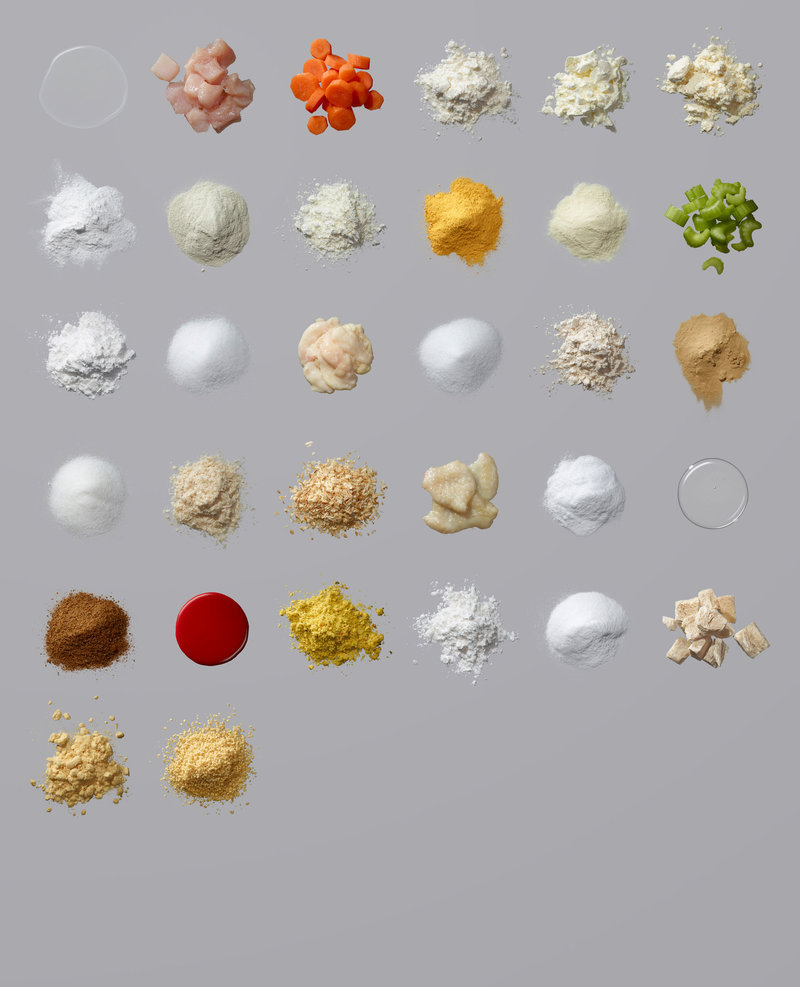
We may eat a lot of food additives, but most consumers know very little about them. These often misunderstood substances go by unwieldy names like “diacetyl” or “azodicarbonamide.” They are in everything from salad dressings to Twinkies. But how many of us actually know what they look like or, more important, what they’re doing in our food?
Ingredients, a new book by photographer Dwight Eschliman and writer Steve Ettlinger, seeks to demystify 75 common food additives, from acesulfame potassium to xanthan gum, by providing an easy-to-read encyclopedia of sorts of various food additives, their uses and their history.
Hi there lovely people, today I bring you some very helpful apps for the sick student! They’re very helpful for us Chronic Illness kids, mental health or just your regular flu.
1.Water Your Body. This is a great app for when you are dehydrated while having a flu or whatever, it could also be for daily use.
2. MediSafe. I can’t stress ENOUGH how helpful this app is. For people that have to take meds perpetually (or not) and are rather forgetful, this is h e a v e n. It has an alarm that tells you when to take your meds and it reminds you to bring them with you in the morning!
3. What’s Up? This app is great for keeping track of anxiety and depressive episodes. It has activities, coping methods, information about mental illnesses AND a diary! My psychiatrist and I love it!
4. Ambio. It’s a background noise app where you can customize the sounds. If I get really anxious I just put on my headphones and listen rain for hours.
5. ShakeIt Alarm. As an epileptic it takes me quite a lot of effort to wake up, but I’m sure the regular student can relate to this problem as well. So instead of having ten alarms this will truly wake you up by either shaking it, tapping it or screaming at it (not recommended if you don’t live alone).
6. Forest. It’s pretty tough to stay focused and motivated when it comes to mental illnesses, this app won’t burn your hand if you touch your phone but it IS helpful and you get to plant trees virtually and in the real world!
I’ve been using MediSafe for almost a year now and it is amazing. 10/10 would recommend.
animadvertere your comment nudged me into trying medisafe and it looks extreeeeemely useful.
In response to the question, “Do you have any suggestions on talking to doctors about pain? I’m going to see my doctor in a few days so I could use some tips and getting my point across.”
Anybody who’s ever tried to explain their experience of bodily pain to someone else knows that it’s difficult. Pain is subjective to each person, and absolutely nobody can feel our physical pain but us. This doesn’t mean that we shouldn’t try to communicate to others that we are having a life-changing problem, though; this just means that we should learn how to communicate about it effectively in order to receive the most empathy, compassion, and appropriate treatment(s) possible. How do we do that?
Figure out if your pain is acute or chronic Acute pain is short-term and often intense. Chronic pain lasts for longer than 3 months and can be just as intense, if not more so. Try to journal and see if you can list all you know about your own pain’s history, and go into your appointment with this list (as well as a list of your questions and concerns) so that you feel confident and don’t forget anything important to you. How long has it lasted? Is it the result of a specific event that you can pinpoint?
Find vivid phrases to describe what your pain feels like When I was first going in to see a doctor for chronic hip pain, I found the phrase, “I feel like I just slammed my hip against a table.” Easy to understand, as well as almost feel yourself, right? Make it clear that this is something that needs and deserves treatment. Women often get taken less seriously than men when seeking pain treatment, as do racial minorities. Advocate for yourself as best you can.
Learn the typical words that describe pain (as well as what parts of the body are affected by it) Sometimes, in dealing with pain, you’ll be experiencing different types of pain in different places. Read this page in order to understand what people actually mean when they say they’re having a “dull” pain, as well as other terms like “raw”, “stiff”, and so on. In addition, find a nice picture of the human body on Google, if you’re struggling to figure out the name of the approximate region where you’re hurting. I like this one because it has both the Latin and the English words, as well as the front and back of the body.
List which everyday activities are compromised by your pain Certain pain syndromes, if it turns out that you have a more widespread chronic pain disorder rather than an acute pain, have life activities that are known to be affected in most people who have it. Journal about them. You’re often required to list these on patient intake forms, anyway, so this will speed up your process of filling out that paperwork.
If you’re science-y, read up on pain This is mainly for the anatomy and physiology nerds out there. Two very readable articles from WebMD: Pain basics (1 page) | Pain classifications (3 pages)
List every single symptom you’re experiencing (even the ones that you think can’t possibly be connected to each other) Think about every part of the body. Is anything going on that didn’t in the past? I know that this can be hard, and even distressing, because it can give us a reason to grieve, but as much as you can, push through your discomfort with it. What makes them worse? Better? Bring this list with you to your appointment so that you can’t possibly forget any of them when you’re on the spot. The more your practitioner knows, the better.
Go into your appointment with a pain scale of your choosing (because not all pain scales are created equally, nor do they necessarily mean the same thing to different people) What is your pain on good days? What is it on bad days? I personally like the Mankoski Pain Scale because it talks about the daily life impacts of your pain, as well as the kind of medication that might help. Of course, it will be up to you and your practitioner ultimately to decide what kind of treatment you will get, but knowing, for example, that you’ve tried ibuprofen and it hasn’t worked is a helpful piece of information.
I wish you the absolute best in your appointments, friends. Know that you’ve even got an entire community behind you here on Tumblr! We’ve got your back and understand you more than you could possibly know. We’re called spoonies (people who have chronic illnesses that limit our energy). Here’s a masterpost of spoonie community-related stuff, (and how about another?), and a world map of spoonies to remind you that you are never alone! And, if you get diagnosed with something in particular, here’s a list of Tumblr bloggers that identify with particular diagnoses (and, chances are, there are others out there just like you)! Be well, and please ask any questions you need to.




















 Kimchi and Justice