I wanna make a playlist.
I would love to hear what kind of music people think of when they think of me u v u
Category: Uncategorized

Would you kill him in his bed?
Thrust a dagger through his head?
I would not, could not, kill the King.
I could not do that evil thing.
I would not wed this girl, you see.
Now get her to a nunnery.~ Green Eggs and Hamlet
Benedict: okay the history of the soviet union
Benedict: is sometimes pretty unbelievable
Maxie: oh?
Benedict: yeah so like
Benedict: tsar nicholas’s kid alexei, the
Benedict: idk if they called him the prince, like they didn’t exactly use that system? he was something called a tsarevich though which i assume boils down to the same thing
Benedict: like whatever, monarchies, call your heriditary business whatever you want
Benedict: anyway one of the noble dudes was agitating for a plan to gradually free the serfs, modernize things like the west
Benedict: and alexei had none of this and so he exiled the dude
Benedict: and like
Benedict: there’s a reason the ussr tended to kill its political dissidents rather than exile them
Benedict: because this guy, piotr, during all the revolution stuff, manages to get a telegram to alexei
Benedict: piotr had led one of the mass emancipations and was marching on the palace
Benedict: and the telegram said
Benedict: “serfs rise, ‘vich. bet you thought you’d seen the last of me”
Maxie: so, full disclosure
Maxie: i was distracted and saw the punchline first.
Benedict: aw
Benedict: idk whether to include the full disclosure in the basketball post
Benedict: what do you think
Maxie: I mean, don’t do it if you think it hurts the joke
Maxie: it’s not like Ivano be terrible, here.
Maxie: (I’m sure I’ve used that before, but bear with me, here.)
Maxie: (You gotta lemming get in what jokes I can.)
Benedict: i. really shouldn’t try to one-up you with soviet puns, should i
Maxie: eh, USSR the only judge of that.
Maxie: sorry, that one was pretty exkruschevating.
Benedict: fuck
Maxie: by the way, you know the big difference between the Siberians and the Mongols?
Maxie: at least, historically
Benedict: i don’t.
Maxie: well, the mongols, of course, were a culture very big on their horses
Maxie: but siberia never had the conditions to make horseback riding practical, so the people there ended up developing cross-country as a method of making long journeys instead.
Maxie: basically
Maxie: it’s a question of trot/ski.
Benedict: hhhhhhhhhh
Benedict: i have no one to blame but myself
Benedict: also you
Benedict: mostly you
Benedict: fuck you
Maxie: so stalin’s reading glasses started giving him a really bad headache later in life, but he refused to get a new prescription
Maxie: said it would be revisionism
Benedict: i’m gonna break something




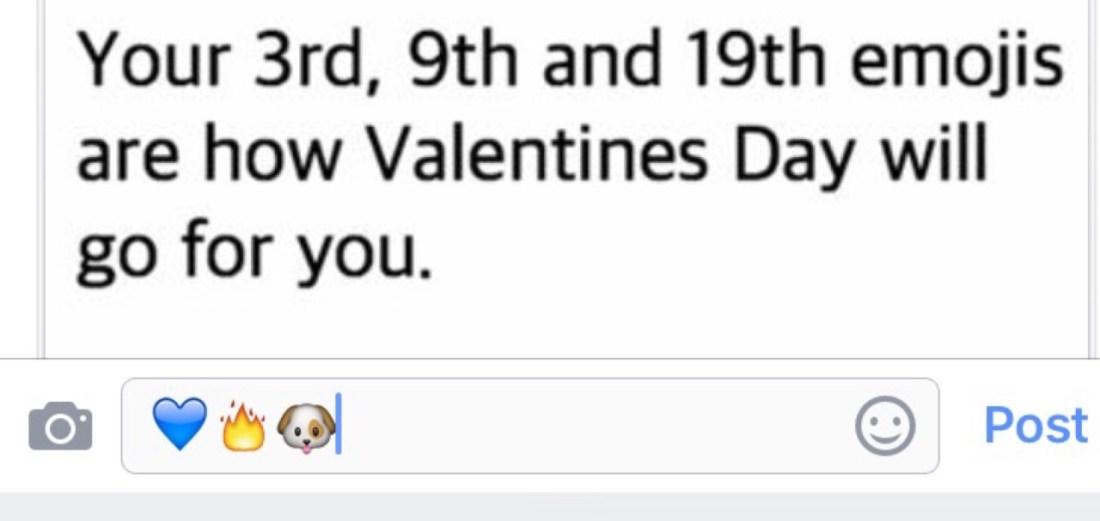
don’t judge me for this
Reblog if you’ve ever read fan-fiction that actually set the bar higher.
Stop telling yourself that the grass is greener on the other side, because it’s not. It is greener where you water it. So take control of your life and start watering your own pastures and grow your own greener grasses.
Stop both envying your neighbor’s green grass AND watering your own. We’re in a fucking drought. You can’t sustain that shit. Think beyond the lawn that society told you to want. Put in some native plants that will thrive and bloom with very little water. They might be a little more spiny than what you first planned, but there is great beauty and variety in these hardy survivors. Your yard will be way more interesting and friendly to wildlife than that of the people who took the easy route and poured on water at the expense of other people and organisms. (This has been a California-themed post hijacking.)
No but like along with being literal good advice (GRASS AND LAWNS ARE A TERRIBLE IDEA WE SHOULD REVERSE THIS CULTURAL EXPECTATION NOW) this is also metaphorically good advice (as I’m sure you knew when you posted it).
There are sometimes things that you take for granted that you are just Expected To Want or Do or Be that you don’t actually have to. You’re so used to it you don’t even think about it, but the moment you do a less resource-heavy alternative appears.
On an environmentally friendly level this is a terrible example, but a couple years ago I was talking with my therapist about problems I was having being a functioning human being, and I went on a rant about the dishes and how they stress me out and I feel like I never get them done and then I hate myself and after listening to this whole rant I expected my therapist to give me the normal pep talks about being kind to yourself and taking it on a little bit at a time but instead he just had the most exasperated look on his face and he said,
“Buy some paper plates.”
He said it like it was the most obvious thing in the world and I was completely speechlessly thunderstruck.
He said, “As an environmentalist, I am giving you permission for your own health to buy some paper plates. Problem solved.”
I don’t always use paper plates now. My mental health does allow me to keep up with the dishes better than I was (though these days my physical health has started interfering). But when I feel that slipping? I skip the cultural expectation that I should just be doing the dishes all the time. I conserve my (metaphorical, the opposite of literal in this case, sadly) water, and I buy some paper plates.
There a thing that’s ruining your mental health? Your life? It feels like a simple thing that other people can just DO, but you can’t? Often there’s a simpler solution. If you are tired of taking care of your hair, cut it into a pixie cut to save yourself the hassle. Hell, shave it off. You don’t need hair! Google hangout is a great alternative to going out when you want to talk to a friend but aren’t sure you can get yourself out of your house. If food stresses you out, buy shit you can just grab and eat without even having to microwave (I fucking love cottage cheese and vegetables for this exact reason).
You do not have to cook. You don’t have to date or get married. You don’t have to be monogamous if you do want to date or get married. You don’t have to be straight. You don’t have to be a boy or a girl. You don’t have to look a certain way or talk a certain way or eat certain things. You don’t have to go to college. You don’t have to be in that major. You don’t have to own a house. You don’t have to want or have kids. You don’t have to wait for the perfect partner to have kids if you do want them.
It’s such a normal thing to have a lawn that many people don’t even consider the time, money, and water it would save to just get rid of it and replace it with an alternative that takes into account the native environment of where it’s growing. How much easier their life would be without maintaining something that just went there because it was expected with no regard for whether it naturally fit, and instead put in plants that serve the same function but actually thrive and take root with no real effort.
Instead of fighting to maintain expectations, throw away your lawn and plant natively instead. Both literally and metaphorically.
There’s been an ongoing conversation about the usage of black slang(like “fam” and “woke”) by non-black people, and I was wondering what is your opinion on it? Is it okay to use slang/vernacular from a culture that isn’t yours? I’d never thought about where I get the words I use before, but now I wonder whether the slang I’ve subconsciously learned on Internet is cultural appropriation.
I’m sure I don’t have the answer on this, and I’d love to hear from @allthingslinguistic and @superlinguo, as they’ll have a better idea how academic linguistics weighs in on this.
One thing to keep in mind throughout the following discussion: No one owns a language.
Language is a tough nut to crack because it simply is. The natural languages on Earth weren’t created by any one person—or any group of people—and they simply evolved into different forms, with no cutoff between one language being one thing (e.g. Old English) and then something else (e.g. Modern English). If you want a very cut and dried example of appropriation and its effects, there’s a wonderful (and short) example in the movie Bring It On (the cheerleading one starring Kirsten Dunst).
For those who haven’t seen it, Kirsten Dunst plays a white cheerleader at a high school in San Diego. Eliza Dushku plays a new recruit who transfers from a school in LA. On viewing their practice Dushku calls out Kirsten, saying that all of their routines have been stolen from a black cheerleading squad at a high school she’s familiar with in Compton. Kirsten is unaware of this—as is everyone on the team—because it’s their coach that stole the routines and presented them as something new and original. Once they realize this—and meet the squad they’ve unwittingly disenfranchised—they determine to create new original routines.
This is a handy example because it’s nice and neat: The white group stole something from the black group that the white group would not have come up with on their own. Furthermore, the theft is demonstrably detrimental, as the white group is at a school famous for its cheerleading which has a lot more visibility on the national stage, so they’re a shoe-in for competitions; the black group is not. Also it’s very clear that the white group itself isn’t at fault: there was a single person at fault (the coach), and the group was unaware. Making things even better, once the group is made aware, they make the conscious decision to abandon the stolen routines, and even manage, via their status, to raise the visibility of the disenfranchised group, allowing them to compete on the national stage (and, as I recall, they win, too—the group from Compton).
Now let’s move back to language. Part of what makes language muddy and situations like the one in Bring It On simple is everything can be identified in the latter: The group from Compton created the routines; one single person was responsible for stealing the routines; it is easily demonstrable that the theft benefits the privileged group and disenfranchises the original creators. With language, it’s rarely ever clear who invented what. It’s also rarely ever clear who was responsible for a linguistic element moving from the in group to the out group. It’s also near impossible to say what the damage is when some word or phrase moves from one group to another. Only one thing is clear: Everyone is Kirsten Dunst in this scenario. Language comes and you use it. You don’t know where it came from or why: It’s just there.
Take the examples you listed above—“fam” and “woke”, or another one of my favorites, “bae”. No one can say where precisely they came from, but I can tell you this: If you know those words it is already too late. They’re out. They’ve hopped the fence. No one can control them anymore. This article cites a website that tracks the use of words in rap songs, and it claims that “bae” has been showing up in rap songs since 2005.
Let me say that again: In rap songs. Published rap songs that anyone can listen to. Unless the first rapper to use it in a song actually invented it, it seems likely that the word was already in use and had spread quite a bit. If it started out as a regionalism, it was now a colloquialism. When it gets to a popular medium like music, though, it’s likely that someone will hear it and not know that it started out as a regionalism. If you hear a word you don’t know all you know is that you don’t know it. Once you know it, though, you can use it. And unless someone specifically tells you not, you will.
Now, when can someone tell you not to use a word? That’s an interesting question. I always rely on the general tenet that one shouldn’t make fun of or disparage others. If it can be demonstrated that using a word does precisely that, intentionally or unintentionally, that’s reason enough to tell someone not to use a word (ahem, Washington football team). Furthermore, these things can be successful. Stewardess is one example (a gendered and, given the associations, a somewhat disparaging word). When I was growing up, everyone used it. Now no one does: Everyone uses flight attendant. I don’t know how it happened, but it did, and it was damn effective. Same thing happened with gyp (meaning to cheat). I used this all the time as a kid, because I learned it and used it. Everyone did. I had absolutely no idea that “gyp” was short for “gypsy”, and that the etymology was “to behave like a gypsy towards someone”. If you’d asked me then, I probably would’ve thought you spelled it jip, because institutional racism against the Roma people is so much more prevalent in Europe than it is in the United States. When someone finally told me that that’s where that word came from, I was shocked, because the notion is so remote to most Americans. But I did immediately stop using it. And I’ve noticed it’s simply not common anymore, which is a good thing. I’m in California, so I can’t speak for the rest of the US, but I don’t see it a lot online, either.
These movements can also be overt, and can often be effective. When I was in high school, “gay” as an insult was extremely common. There were groups that actively campaigned against that, though (as a basketball fan, I loved that this commercial was played regularly during games), and, YouTube comments aside, it’s been pretty effective. “Gay” as an insult is nowhere near as common as it was. In short, if it’s a societal push, you can actually banish words from the lexicon.
Back to the question that opened the previous paragraph, should we not be using “bae”? Tough to say if it’s hard to say who “we” is. That is, using “gay” as an insult is clearly disparaging to homosexuals. Using “bae” for one’s significant other, though, doesn’t really disparage anybody. That is, unless one is using the word to mock a hypothetical black user of the word, in which case the message shouldn’t be don’t use “bae”, but rather, uh, don’t mock anyone for the way they speak. When it comes to teasing people for comedy, they’d better be on even footing with you (so it’s just as likely that they could be teasing you), and you shouldn’t ever mock something someone has absolutely no control over, such as the circumstances of their birth, the color of their skin, or the way they speak their own language.
This should, in my opinion, take precedence over trying to puzzle out who came up with which word, and whether or not one is sufficiently a part of a given group to use it. Especially in casual usage, it’s not clear what advantages a non-black English speaker is gaining by using a word like “bae” that a black English speaker is missing out on. Being a rapper paid to use language is one thing; being a person with a Tumblr is another.
Also it’s important to separate vocabulary from grammar. AAE isn’t just a set of vocabulary: It’s a distinct and consistent way of speaking the English language. One can use a noun or two without coming anywhere close to trying to use AAE.
Also when it comes to vocabulary it’s important to have a bit of perspective. Words like “fam” and “woke” and “bae” are quite new in the general public consciousness. They may be here to stay; they may not. Other words from AAE and elsewhere have come and gone, and others have come and stayed, but no one is complaining about those that have stayed. For example, both “old school” and “back in the day” are from black English—and fairly recently, too—but they are absolutely a part of English now. You can’t even say “back in the old days” or “way back when” anymore without it sounding folksy. I knew “back in the day” had moved into common parlance when I met my wife @thisallegra who used it all the time, but who apparently had no idea it came from black English (I, of course, remembered it from the song, which is the first place I heard it, since I listened almost exclusively to rap between 1991 and 1994). If she was just using it without any idea that it should be tagged as a regionalism, it was already on its way to becoming standard English.
I do have a theory as to why it stuck around, though, and this’ll take me to “bae”. “Back in the old days” has always suggested old-timeyness. You could say it, and it conveyed the same meaning, but it carried a sense of…not disparagement, but non-seriousness with it. That is, if you say “back in the old days”, you can expect whoever you’re talking to to take what you’re saying with a grain of salt. There’s actually no such judgment with “back in the day”. If anything, it suggests reverence. I don’t recall any such expression that existed before that (or nothing as compact), meaning that the expression filled a gap: It was useful. That’s why it made the jump.
And that brings us to bae. The most common way to refer to one’s significant other is “boyfriend” or “girlfriend”. These are gendered terms. Of late, we’ve been pushing to find non-gendered terms for roles and words that, previously, have been gendered. What doe sone do for “boyfriend” or “girlfriend”? What’s English got? Significant other? Too clunky. Boyfriend or girlfriend? I’ve seen it (e.g. “Do you have a boyfriend or girlfriend?”), but it’s both clunky and exclusive (it refers to someone that is either male or female and that’s it). S.O.? I’ve seen it, but it’s not common. Baby? Still reads as female, most of the time (one of the many words that isn’t gendered but still has de facto gender coding). So what else is there? Using someone like honey? Too specific.
Think about it. This was a pretty serious gap in English. We just didn’t have a good word to refer to a significant other without referring to their gender. Pretty lame. English speakers the world over have had ample opportunity to come up with something to fill this gap. No one did. Until bae.
Is it any wonder that people everywhere are using “bae” now? It seriously codes as completely gender-irrelevant. It’s pretty useful that way (e.g. I’ve seen that meme where it says “when you’re waiting for bae to text you back”, and it can pair with any image, regardless of gender. It’s great!). And my read on it (feel free to comment) is that there is absolutely no default gender for “bae”. It’s not a term that mainly refers to men that can be used for women, or vice-versa. You can use it to refer to any person who identifies as any gender. Far from worrying about whether or not we should use it on account of cultural appropriation, we should find the person(s) who invented it and give them a damn medal. Since it’s language, though, we’ll likely never know.
So, long answer to a short question, this is about where I land on the issue. Ask yourself: Am I actively disparaging or mocking someone by using a particular word? If not, does the word ultimately derive from a slur or insult? If not, am I capitalizing on someone else’s work and benefitting from it? If not, am I misrepresenting myself and the way I ordinarily speak? If the answer to all those questions is “no”, you should be good. That’s my 2¢. I look forward to hearing what others in or adjacent to linguistics have to say.
This post makes me happy on so many levels. Thoughtful, well-reasoned, sensitive, respectful, and conscious of cultural drift/shift/flow all at once. I doff my hat to you, fellow scholar.

Bitter orange is a citrus fruit close to oranges, but very bitter and it must be cooked or candied to be taste good. The sweet orange (citrus sinencis), that we know of today, appeared only in the 15th century, and it was not found in cookery before the 16th century. So beware, when you read the word orange in a medieval text, it always refers to the bitter orange!
I heard a story once that a princess of Portugal who married into the English royal family served bitter orange marmalade out of spite to English people she didn’t like. Her guests had to eat it and pretend to like it because of her position. It seems several genuinely did like it, and thus eating marmalade became a custom in England.
Would you look at that, apparently I haven’t made this whole thing up. Princess Catarina de Bragança (who married King Charles II of England) is credited with introducing marmalade to England in the 1600s, along with the custom of afternoon tea. (So far I haven’t found any sources that say whether she did it out of spite.)
 Kimchi and Justice